How this Fast Diet Lifestyle works: Eat these meals tomorrow, for a calorie total of less than 600. On another day this week, eat the meals from a different post, another day of eating 600 calories or less. Eat sensibly the other days of the week. That’s it: a simple way to lose weight and be healthier. Join me in the Fasting Lifestyle. Welcome to lifeinspiration4all who is now Following.. Join us in the Fasting Lifestyle!
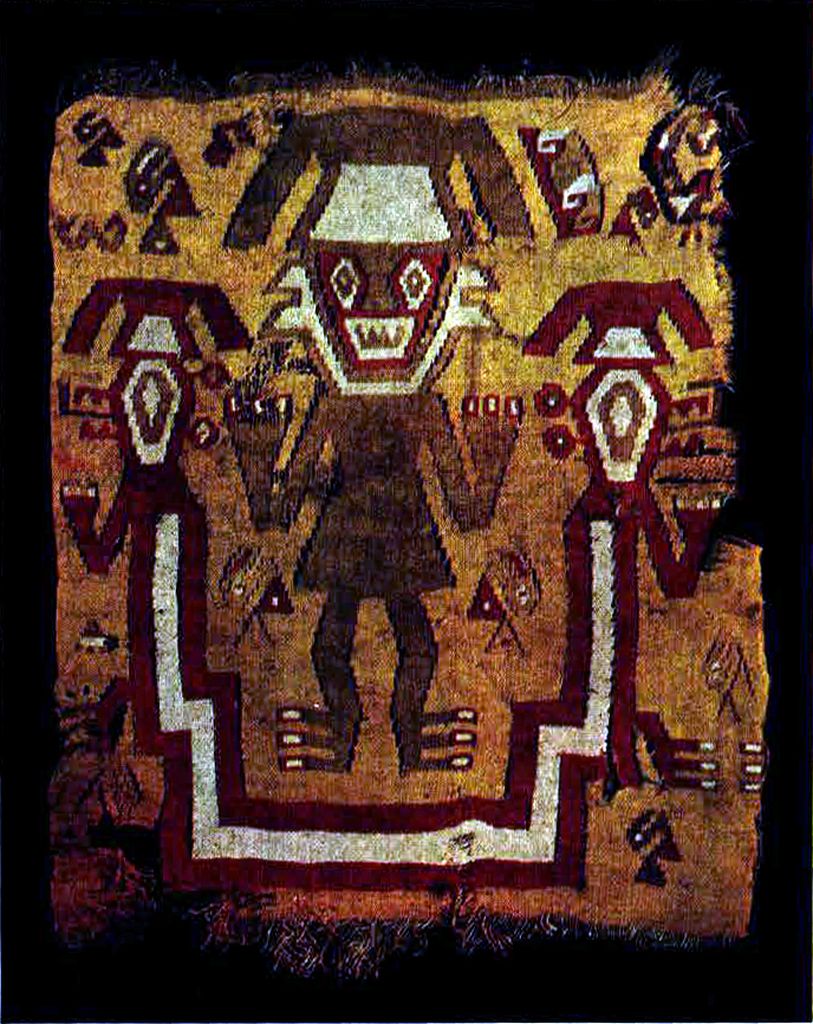
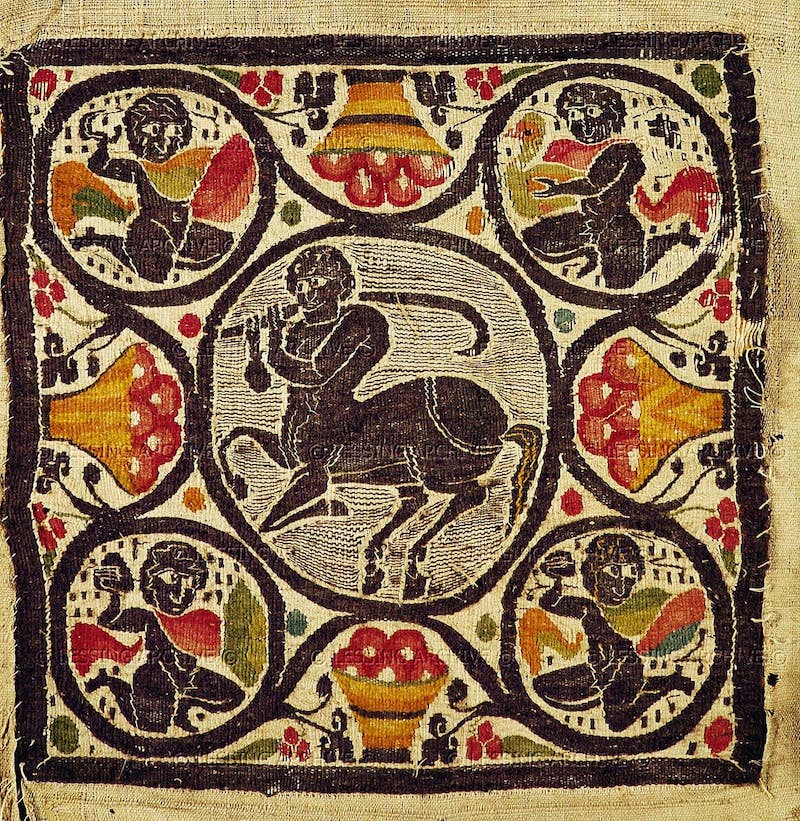
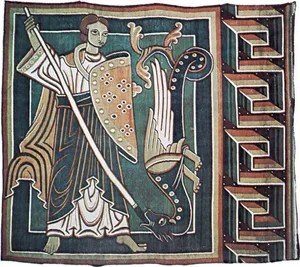
If you go into any museum of European Medieval art, you will see a lot of tapestries. They range in execution from folk art to exceptional. But though they proliferated in Medieval Europe, in manufacture and use they were found far and wide in the world. A tapestry is a piece of weaving. Most weaving is a simple over-and-under, like a pot holder you made as a kid or like a lattice pie crust. The up and down threads are called ‘warp’ while the left to right threads are called ‘weft’. In your blue jeans, the threads are equally distributed, but in tapestries, the weft threads cover the warp threads. This permits designs, even pictures, to be woven onto the tapestry, without the color of the warp interrupting the pattern. While some tapestries are embroidered, most are woven. Before the Incas ruled Peru, a prehistoric people were producing tapestry weaving on clothing and on decorative fabric panels. The Coptic Christians of Egypt were weaving tapestries as early as the third century CE, showing religious images. Tapestries in Europe have been found in Norway [9th century] and Germany [11th century]. By the 1400s, the workshops in Arras and Brussels [both now in Belgium] and in Paris, France were famous. So famous that the English word for ‘tapestry’ was ‘arras’. Wall hangings were a popular way to cover and insulate the cold stone walls of castles. You might remember that Polonius in Hamlet, hides ‘behind the Arras’ to eavesdrop on the prince and his mother. Although there was some interest in Italy, in the 1500s the bulk of the tapestry industry was still centered in Northern Europe. In addition to the word ‘arras’ making its way into the English language, the French word for ‘rug’ is ‘tapis’ which surely had its origin in the word for tapestries. [While tapestries were sometimes used as table or bed coverings, they were never used as rugs. The popularity of rugs came later, and no doubt their resemblance to tapestries inspired the new word.] In France in the 1500s, Francois I promoted the industry by setting up tapestry workshops at Fontainebleau, followed by the state-owned factories at Gobelins and Beauvais in the 17th century. In Tennyson’s Arthurian poem The Lady of Shallot, the woman is cursed to weave a tapestry all day, rather than look down the river to Camelot. Tapestries are still being made today. In honor of the 250th anniversary of the United States’ founding, an exhibit will open on September 14 at Seaton Hill, Pennsylvania, USA displaying 13 embroidered tapestries, each representing one of the original 13 colonies. Made by 2000 volunteers, America’s Tapestries will be touring the country for the next three years.
Our foods represent tapestry-making countries named in this narrative: Peru at breakfast, the USA at dinner. Want a soundtrack for your day? Listen to Carole King’s album Tapestry from 1971.
Torrejas de Epinaca: 222 calories… 13 g fat… 1.7 g fiber… 8.5 g protein… 9 g carbs… 59.6 mg Calcium… PB Chewinghappiness.com provided the recipe for a simple Peruvian breakfast treat. This is enough batter to make 9 torrejas, enough to serve 2 [two] people with 4 pancakes each.
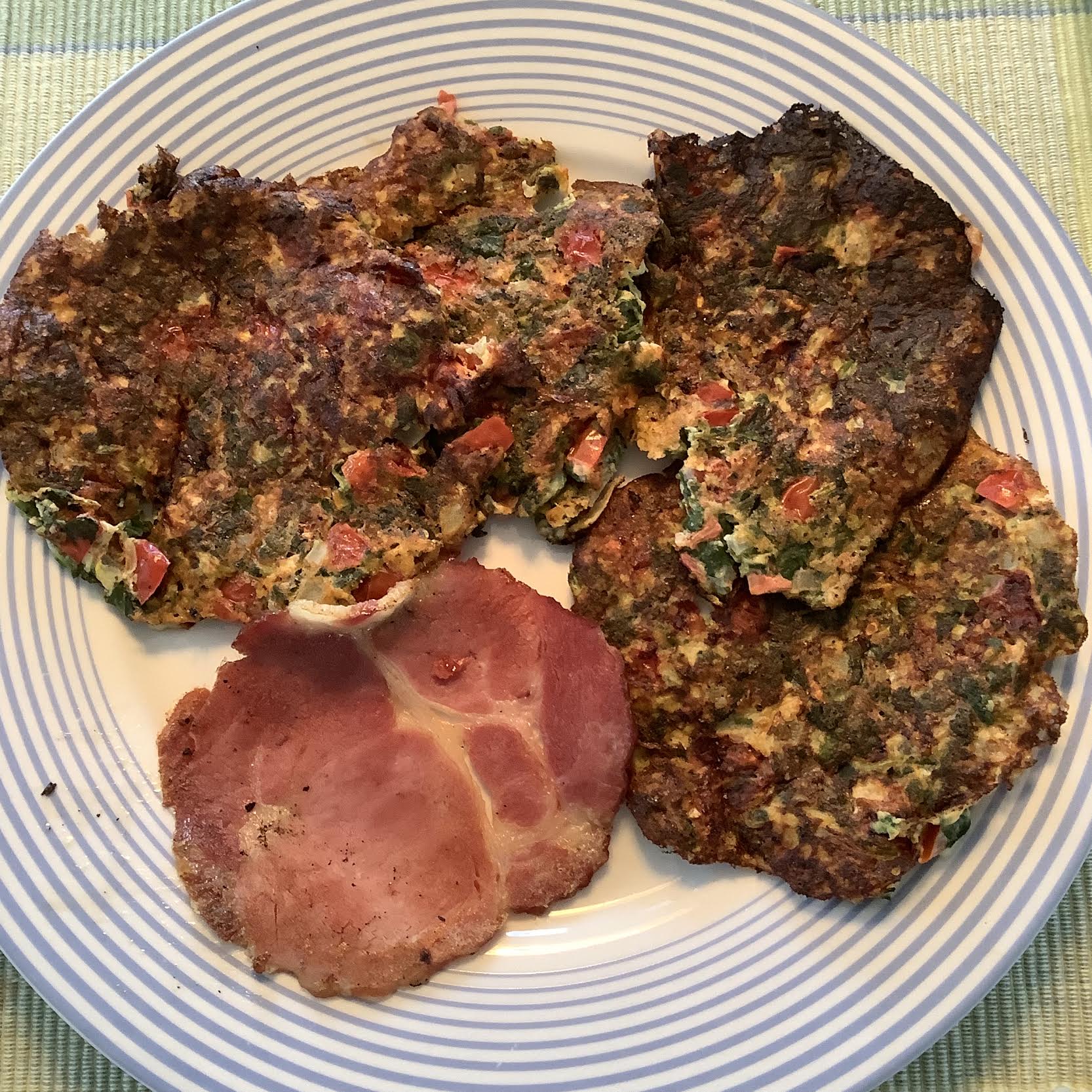
- 1 Tbsp canola oil — 1/2 cup fresh spinach, chopped OR frozen spinach, thawed and drained — 1/2 cup yellow summer squash, grated — ½ c diced onion — 1 cup diced tomatoes — 1 clove garlic, minced — 2 eggs — 1½ Tbsp whole wheat flour — per serving: 0.8 oz back bacon –
Whisk eggs with flour, then stir everything together. Heat a frying pan over medium-high heat, and spray the pan with non-stick spray. Dip a ¼ cup measure into the batter and pour it into the center of the pan, spreading it into a 4-inch circle. Cook until browned on one side, 3 minutes, then flip and cook on the other side, 3 minutes. Spray the pan again between torrejas. Continue until all the batter is used. Plate with the bacon.
Ham & Oyster Pie: 256 calories… 4.6 g fat… 3 g fiber… 21 g protein… 25.5 g carbs… 125 mg Calcium… GF This dish was popular in the Colonial American South at Christmastime. I first enjoyed it in the Fox Tavern of the Hancock Inn. As long as oysters are available, one can have it anytime. HINT: This recipe serves 2 [two].
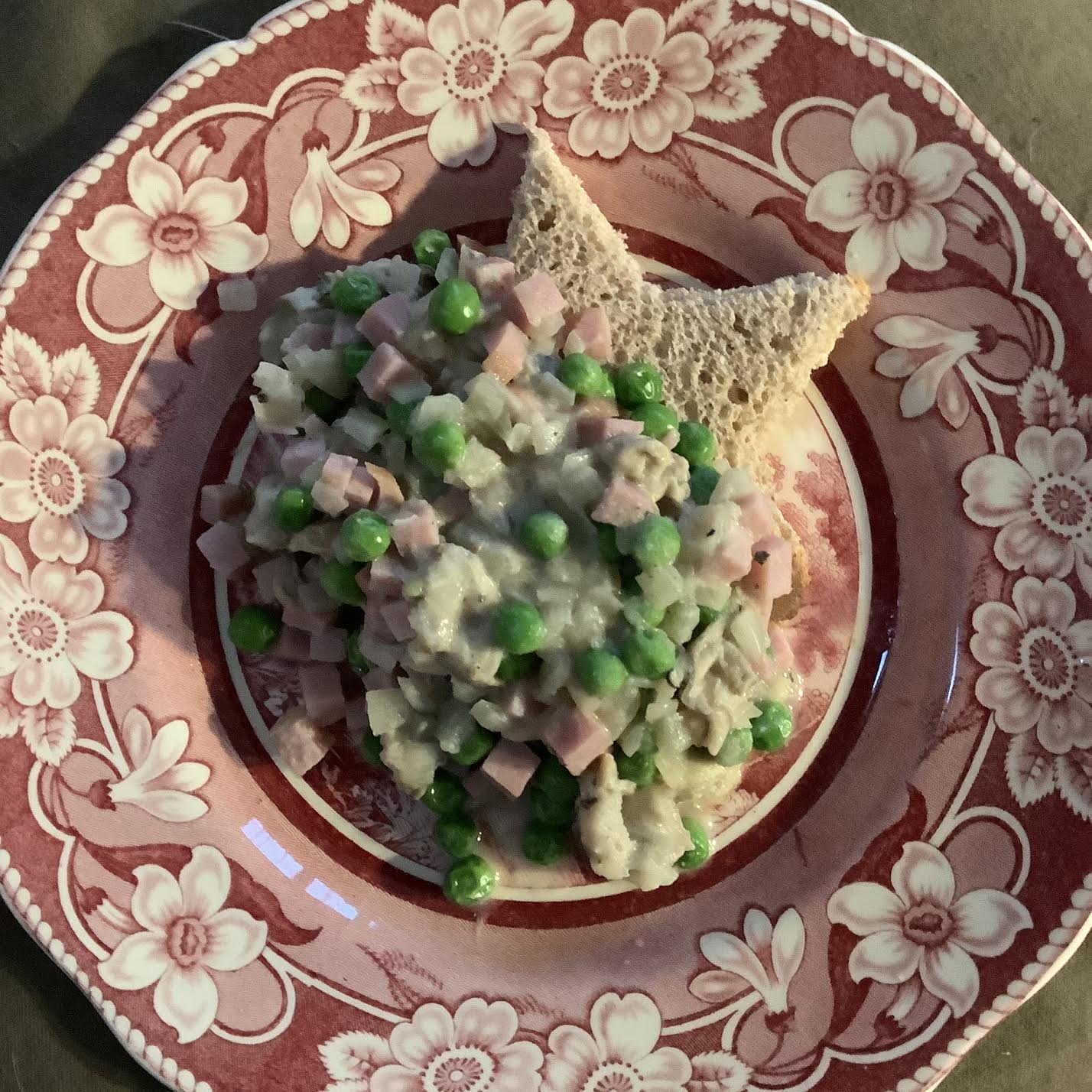
++ 3 oz [2/3 cup] roast ham in ½” dice — 1 cup oysters with their liquid, about 19 — ½ cup onions, chopped — ¼ cup milk — 2 Tbsp white wine — 2 tsp potato starch — ½ cup peas, frozen — 4 small stars cut from one slice of 70-calorie whole-grain bread, 0.55 oz bread ++
Drain oysters and reserve their liquid. Combine onion and oyster liquid in a small pan. Simmer, covered, until onions are transluscent. Stir wine, milk, and potato starch into the liquid until it is smooth. Add oysters and ham. Stir and heat over low until sauce has thickened. Add peas, stir, and turn into a two-cup casserole. Bake uncovered at 400 F. for 15 minutes while you lightly toast the stars. Before serving, nestle the stars into the bubbling sauce.
sources: >>>>Benners, Ethel Ellis. “Ancient Peruvian Textiles.” The Museum Journal XI, no. 3 (September, 1920): 140-147. Accessed September 13, 2026. https://www.penn.museum/sites/journal/843/
>>>Kohan Textile Journal, https://kohantextilejournal.com/woven-storytelling-coptic-tapestries/

