
How this Fast Diet Lifestyle works: Eat these meals tomorrow, for a calorie total of less than 600. On another day this week, eat the meals from a different post, another day of eating 600 calories or less. Eat sensibly the other days of the week. That’s it: a simple way to lose weight and be healthier. Join me in the Fasting Lifestyle.
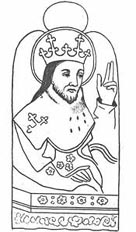
Edward was an Anglo-Saxon, born around 1003 in Wessex, son of King Aethelred II and Emma of Normandy. His family fled Britain when the “Danes” [Vikings] took over much of the island in 1013, going to Normandy [originally settled by the Vikings who were Emma’s ancestors]. Then they returned to Britain, leaving again in 1016, after his father’s death. For many years Edward lived in Normandy, becoming quite Norman in his ways. At last, in 1041, Edward returned to Britain. With the help of his half-brother Hardicanute [a Viking son of Emma’s second marriage], Edward became King of Wessex. He was not a particularly strong ruler, although he kept the peace with the Danes. Edward married Edith, daughter of the puppet-master Godwine, who pulled the strings during the first 11 years of Edward’s reign. Edith and Edward had no children, leading to tales that Edward was too pious to procreate. The king was religious, though not excessively so. A pledge to the pope resulted in Edward’s building of Westminster Abbey, then outside of London. Edward was buried there after his death on January 5, 1066, and his shrine can still be seen. The lack of an heir caused confusion. Harold, son of Hardicanute/nephew of Edward, became king in 1066, a claim that was challenged by Edward’s cousin, William of Normandy. Edward seemed to have promised the crown to them both, as a negotiation tactic. William eventually settled the confusion at Hastings. After Edward’s death, legends of his piety grew, and miracles were attributed to him. He was canonized within a century, being named a ‘confessor’, designating a saint who was not a martyr.
Our meals are similar to foods that might have been eaten in Edward’s time, [OK — not the Asian flavors in the dinner…] when grains, sausage, and vegetables would be cooked together in a pot for many meals.
Cottage Breakfast w/egg: 213 calories… 8.6 g fat… 2 g fiber… 15 g protein… 20 g carbs… 84 mg Calcium… NB: The food values given above are for the egg bake and fruit only, not the optional beverages. PB I wanted a breakfast that evoked a cottage in the English country-side, so here it is. The pan muffins are very good.
++ 1 pan muffin ++++ 2 oz applesauce ++++ one 2-oz egg: fried or hard-boiled or soft-boiled ++++ ¼ c 2%-fat cottage cheese ++++ Optional: 5 oz fruit smoothie or berry-yogurt smoothie [88 calories] ++++ Optional: blackish coffee [53 calories] or blackish tea or mocha cafe au lait [65 calories] ++
Take one pan muffin from the freezer the night before and let it thaw. Cook the egg to your taste and warm the pan muffin. Dish the applesauce and plate with cottage cheese. Pour optional beverages. What a sweet and easy meal.
PAN MUFFIN each: 71 calories– 2.5 g fat– 1 g fiber –2 g protein– 11 g carbs– 8.5 mg Calcium— PB These are a dandy little bread to add to a breakfast plate. You will see them also in Roman Breakfast. HINT: I prepare 8 pan muffins from the 10-grain mufffin batter, to cook and freeze. I make remaining batter into full-sized muffins to enjoy on Slow Days.
| 1 cup dry Bob’s Red Mill 10-grain hot cereal mix—-1¼ cup buttermilk/soured milk | Combine cereal and milk in a small bowl. Let sit 10 minutes. |
| 1/3 cup butter —-1/3 cup sugar—1 two-ounce egg | Cream the butter and sugar, then mix in the egg. |
| 1 cup unbleached flour— 1 tsp salt —1 tsp baking powder —1 tsp baking soda | Add dry ingredients and cereal/milk mixture. Stir until just combined. |
| 2 Tbsp batter for each pan muffin | Portion out batter onto a hot griddle or flat-bottomed pan spritzed with non-stick spray. Cook on both sides. |
Vegetable-Sausage Bowl: 295 calories… 15 g fat… 4.4 g fiber… 10 g protein… 22.5 g carbs… 124 mg Calcium… PB GF A riff on a recipe by Sarah Copeland in the New York Times, this fusion of German sausage and Asian flavors was a real hit at our house. Very quick to prepare and a great way to add vegetables to the diet.
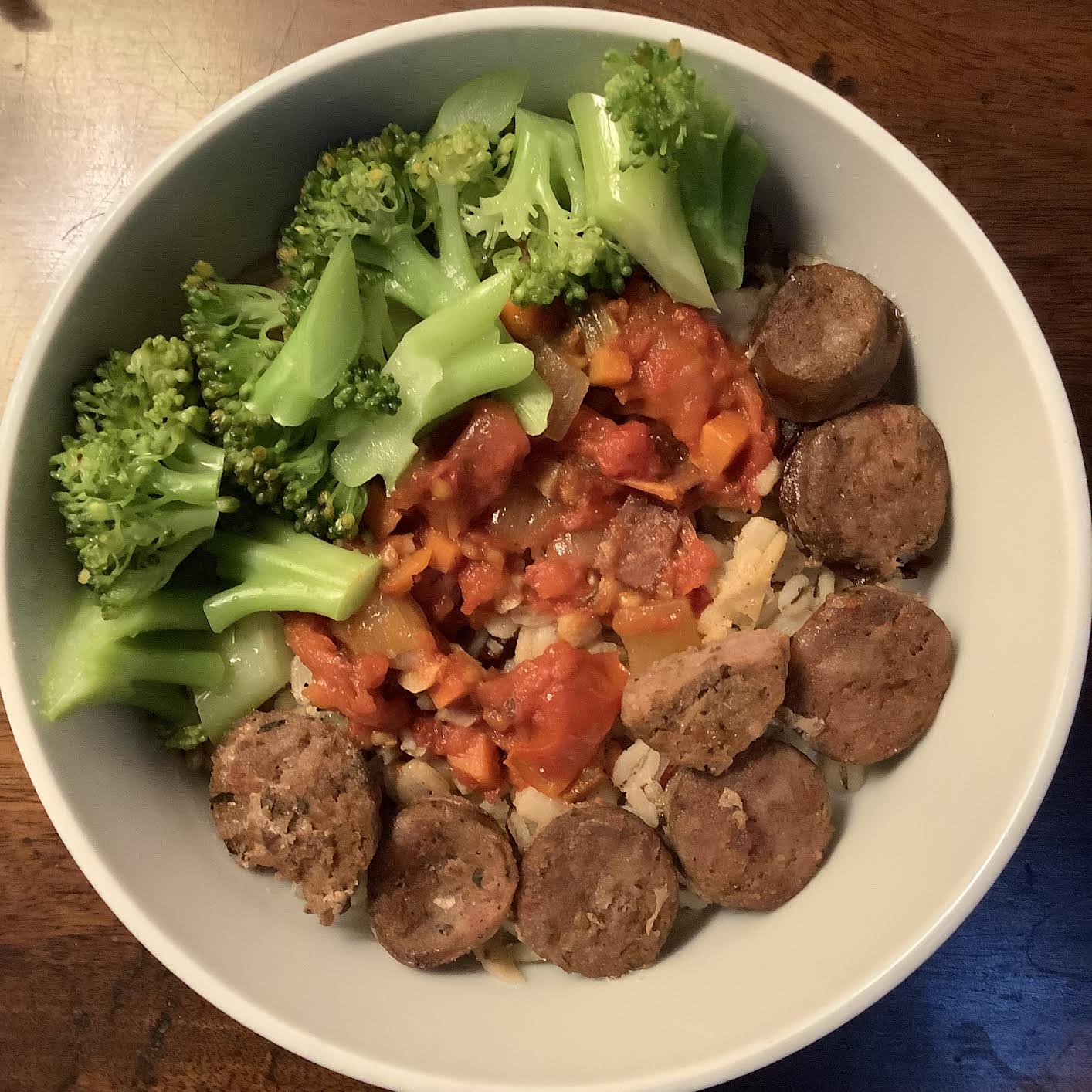
| 2 servings | big wok, skillet or cast-iron pan |
| ½ oz almond slivers —- pinch Kosher salt | Add nuts, salt to pan, and stir until toasted, 1 min. Remove from pan and save. |
| 1 tsp neutral oil—-2-3 celery stalks, sliced on bias -OR- ½ c thin zucchini slices —- ½ c. carrots, sliced in thin coins -OR- ½ c sweet pepper, in thin slices | Heat oil over med-high until shimmering. Add these and stir-fry until slightly softened, 1-2 mins. |
| 1.5 tsp sesame seeds | Sprinkle on seeds, toss until toasted, 1 mins. |
| 1 c. kale, without stems, fresh or frozen——1 c. torn lettuce | Chop kale roughly. Add greens to pan, stir to combine. |
| 1½ tsp rice wine vinegar or white wine vinegar—- -2-3 T. water | Add these, scraping bottom of pan. Cook until greens are lightly wilted, ~1 min |
| 2½ oz bulk bratwurst sausage | Brown in separate pan, breaking into small bits. Add. |
| ½ c. cooked brown long-grain rice | Add to pan and stir well while rice heats. |
| 3 T. torn mint leaves—-1 tsp Go-Chu-Jang, Korean hot sauce —-1½ tsp soy sauce | Scatter with herbs, add soy sauce and hot sauce. Stir together, serve in bowls with reserved nuts on top. |
 Eating well, with creative recipes, to follow the Fasting Lifestyle according to Michael Mosley's "Fast Diet."