Slow Days: Hake with Green Sauce

People who are new to Fasting often pose the questions: “Can I really eat ‘anything I want’ on a Slow Day?” and “What should I eat on Slow Days?” To answer those questions, I have decided to add some blog posts to show some of the foods we eat on what the world calls NFDs [non-fast days] but which, in our house, we call ‘Slow Days.’ This feature will appear sporadically. 

Now for the answers. Can you really eat ANYTHING you want on a Slow Day? Not really. If you eat too many calories every Slow Day, you will not lose weight. There are many questions asked on the FastDiet Forum which attest to that. Once in a while you can splurge, as long as it isn’t everyday. For what to eat on Slow Days, Dr. Mosley recommends a Mediterranean Diet. As for how we eat, an example follows.

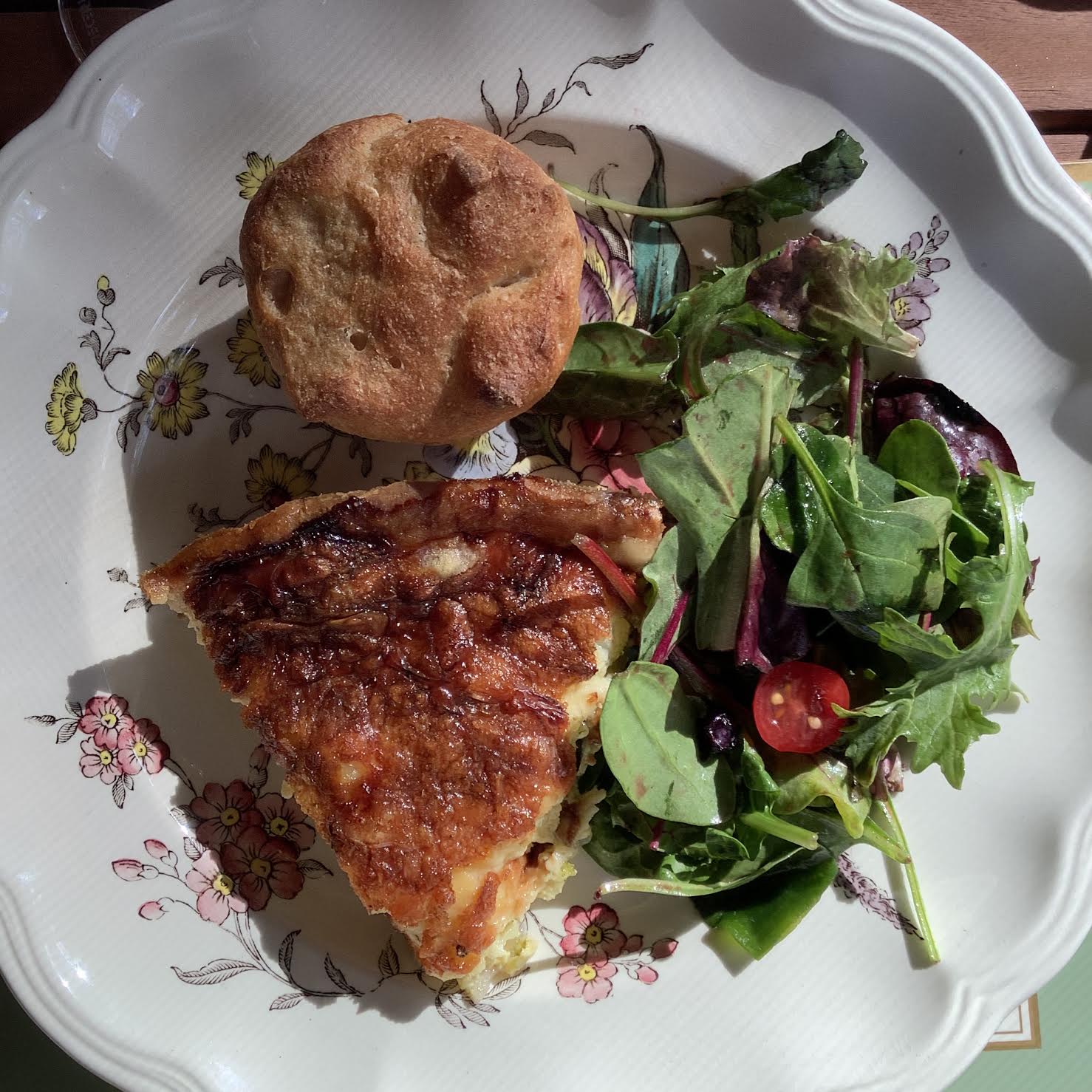
In April, disappointed that our trip to France was canceled, we decided that if we couldn’t be in Gascony, we could eat as if we were in Gascony. After scouring our cookbooks, we chose recipes for dinner, and sometime breakfast, that would be typical of where we would have been on a particular date. Thus we “dined out” in the restaurants of our imaginations. One of the earliest meals was named Hake in Green Sauce. There is no sauce. “Green Sauce” is a centuries-old term for vegetables served on or with the protein of the meal. In Spanish, the term is ‘salsa verde,’ which we today think of as a mild-hot condiment in a jar. The recipe, called “Merluza, Salsa Verde,” is found in Anne Willan’s French Regional Cooking.

The ingredients you see pictured are enough for two people.

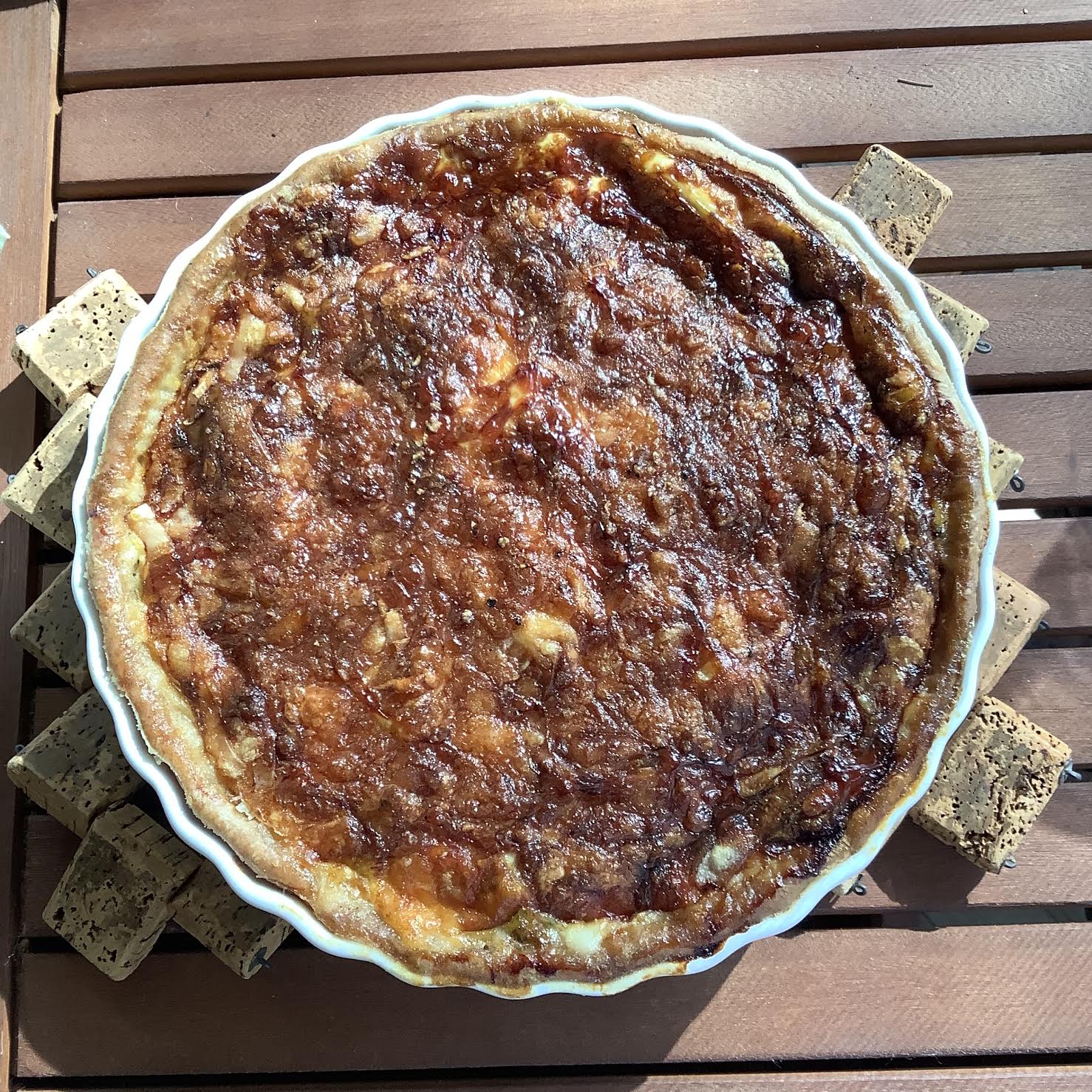
Hake, new potatoes [our’s were multi-colored], garlic, oil, crushed red pepper, peas and asparagus comprise the ingredients. The potatoes are simmered in boiling water for 15 minutes, then drained. The peas are cooked until just tender, then shocked in cold water and drained. Same for the asparagus. The hake is seasoned, then dredged lightly in flour. Brown the hake in an oil-coated pan until lightly brown on both sides, but not cooked through. Arrange the dish in an oven-safe dish [I used the tart pan you see in the above photo] and sprinkle with the hot pepper flakes and chopped garlic. Put the potatoes around the edges of the fish, then put the vegetables on top. Sprinkle with parsley, salt, and pepper. Pour 1/4 cup water into the dish, cover it, and bake at 375F/190C for 15-20 minutes, when the fish will be tender.

This is really good — I ate the whole thing!

Slow Days: Sourdough Pancakes

People who are new to Fasting often pose the questions: “Can I really eat ‘anything I want’ on a Slow Day?” and “What should I eat on Slow Days?” To answer those questions, I have decided to add some blog posts to show some of the foods we eat on what the world calls NFDs [non-fast days] but which, in our house, we call ‘Slow Days.’ This feature will appear sporadically. 

Now for the answers. Can you really eat ANYTHING you want on a Slow Day? Not really. If you eat too many calories every Slow Day, you will not lose weight. There are many questions asked on the FastDiet Forum which attest to that. Once in a while your can splurge, as long as it isn’t everyday. For what to eat on Slow Days, Dr. Mosley recommends a Mediterranean Diet. As for how we eat, an example follows.

It is almost a joke now that during the Pandemic Lock-Down, people vowed that they would use the time to perfect the art of baking: specifically sourdough bread. It seemed to be the culinary equivalent of reading War and Peace — something to get around to when you had time. Early on, bread flour and yeast were GONE from supermarket shelves. New England’s flour-of-choice, King Arthur brand from Vermont, was not even available on-line. For those who have sourdough starter [don’t be a wimp — start your own starter!], be aware that there are many things to do with it, besides making bread. Recently, we made Sourdough Pancakes [click link for recipe] for Sunday Breakfast. A real treat and easy to do.

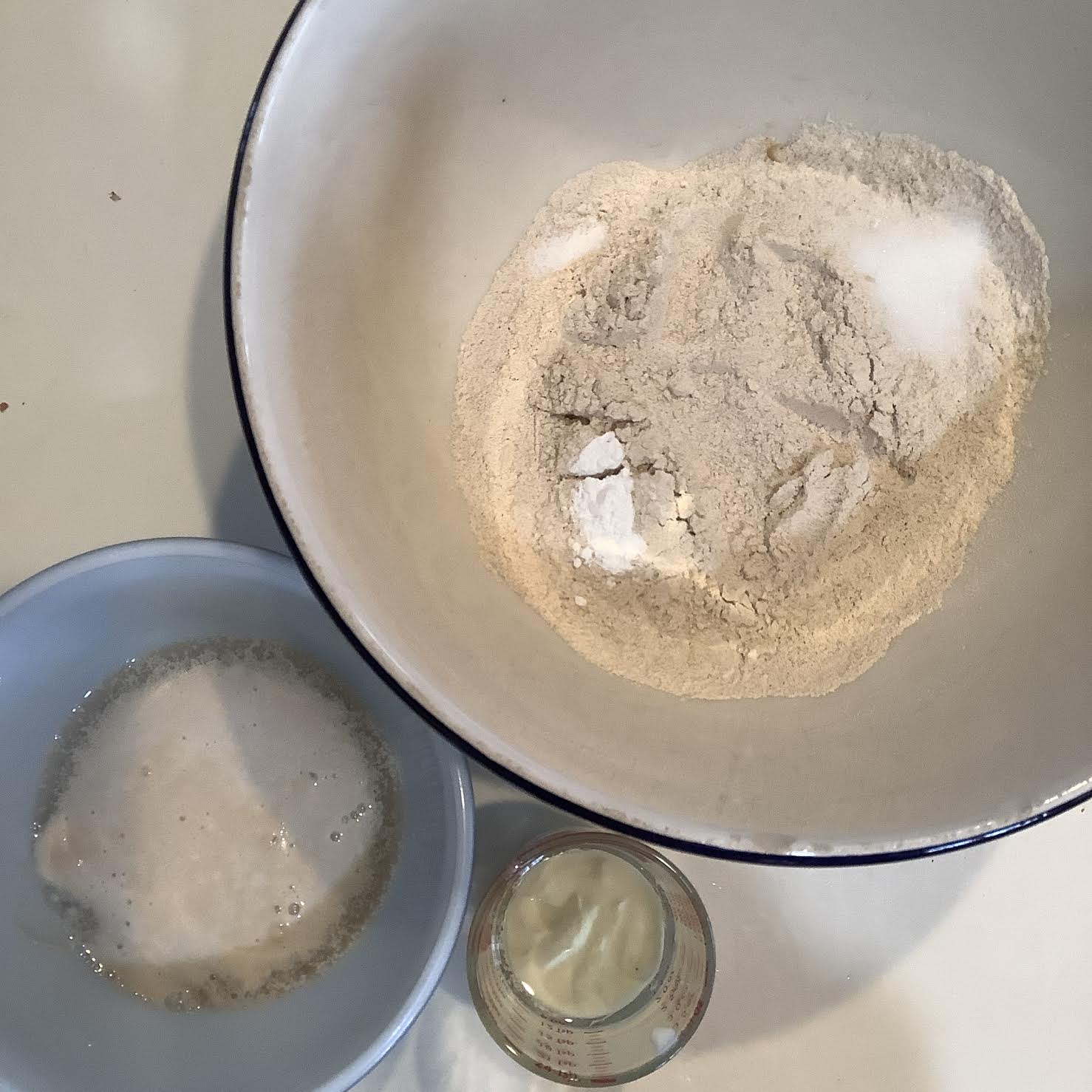
HINT: For two people, I cut the recipe in half. The night before, I combine the flours with the sugar, oil, buttermilk [substitute = soured milk], salt, and starter. This is left on the counter overnight to ripen.

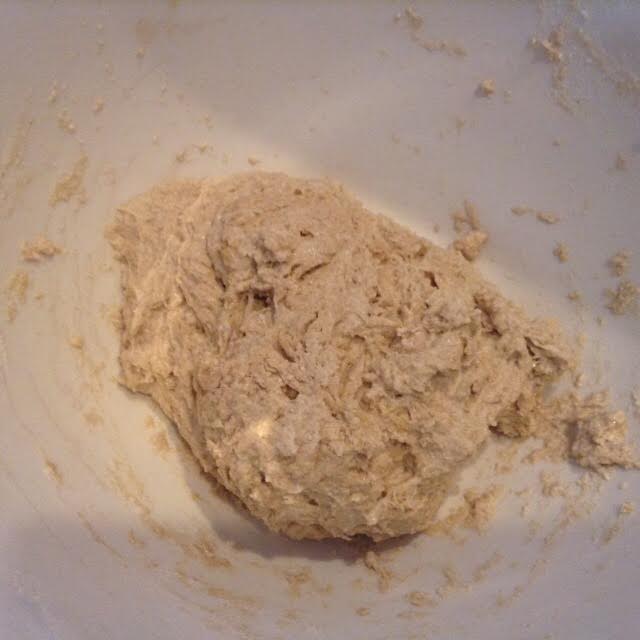
The next morning, the batter is stirred. An egg and the baking soda are added in. The mixture needs to sit a few minutes while you heat the griddle, set the table, and make the coffee. By now the batter is foaming in the bowl.

This recipe resulted in 14 pancakes: enough for today’s breakfast, another meal later, and 2 for a snack with peanut butter and jelly.

Lightly butter the griddle and use a 1/4 cup measure to pour 3-4 Tablespoons of batter on the hot surface. Continue until there is no more space on the pan. When the top of each pancake starts to develop ‘eyes’ [little holes], it is time to flip them to the other side.

Served with maple syrup [our own, I’m happy to say] and sausages — what a treat! The breakfast is completed by the berry-yogurt smoothie and mocha cafe au lait which we enjoy every morning. Great start to a great day. A lot easier than making bread.

Slow Days: Yogurt, DIY

People who are new to Fasting often pose the questions: “Can I really eat ‘anything I want’ on a Slow Day?” and “What should I eat on Slow Days?” To answer those questions, I have decided to add some blog posts to show some of the foods we eat on what the world calls NFDs [non-fast days] but which, in our house, we call ‘Slow Days.’ This feature will appear sporadically. 

Now for the answers. Can you really eat ANYTHING you want on a Slow Day? Not really. If you eat too many calories every Slow Day, you will not lose weight. There are many questions asked on the Fast Diet Forum which attest to that. Once in a while you can splurge, as long as it isn’t everyday. For what to eat on Slow Days, Dr. Mosley recommends a Mediterranean Diet. As for how we eat, an example follows.

I was so happy to come across this recipe by Priya Krishna in the New York Times food column. In my past, making yogurt has been a chore and the results were not worth the effort and worry of watching the thermometer like a hawk and wishing I could maintain temperatures in my cooler-than-most kitchens. Usually the recipe failed. This has been foolproof and perfect every time.

The recipe’s author’s words are in quotation marks. All other directions are my paraphrasing or telling what has worked for me.

1 quart milk, 1/4 cup yogurt, the heavy pan to heat the milk, the glass jar in which the yogurt will ripen over-night, the little amount of water for the bottom of the heating pot.
4 cups milk
[Smallest burner on high = 10 mins]
“Evenly coat the bottom of a medium Dutch oven or other heavy-bottomed pot with a thin, 1/4-inch-thick layer of water. (To prevent milk from sticking to the bottom of the pot.)” Set the pot over high heat. “Add the milk to the water in the pot, and heat until it just comes to a boil, watching closely: As soon as you start to see bubbles forming, take off heat.” 
“Let the milk cool until it reaches 130 F. degrees, about 25 mins. If you don’t have a thermometer, the milk should be warm enough that you can comfortably stick your (clean!) finger in it — it should feel hot, but not hot enough to scald (think of a Jacuzzi).” There might be a skin on the top of the milk at this point.
Here is 1 Tablespoon of yogurt in the bottom of the 1-Qt glass jar.
1 Tbsp yogurt  “Smear the bottom of a 1-quart lidded glass container with 1 Tbsp of yogurt. (A dab in the center is fine; you needn’t spread the yogurt evenly to coat the bottom.)
3 Tbsp yogurt “When the milk has cooled, add remaining yogurt to milk and whisk until the yogurt has completely dissolved into the milk.” I use a balloon whisk and stir 50 times clockwise, 50 times counter-clockwise, then 50 times clockwise. You want it thoroughly mixed.
“Pour the mixture into the prepared glass jar and loosely set the lid on top, leaving a little room for air to get out.”
9:28 PM Thursday“Place the container inside an unheated oven. Shut the oven, turn the oven light on and let sit for 4-12 hours” Note: “Depending on the temperature outside, you may want to vary the conditions a bit. In the winter, you may need to leave the oven light on the entire time it takes for the yogurt to set, as directed above; in the warmer months, you may need to shut the light off about an hour after placing the yogurt in the oven.” I like my yogurt firm, so the long ripening times is perfect.
I don’t do this step. Maybe in summer I will….Check the yogurt: When it is done, it will be set (not liquid) but still jiggle like Jell-O. If it’s not yet set, leave it in the oven for 1 hour more. Depending on the humidity and temperature outside, the setting process can take up to 5-½ hours, so don’t fret if the yogurt isn’t done the first time you check.
8:28 AM Friday“When the yogurt is done, top it with the lid to seal. Put it in the refrigerator to chill and fully set before using. The yogurt will keep, covered, for 4 to 6 weeks. (It’ll start to get pretty sour after 2 weeks, which, depending on your tastes, could be a good or bad thing.] You can also freeze a few tablespoons to start a later batch.”
Ready to go! Just right for smoothies, to eat with fruit, use as ‘crema” in fajitas and enchiladas, in coffeecakes — whatever you please.

Slow Days: Bruschetta

People who are new to Fasting often pose the questions: “Can I really eat ‘anything I want’ on a Slow Day?” and “What should I eat on Slow Days?” To answer those questions, I have decided to add some blog posts to show some of the foods we eat on what the world calls NFDs [non-fast days] but which, in our house, we call ‘Slow Days.’ This feature will appear sporadically. 

Now for the answers. Can you really eat ANYTHING you want on a Slow Day? Not really. If you eat too many calories every Slow Day, you will not lose weight. There are many questions asked on the FastDiet Forum which attest to that. Once in a while your can splurge, as long as it isn’t everyday. For what to eat on Slow Days, Dr. Mosley recommends a Mediterranean Diet. As for how we eat, an example follows.

“Bruschetta” … what does that word mean to you? And how do you pronounce it? The cookbook Diary of a Tuscan Chef gave us a recipe for this concoction, which we ate happily for years — a tomato relish on bread. And we called it ‘bruce-SHET-ta.’ Had we turned the cookbook page, we would have had the real story. When olives are being pressed into oil, [a late-Fall, cool-weather activity] one of the workers will toast bread over a fire, rub it with garlic, and drizzle the new oil over it so everyone can have a snack and a taste of the crop. THAT is bruschetta!

Bread, garlic, and olive oil = bruschetta

Of course, as the idea of ‘putting some food on toast’ moved around the world, something was lost in translation, including the pronunciation. When on tour in Italy, I asked the guide, a Roman, how to pronounce this culinary creation. Chuckling, he said that Americans always ask that and for the longest time he had no idea what they meant by ‘bruce-shet-ta.’ The correct way to say it? ‘bruce-KAY-ta’ The aforementioned Tuscan Chef, Cesare Casella, writes: “Americans seem to think bruschetta is chopped tomatoes, garlic, basil, and olive oil on toast. I don’t know why. For us that is crostini con pomodoro.” He concludes that there seems to be an “American craving for cubed tomatoes.”

On the right you see Cesare Casella’s ‘tomato relish’ on the bread.

When Older Son began baking, he sent us a recipe for his ‘no-knead focaccia’, which is great but makes more bread than Dear Husband and I can eat in a week. So Older Son prompted us to eat it as Bruschetta. I protested that there would be very little protein in that: just bread and tomato relish. Being wise, our son suggested additional toppings: herbed ricotta cheese, slices of chicken or turkey breast. Anchovies would be good. The recipe for the bread is below.

So that is the evolution of a meal that is perfect in Summer or any warm evening. Perhaps we should call it ‘Crostini’ but we don’t. We’re Americans, you see.

No-Knead Focaccia

one 10” loaf, four 6” loavesTwo 6” loaves or 6 bunsDutch oven or cast iron skillets
500 g bread flour or half bread flour, half white whole-wheat
375 g water
10 g salt
6 g yeast
250 g bread flour or half bread flour, half white whole-wheat
187 g water
5 g salt
3 g yeast
Combine ingredients until they form a shaggy ball.
Cover bowl and let rest 8-12 hours. Rising overnight works very well.
Olive oilOlive oilLeave dough whole or divide into smaller portions. Oil pans and add dough.
Let rise 1-2 hours.
Olive oil garlic, chopped
olives, chopped
herbs
Olive oil
garlic, chopped
olives, chopped
herbs
Brush dough with oil, then sprinkle with optional topping of your choice.
Bake at 450F 30-40 minutes, until golden brown. If baking smaller portions, shorten baking time.
1 of 8 servings = 64 calories

Slow Days: Lobster Rolls

People who are new to Fasting often pose the questions: “Can I really eat ‘anything I want’ on a Slow Day?” and “What should I eat on Slow Days?” To answer those questions, I have decided to add some blog posts to show some of the foods we eat on what the world calls NFDs [non-fast days] but which, in our house, we call ‘Slow Days.’ This feature will appear sporadically. 

Now for the answers. Can you really eat ANYTHING you want on a Slow Day? Not really. If you eat too many calories every Slow Day, you will not lose weight. There are many questions asked on the FastDiet Forum which attest to that. Once in a while you can splurge, as long as it isn’t everyday. For what to eat on Slow Days, Dr. Mosley recommends a Mediterranean Diet. As for how we eat, an example follows.

If times were normal, we might be at our vacation cottage right about now. Not to stay for a long time, but to see the place in late Spring, before the tourists descend. We used to go there during my school’s April Break: to open the cottage, move up some furniture, visit with local friends, and see what the Winter storms did to the beach. If we stayed into early May, then the ocean would be dotted with colorful buoys and small fishing boats — in other words: Lobster Season. Prince Edward Island has two very limited seasons, one for each of two different parts of the island. In full Summer, when we usually arrive, lobsters are still available. When Summer guests appear at out cottage, we treat them to a lobster feast. Afterward, the cephalo-thoraces [the front-middle part that everyone else throws away] are picked clean of the meat located in the ‘shoulder joints’: enough to make lobster rolls!! [Four thoraces produce enough meat for this meal of three rolls.]

1-1/2 cups of lobster meat, chopped celery and red onion, chiffonade of lettuce or spinach, mayonnaise, and celery seed make the filling. The rolls are ‘New England’ style hot-dog buns. That means they are sliced across the top, not along the side. Being New Englanders, we prefer those.

The buns are lightly toasted with butter on a griddle and served with fresh tomatoes or a light salad. If you want to know about the wine — we always serve ‘The Hermit Crab’ or a Viognier with lobster rolls — go to Dear Husband’s blog peterspicksblog.com.

Slow Days: Blueberry Muffins

People who are new to Fasting often pose the questions: “Can I really eat ‘anything I want’ on a Slow Day?” and “What should I eat on Slow Days?” To answer those questions, I have decided to add some blog posts to show some of the foods we eat on what the world calls NFDs [non-fast days] but which, in our house, we call ‘Slow Days.’ This feature will appear sporadically. 

Now for the answers.  Can you really eat ANYTHING you want on a Slow Day? Not really. If you eat too many calories every Slow Day, you will not lose weight. There are many questions asked on the FastDiet Forum which attest to that. Once in a while you can splurge, as long as it isn’t everyday. For what to eat on Slow Days, Dr. Mosley recommends a Mediterranean Diet. As for how we eat, an example follows.

People get lyrical about muffins. On the other hand, James Beard had a dim view of them, saying “Muffins have been inordinately popular for years. I, for one, have never been able to understand why.” For a long time, I didn’t care for most blueberry muffins I ever had — they were either too much like biscuits or they were gigantic and super-sweet. Finally I found a recipe from Maine for a coffeecake with blueberries in it. Inspiration!! It struck me that this recipe would be perfect when baked as muffins. Many fine breakfasts have resulted from that recipe, and here it is:

++1 cup unbleached flour++++ 1 cup white whole wheat flour++++ 3/4 cup sugar++++ 3 teaspoons baking powder++++ 1 teaspoon salt++++ 1/3 cup butter [fairly soft so it will mix]++++ 1 cup milk**++++ 1 egg++++ 1/4 teaspoon almond extract++++ 1 cup blueberries [fresh or frozen — frozen are better since they don’t mush up when stirred in which turns the batter a nasty grayish-blue]++ **You could use buttermilk or plain yogurt instead of milk, and then you would need to add 1 teaspoon of baking soda to the above ingredients.

Combine and mix all the ingredients except the blueberries. Lastly, gently stir in the berries. Put into muffin papers or greased muffin tins. NB: Do all this the night before and leave the pan on the counter, covered, ready to bake in the morning. Works perfectly. Bake at 350F for 15 minutes or so. How many muffins you’ll get depends on the size of the tins. When I use silicon cupcake forms [see right] and I get 13-15 muffins.

What isn’t eaten for breakfast is put into zipper-locking bags, as these freeze and reheat very nicely. Have a happy breakfast!

Slow Days: Breadcrumb Pasta

People who are new to Fasting often pose the questions: “Can I really eat ‘anything I want’ on a Slow Day?” and “What should I eat on Slow Days?” To answer those questions, I have decided to add some blog posts to show some of the foods we eat on what the world calls NFDs [non-fast days] but which, in our house, we call ‘Slow Days.’ This feature will appear sporadically. 

Now for the answers. Can you really eat ANYTHING you want on a Slow Day? Not really. If you eat too many calories every Slow Day, you will not lose weight. There are many questions asked on the FastDiet Forum which attest to that. Once in a while your can splurge, as long as it isn’t everyday. For what to eat on Slow Days, Dr. Mosley recommends a Mediterranean Diet. As for how we eat, an example follows.

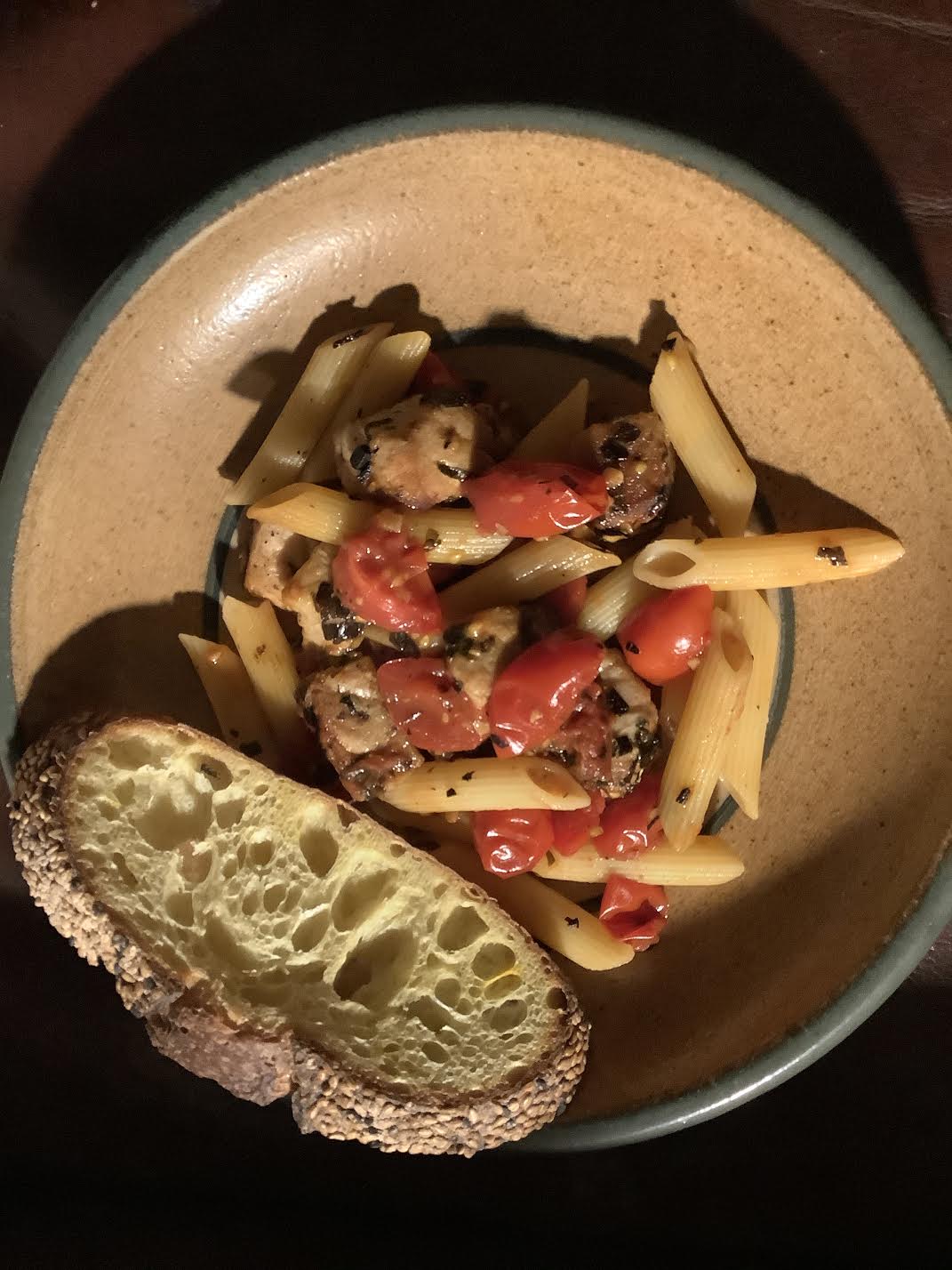
For years we searched for the right foods to eat during Lent. We wanted foods that were connected to the meaning of the season; foods that were good to eat yet not so fancy that we seemed to be ‘living it up’; foods that had a nod to the traditional austerity typical of the 6-week period of religious contemplation. One of the thorny decisions concerned Ash Wednesday, the beginning of Lent, which is a solemn day after the giddiness of Carnival before it. At last we decided: a breadcrumb pasta from the Puglia Region of Italy. The idea of dressing your noodles with a sauce of breadcrumbs struck just the right note of culinary penance. No meat, no butter: this is the perfect choice to begin Lent.

The ingredients are very simple: 3 oz pasta, 1/3 cup crumbs from day-old bread [we use whole grain for flavor and fiber], 2 Tbsp olive oil, 1 Tbsp sliced garlic, oregano, salt, 6 olives, 1 oz spinach leaves, grated pecorino cheese.

These ingredients are enough for two servings.

You will need a mise-en-place, this cools so quickly! Once you have prepared your mise-en-place, start cooking the pasta. Cook the pasta for about 4 minutes, then turn off the heat with the pasta still in the water. Stack the spinach leaves and cut them cross-wise [chiffonade]. Pit the olives and cut each into four pieces. Heat a cast iron skillet at medium heat and pour in the oil. When the oil is hot, add the garlic and briefly cook it until pale yet fragrant. Add the crumbs and stir into the oil. Add the oregano and take off the heat. Stir. Turn down the heat, then put the pan back on it. Cook, stirring until the crumbs are crispy. Take off heat again and stir in the olives. By now the pasta is ready. Using a slotted spoon, remove it from the water and put it in the pan with the crumbs. The trick is to incorporate a little of the noodle-water into the dish. Stir to mix. Add two pinches of salt and the sliced spinach. Toss it all together, then add the grated cheese. Plate. This took such a short amount of time that I barely called out a pre-dinner alert, than it was time to plate up.

Such an unusual combination of flavors and textures!

This is not a meal for a low-carb menu. But then, this is a Slow Day, so we don’t need to count calories. We eat this one time each year and we enjoy it.

Slow Day: Grilled Vegetable Pasta

People who are new to Fasting often pose the questions: “Can I really eat ‘anything I want’ on a Slow Day?” and “What should I eat on Slow Days?” To answer those questions, I have decided to add some blog posts to show some of the foods we eat on what the world calls NFDs [non-fast days] but which, in our house, we call ‘Slow Days.’ This feature will appear sporadically. 

Now for the answers. Can you really eat ANYTHING you want on a Slow Day? Not really. If you eat too many calories every Slow Day, you will not lose weight. There are many questions asked on the FastDiet Forum which attest to that. Once in a while your can splurge, as long as it isn’t everyday. For what to eat on Slow Days, Dr. Mosley recommends a Mediterranean Diet. As for how we eat, an example follows.

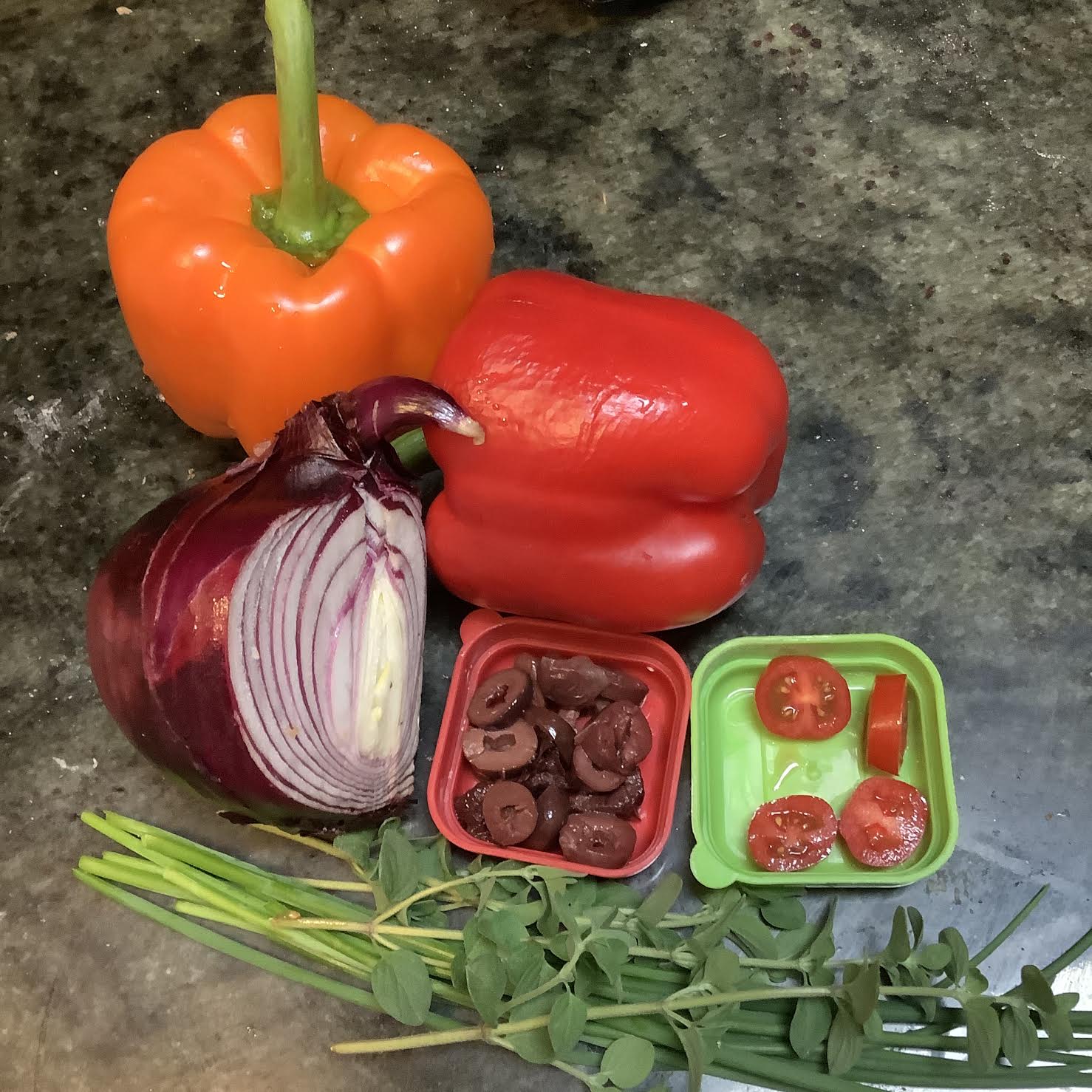
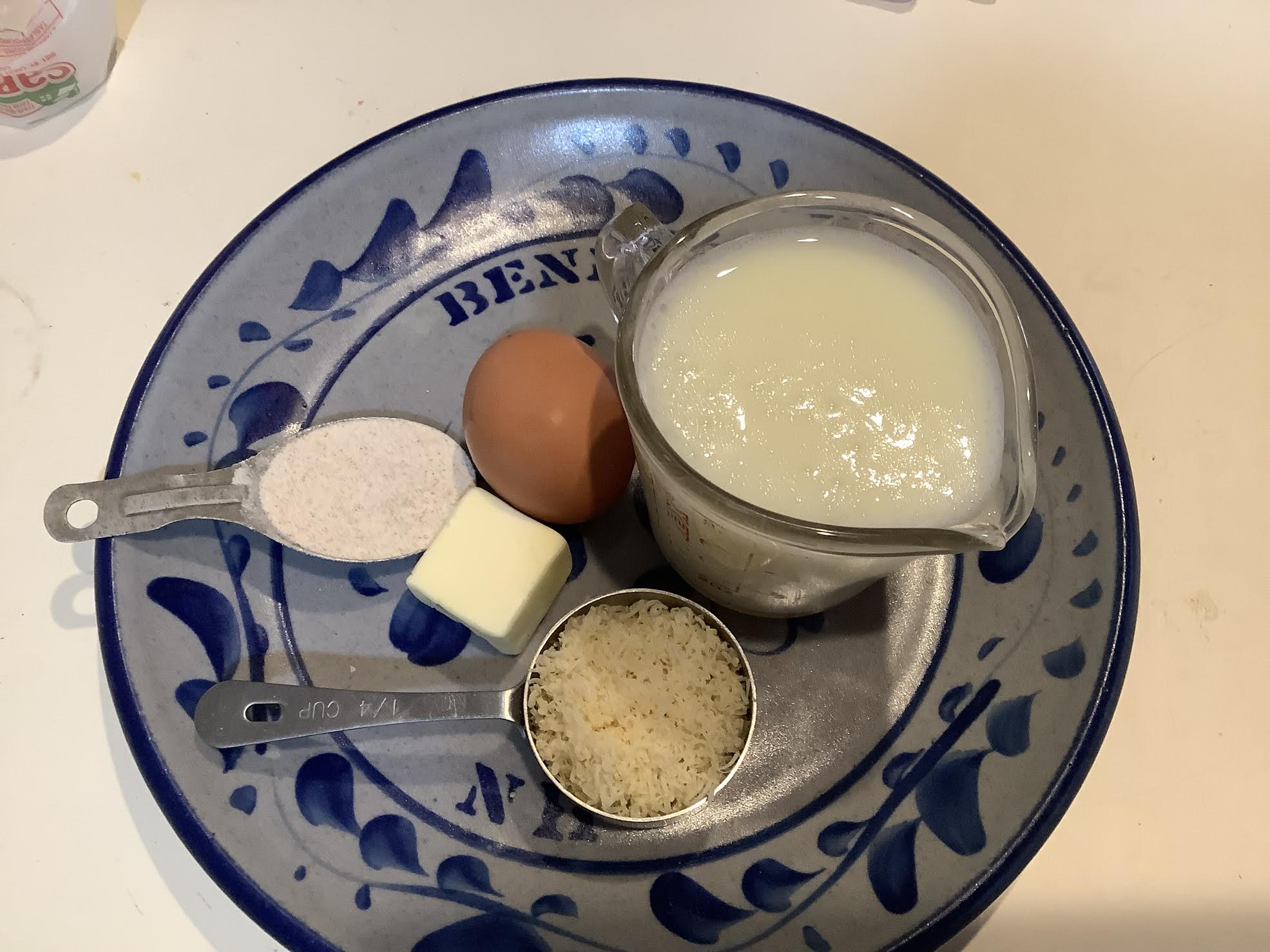
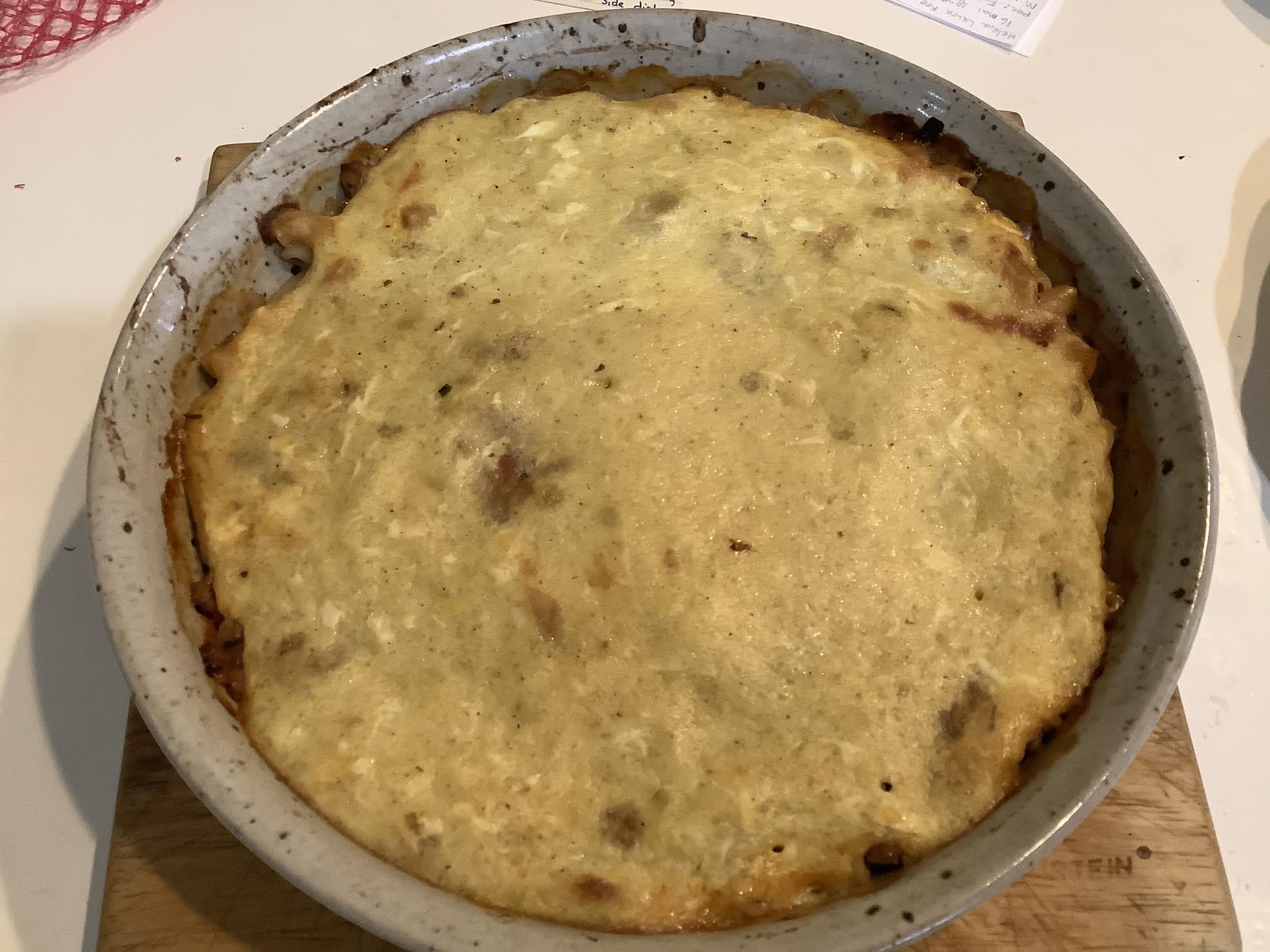
Sometimes, there is a crowd to feed and that’s when we turn to one of our stand-by meals: Grilled Vegetable Pasta with Sausage. The vegetables include: zucchini/summer squash, yellow or orange sweet peppers, red onion, and or other colorful fresh items of the same texture. Choose any pasta you wish — 2 ounces by weight per person. Bratwurst or Italian sausage will do just fine. Make 1-1/2 cups of your favorite white sauce and add 1/2 cup of grated Parmesan cheese.

The colors of the vegetables are echoed in the colorful pasta.

The sausages are grilled, then sliced. The vegetables are sliced or cut into chunks, as you prefer. In a grill basket, toss and shake the vegetables over hot coals until softer and starting to blacken, then empty into a large bowl. While one person is doing the grilling, the other preparing the cheese sauce. SLOWLY, over low heat. [Sometimes (often), my sauce ‘breaks’ and becomes clotted. The solution is to whisk flour into the milk to bind the sauce back together.] Cook the pasta and combine everything in the bowl with the vegetables. Easy to prepare and always a hit.

Often, seconds helpings are the norm.

I. F.

How this Fast Diet Lifestyle works: Eat these meals tomorrow, for a calorie total of less than 600. On another day this week, eat the meals from a different post, another day of eating 600 calories or less. Eat sensibly the other days of the week. That’s it. Simple way to lose weight and be healthier.

I.F. could describe the “Laconic answer”. [Back Story: The Greek city-state of Laconia, famous for the citizens’ terseness of speech, was besieged by an invading army. Their general sent a message: “If we take your city, we will kill every man, woman, and child. You had better surrender now.” Answered the head man of the city: “IF.” Laconia was not defeated.] Or, in this modern era, it could stand for “Intermittent Fasting.” What is that, you ask…. There are several ways to answer that. Over-all, intermittent fasting is a way to become more healthy by losing weight and giving your body time to restore itself in a sort of resting phase that occurs during a time of limited calorie intake. Version 1: You abstain from all eating, but are free to consume all the water you want, for two to four days each and every month. Sometimes an electrolyte liquid is consumed during the fast. Version 2: You abstain from all eating, but are free to consume all the water/broth/black coffee/black tea you want for one full day — from the time you wake up to the time you go to sleep again. This is done once or twice within a week. Version 3: You do all of your eating within an 8-hour window — say, 8 am to 4 pm. For the other 16 hours of a day, you may consume only water. This is called 16:8 Fasting. Version 4: Every other day, you consume a limited number of calories — from 500 to 1000 — while on the alternate days you eat as you please. Also called “Alternative Day Fasting.” Version 5: Two days each week, you consume 500-600 calories, eating as you please [but wisely] on the other days. Also called “5:2 Diet,” as developed by Dr. Michael Mosley. This is the eating plan that Dear Husband and I have followed for 6+ years with very good results.

Whichever method you choose, the goal is to train yourself to eat more moderately. If you never learn that, you will go off any diet and your weight will zoom up again. What’s the point of that?? People who do not get a handle on their over-eating are doomed to diet-and-gain over and over again. We view our eating plan as a Lifestyle, something that fits into the way we live and that we are happy to continue every week for the rest of our lives. Following are some of the meals we eat on a Fast Day.

B-T-O Bake: 127 calories 6 g fat 1 g fiber 9 g protein 8.6 g carbs [7.5 g Complex] 66 mg Calcium  NB: The food values shown are for the egg bake and the fruit, not for the optional beverages.  PB GF  This bake has flavor and to spare. Delicious way to use left-over broccoli.

1 two-oz egg 1 Tbsp low-fat cottage cheese 1 oz diced tomato, drained ¾ tsp Parmesan cheese ½ oz cooked broccoli 1 Kalamata olive 1 plum OR 4 cherries OR 4 oz strawberries Optional: blackish coffee [53 calories] or blackish tea or mocha cafe au lait [65 calories] or lemon in hot water  Optional: 5-6 oz fruit smoothie or berry-yogurt smoothie  [88 calories]

Set the toaster oven at 350 F. Dice the broccoli and the olive. Stir the cheeses together. Spritz an oven-safe container with non-stick spray. Whisk the egg, then whisk in the cheeses. Distribute the tomato, olive, and broccoli over the bottom of the baking dish. Whisk the eggs once more and pour into the baking dish. Bake for 12-15 minutes. Portion the fruit and prepare the beverages of your choice. Now that’s a breakfast!

Tortellini w/ Black Kale:  209 calories 9 g fat 3.5 g fiber 10 g protein 24 g carbs [7.4 g Complex] 231 mg Calcium PB Packaged, dried tortellini is a handy item to have in the pantry. It makes for a fine Tuscan meal when pared with Black Kale. The recipe is from ‘thekitchn‘  NB: I used the recipe below for the kale as two servings, when paired with the pasta. But the calories are so low that you could use it as one serving. 

27 g dried cheese/spinach tortellini [Barilla brand is good] 3 oz diced tomato 2 Tbsp grated Parmesan cheese PLUS ingredients shown below for the kale.

For the Kale:

3 oz black kaleUse your hands to pull the kale leaves from their stems. Coarsely chop the leaves. Rinse them, but do not dry.
1 tsp olive oil
2 cloves garlic pinch red pepper flakes
Heat the oil in large, wide, high-sided sauté pan over medium heat until shimmering. Add the garlic and red pepper flakes and cook, stirring, until fragrant, about 1 minute (do not let the garlic brown).
¼ tsp kosher salt pinch ground pepper Add the kale, stirring as it starts to wilt. Stir in the salt and pepper. Cover and cook, stirring occasionally, until the kale is just tender, about 5 minutes.
2 tsp Lemon juiceRemove from the heat, stir in the lemon juice, and serve.

For the meal: Cook the pasta in boiling salted water for 9-11 minutes, then drain. Combine with the diced tomatoes and Parmesan. Plate the pasta surrounded by the kale.

me-me-me-me

How this Fast Diet Lifestyle works: Eat these meals tomorrow, for a calorie total of less than 600. On another day this week, eat the meals from a different post, another day of eating 600 calories or less. Eat sensibly the other days of the week. That’s it. Simple way to lose weight and be healthier.

Tomorrow will be my birthday, and this blog is all about ME. I know a woman who describes people who are vain or show-offy as ‘Opera Singers’ – – all ‘me-me-me’. So this will be my opera singer day as I talk about some of my food favorites. There are people who say, “I couldn’t diet because I love food too much. You who diet obviously don’t like food.” What I don’t like is eating when I’m not hungry. What’s the point? No food tastes as delicious as when you are hungry! I like foods that are savory; and foods that are sweet; and foods that are easy to prepare; and foods that take some finagling. One of the reasons that Dear Husband and I look forward to Fast Days is that the food will be varied and delicious. [Yes, I’m bragging again.]

Fasting works. It is a break from high-on-the-hog eating and a chance to re-set the bathroom scale to a more reasonable number. What foods would I choose if my natal day fell on a Fast Day? A strawberry-filled crepe at breakfast seems so elegant, yet is simple to pull off. The fish and vegetables for dinner is a meal SOOOO easy and yet really delicious. Through Fasting, I have maintained my average weight at my Target for over 4 years. If you can say the same, good for you! If you are not where you want your weight to be, try Fasting.

Strawberry Crepe: 193 calories 7.5 g fat 2 g fiber 9.5 g protein 23 g carbs [8 g Complex] 211 mg Calcium  NB: Food values given are for the plated foods only, and do not include the optional beveragePB  Isn’t it a treat to enjoy ‘Strawberries & Cream’ once in a while? If you haven’t made the crepes already, this is a good reason to try them. Mine were ready in the freezer.

1 sweet crepe*** 2 Tbsp ricotta cheese 3 Tbsp vanilla low-fat yogurt 3 oz strawberries, sliced and put in a sieve over a bowl, especially if frozen 1 slice uncured bacon or 1 slice ‘Canadian’ bacon   Optional: blackish coffee [53 calories] or blackish tea or mocha cafe au lait [65 calories]  NO SMOOTHIE 

Stir the ricotta and yogurt together. Add most of the berries, saving some for garnish. If there is a lot of juice, cook it down slowly to make a little syrup. Cook the bacon. Place the crepe on the plate and spoon the cream filling onto it. Fold over the crepe and top with the extra berries and syrup. Plate with the bacon and prepare your hot beverage of choice.

***CREPES, SWEETmakes 16 eight-inch crepes  each = 55 calories 0.7 g fat 0.2 g fiber 2.7 g protein 9 g carbs [0 g Complex] 39 mg Calcium 154 g all-purpose flour 14 fl oz milk [416 g] 2 tsp vanilla sugar 2 two-oz eggs

Whisk the flour and sugar together. Add the milk and whisk until combined. Add the eggs one at a time. Whisk vigorously until the batter runs off the whisk in ropes. The batter can rest for up to an hour. Heat a small cast-iron pan or ceramic saute pan.  Lightly spritz with oil, then wipe out the pan. Dip a ¼ cup measure into the batter and let the extra drain off. Grasp the handle of the cook pan with one hand as you slowly pour the batter into the center of the pan. Tilt the pan in a swirling pattern to let the batter form a circle roughly 6” in diameter. Don’t get hung up on perfectly round or perfectly flat. Watch the crepe cook and look to see when the edges start to dry and curl a bit. Using a heat-resistant but non-scratching tool [I use my fingers], lift the crepe and turn it over. Cook the other side until done. Time will vary, depending on the heat of your pan. Lift out the cooked crepe, put it aside, and cook the next one. HINT: if storing them for later today or tomorrow, let them cool on a tea towel, then stack and freeze in a plastic bag. 

Arctic Char with Peas, 3 ways: Arctic Char is a member of the Salmon Family which can be both sustainably fished in the wild and farm-raised. It is delicious, too. There are three presentations given: two are ridiculously easy, the other slightly more complex. All are great.

Version I: 263 calories 8 g fat 3 g fiber 28 g protein 10 g carbs [10 g Complex] 25 mg Calcium  PB GF   4 oz arctic char fillets ½ cup green ‘English’ peas, fresh or frozen Salt and pepper the fish and bake at 400 F. for 10 minutes/inch of thickness or grill for 4 minutes/side. Cook the peas and serve over/around the fish.

Version II: 247 calories 8.5 g fat 2 g fiber 26.5 g protein 7.3 g carbs [5.5 g Complex] 74.7 mg Calcium   PB GF   4 oz arctic char fillets ¼ cup watercress sauce [see SIDEKICKS II oct 4, 2017 ] 1 cup snow peas, stems and strings removed Salt and pepper the fish. Bake at 400 F. for 10 minutes/ inch of thickness or grill for 4 minutes/side. Warm the watercress sauce and serve over the fish. Cook the peas and plate. 

Version III: 274 calories 7.4 g fat 8 g fiber 25 g protein 16.4 g carbs [all Complex] 54.5 mg Calcium   PB GF  3 oz arctic char ¼ cup edamame [soy beans] ¼ cup ‘English’ peas ½ cup snow peas Remove the stems and strings from the snow peas. Salt and pepper the fish and bake at 400 F. for 10 minutes/ inch of thickness or grill for 4 minutes/side. Meanwhile, cook the peas and edamame according to package directions. Plate the fish and surround it with beautiful green peas.

Ingredients for next week: Breakfast, single portion for Monday ……… single portion for Thursday:

1.5 two-oz eggTWO BREAKFAST MENUS:
anchovies3%-fat ham + sourdough rye bread 
tomatoHermelin or Camembert cheese
melon or mangoyellow plums
Optional smoothieoptional smoothie
optional hot beverageoptional hot beverage

Dinner, single portion for Monday: …….. single portion for Thursday:

chicken meat + stock + stock cubes [bouillion cubes]THIS IS A BREAKFAST MENU
canned creamed corn + scallions1 two-oz egg + chèvre cheese
sesame oil + corn starch + gingerspinach, frozen or pre-cooked
egg white + 1 oz ham slicelemon-dill seasoning + apple/pear
Sparkling wateroptional beverages