Slow Days: Pasta DIY

People who are new to Fasting often pose the questions: “Can I really eat ‘anything I want’ on a Slow Day?” and “What should I eat on Slow Days?” To answer those questions, I have decided to add some blog posts to show some of the foods we eat on what the world calls NFDs [non-fast days] but which, in our house, we call ‘Slow Days.’ This feature will appear sporadically. 

Now for the answers. Can you really eat ANYTHING you want on a Slow Day? Not really. If you eat too many calories every Slow Day, you will not lose weight. There are many questions asked on the FastDiet Forum which attest to that. Once in a while you can splurge, as long as it isn’t everyday. For what to eat on Slow Days, Dr. Mosley recommends a Mediterranean Diet. As for how we eat, an example follows.

The dough has been mixed

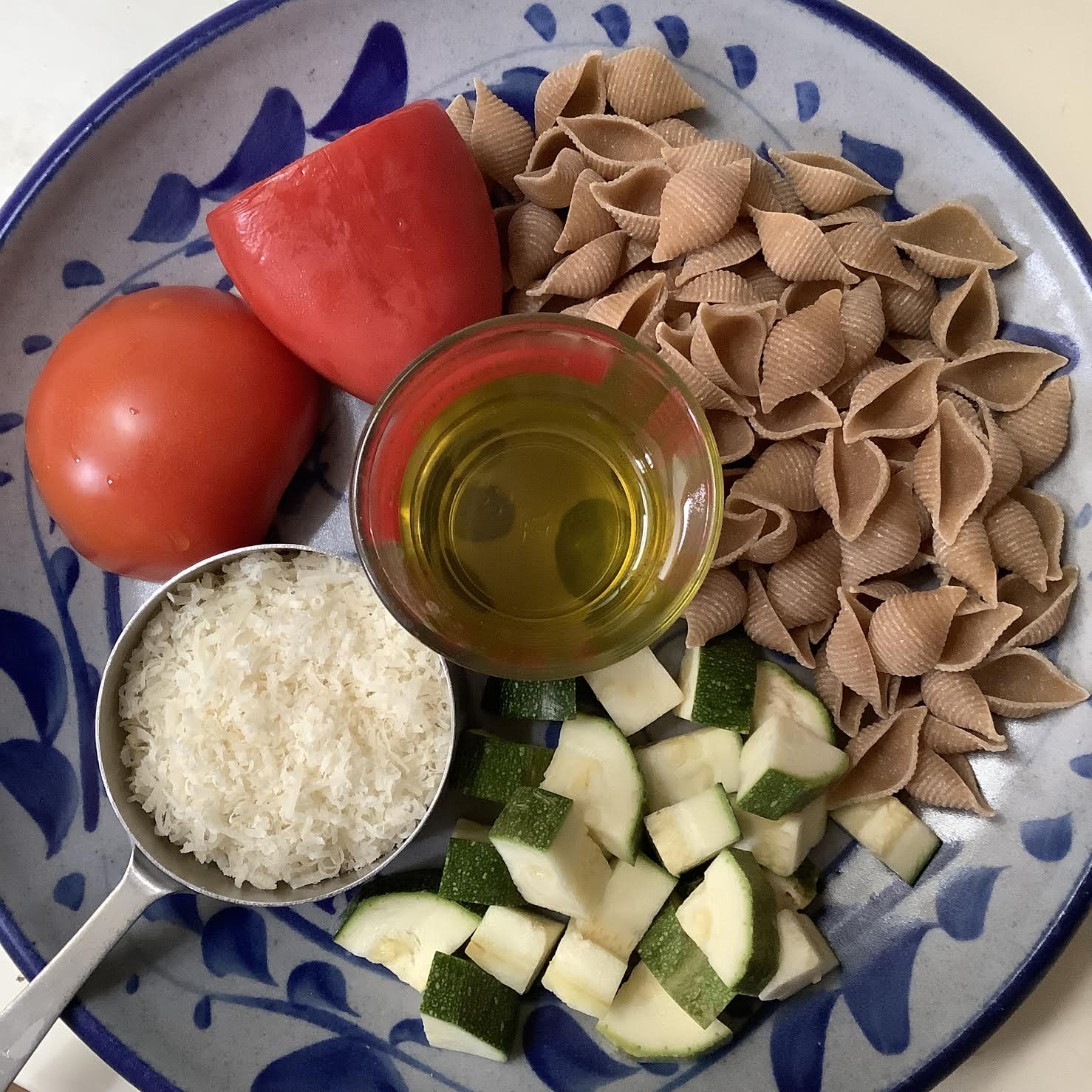
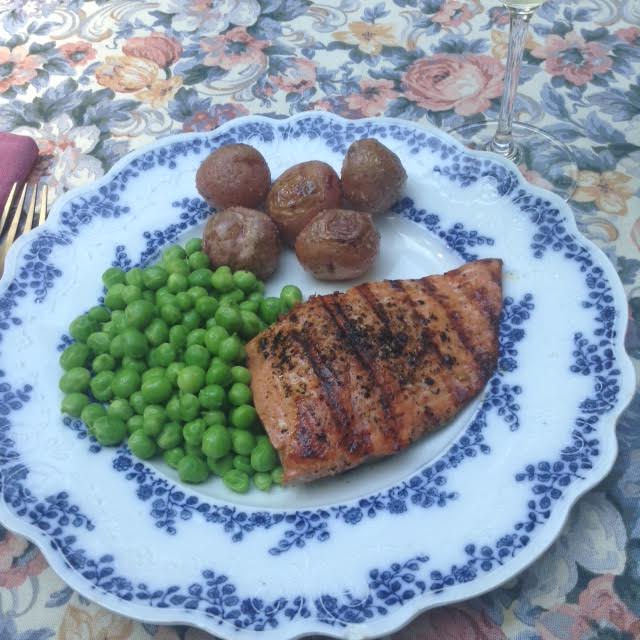
Once a week, we have a meal involving pasta. And, yes, for those of you in the US who are from New England, the day we eat pasta is Wednesday. Many years ago, we bought a pasta machine. We were quite self-sufficient in those days, so making our own noodles seemed just right. It was fun, but then I returned to work and the machine sat in the drawer. Nowadays, it is back to DIY, and with lots of our own eggs, fresh pasta is on the menu again. There are two basic recipes: all-purpose flour + eggs OR semolina flour with water. I decided to combine them: 1 cup semolina flour, 1 cup white whole wheat flour, 1 two-ounce egg [US Large], and some water. These are combined in a food processor or by hand, adding enough water to make a rough ball of slightly moist dough, like Sugar Cookie Dough.

Kneading and rolling it out is the job of the pasta machine. First the dough goes through the rollers at “1,” which is the widest setting. It is folded in half, and rolled again. Every time the dough goes through, it holds together better and becomes smoother. Then you gradually set the rollers at higher and higher numbers: 1 to 2, 2 to 4. Each time, the dough becomes thinner, longer, and more supple. Cut the lo-o-ong dough strips cross-wise so that it is easier to handle. Eventually you reach the setting 6. You could stop there or make it really thin at 7. Six is good for noodles, 7 is better for filled pasta such as ravioli or tortellini.

Now it is time to cut the dough into noodles. You could do it by hand, or by machine. Our machine has two choices: thin like spaghetti, or wider like fettuccini. Working with the smaller dough rectangles, one passes the dough through the cutters. Catch it coming out the other side and hang it up to dry. You can use it fresh, and it is delicious. Cook only 1-2 minutes and bear in mind that 2 oz dry pasta [one serving], is the equivalent of 5 oz fresh pasta. While the water is boiling and the sauce is heating, the pasta is drying slightly, which makes it easier to handle. What I don’t use for today’s meal is dried thoroughly and stored, air-tight, for use another time.

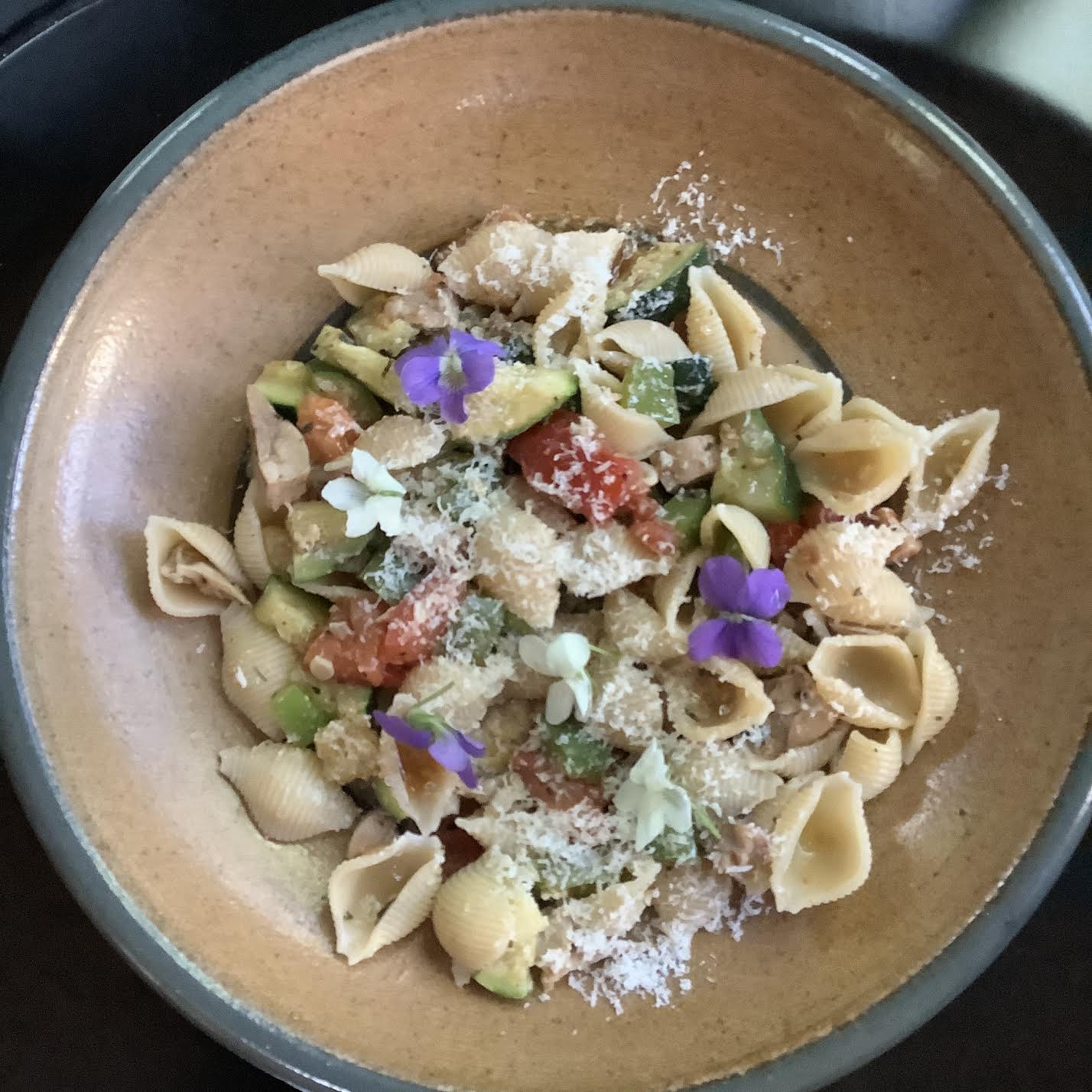
Would I make pasta every week? No, but it is great for special meals. Does pasta make a meal ‘Mediterranean’? Not automatically. How healthy a pasta dish is depends on what is on top of the pasta. Is Pasta a no-no for Fast Day meals? Yes and no. Chicken Tetrazzini, Tortellini with Black Kale, these are some of the Fast meals I’ve posted using pasta as an ingredient. Just remember that a ‘serving’ of dried pasta, of any shape, is 2 ounces. On a Slow Day, knock that down to 1 or 1-1/2 ounces and you can hedge your bet. Our pasta is made even healthier by substituting white whole wheat flour for the all-purpose flour, which adds more protein and more fiber. It is delicious and worth the effort that you put into it.

Foods in Wrappers, III

How this Fast Diet Lifestyle works: Eat these meals tomorrow, for a calorie total of less than 600. On another day this week, eat the meals from a different post, another day of eating 600 calories or less. Eat sensibly the other days of the week. That’s it. Simple way to lose weight and be healthier.

I am fascinated by similarities among diverse cuisines from around the world. In geology, a layer of sedimentary rock can stretch for hundreds of miles. The source material was the same, but as it was deposited, small variations creep in so that in some cases, the further you follow that stratum, the more it looks like a completely different rock. Around the world there are meals made of food in wrappers. All with different fillings, all with different seasonings, all with different wrappings: yet all those creative cooks had a similar inspiration: let’s take this and wrap it in an edible envelope! Today, we will look at four far-flung examples: from France, India, Mexico, and Italy.

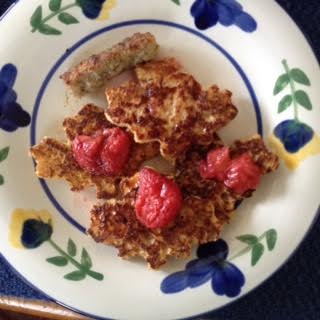
Egg-Mushroom Galette/Crepe:  153 calories  6 g fat 2 g fiber 9 g protein 16.8 g carbs [11.3 g Complex] 39 mg Calcium  NB: The food values given above are for the egg crepe and fruit only, not the optional beveragesPB This is yummy. The eggs are creamy, the mushrooms are earthy, and the crepe is nutty. See “Jean Baptiste” for recipe details.

Momos with Chicken: 222 calories 1.5 g fat 2 g fiber 15.4 g protein 30 g carbs [6.5 g Complex Carbs] 58 mg Calcium  PB  Steamed momos are one of the most popular street foods of Northern India, due to the influence of neighboring Nepal and the fact that they are delicious. Try them and you will agree. Looks long and complex, but it is do-able. See “Deli & Delhi” for preparation details.

Quesadillas : 295 cal 9 g fat 2.7 g fiber 19 g protein 31.4 g carb 211.5 mg Calcium  GF These are great. We return to this recipe often for a quick, enjoyable meal. And you can prepare and cook them ahead! Wrap in foil, and reheat them later. Thanks to Suzy M. for that tip. See For Gunn & Grommet for recipe details.

Tortellini with Black Kale:  209 calories 9 g fat 3.5 g fiber 10 g protein 24 g carbs [7.4 g Complex] 231 mg Calcium  PB  Packaged, dried tortellini is a handy item to have in the pantry. It makes for a fine Tuscan meal when pared with Black Kale. ‘Black Kale’ is also called ‘Dinosaur Kale’ or ‘Tuscan Kale.’ The recipe is from ‘thekitchn.’  Another very simple meal with a lot of appeal. An ounce of bread could be added while keeping the calories in line. See S.A.D. for recipe details.

Ingredients for next week: Breakfast, single portion for Monday ……… single portion for Thursday:

1 two-oz egg + apricot1 two-oz eggs  + blueberries
prepared horseradishricotta cheese + onion
romano cheese + chivesmozzarella cheese
WisPride or Kraft Olde English CheddarJarlsberg cheese + herbs
Optional smoothieoptional smoothie
optional hot beverageoptional hot beverage

Dinner, single portion for Monday: …….. single portion for Thursday:

left over roast or boiled beefbeef or pork or chicken meat
mustard + cornicionechickpea ragout
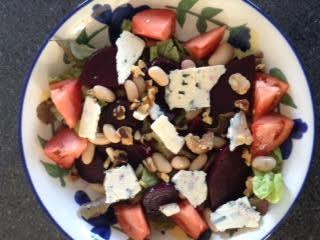
beets, fresh or pickled
Sparkling waterSparkling water

Slow Days: Election Cake

People who are new to Fasting often pose the questions: “Can I really eat ‘anything I want’ on a Slow Day?” and “What should I eat on Slow Days?” To answer those questions, I have decided to add some blog posts to show some of the foods we eat on what the world calls NFDs [non-fast days] but which, in our house, we call ‘Slow Days.’ This feature will appear sporadically. 

Now for the answers. Can you really eat ANYTHING you want on a Slow Day? Not really. If you eat too many calories every Slow Day, you will not lose weight. There are many questions asked on the FastDiet Forum which attest to that. Once in a while you can splurge, as long as it isn’t everyday. For what to eat on Slow Days, Dr. Mosley recommends a Mediterranean Diet. As for how we eat, an example follows.

At last it is Presidential Election Day in the United States of America. Or, should I say, the last day to vote in this unusual election season. It used to be that all votes were cast during one day, all around the nation. One day for voting. The counting took longer, depending on how difficult the roads were between a given town and the state capital. That was back in the dirt-roads-and-horseback days. Nowadays, vote counts are sent to state capitals by phone. But Election Day has never been the end of the story — the votes must be ‘certified’ in each state, which can take days if there is a recount. Then it is up to the Electoral College to vote, with their selection of the winner on December 14. That’s a long time from today!

Let’s have some cake today — one with a long history and a tradition of being a ‘good keeper’: Election Cake. In Colonial Days and the early days of the Republic, popular cakes were made with dried fruits. If the fruit or the cake was suffused in ‘strong spirits,’ it would keep for a long time, meaning less baking for the housewife. In Connecticut, there was the tradition of a cake for Election Day. It could be baked days in advance, then put in the picnic basket for the day-long trip to the village center to be served there at lunch. My mother said that the alcohol in the cake was because sale of booze was banned on Election Day. Maybe not, but getting voters drunk was an early form of voter coercion, hence the ban on alcohol sales. Last March, I baked 2 loaves of this cake, using sourdough [since we all have plenty of that these days, right?]. We ate some on New Hampshire’s Primary Day and the other loaf went to the freezer. We had some in September for state primary voting and the remainder this morning, just to remind ourselves that it was Election Day. We voted Absentee and turned in our ballots to the Town Clerk weeks ago. Kudos to Deb and John and the election team in Bennington.

Early Day 1 2 c flour  ½ cup + 2 Tbsp buttermilk  ½ cup sourdough, fed and bubbly 1-2 T water, as neededIn a large bowl combine the flour, buttermilk, and sourdough starter until you get a thick dough.  Add water if necessary. Form the dough into a round ball, place it in a bowl and allow it to rest, covered, for 8-12 hours
Evening Day 1 1 stick butter ½ cup + 2 Tbsp sugar 2 Tbsp molasses 1.5 tsp white wine OR Rum 1 Tbsp brandyIn a medium bowl, beat the butter, sugar, molasses, wine, and brandy together until well combined and fluffy.
1 egg 1.5 tsp cinnamon 1.5 tsp ground coriander ¼ tsp allspice ½ tsp ground nutmegStir in the egg and the spices.
Add the yeast dough to this mixture and beat until the mixture resembles that of a thick cake batter.
½ cup prunes, chopped ½ cup raisins/ cranberries/ cherries/ currents/ apricotsStir in dried fruit. Pour the cake into a greased “bundt pan (you could also use a springform or dutch oven)”. I used small loaf pans = two pans, 8x4x3”
Cover the pans with a clean dish cloth and allow to rise until it is almost doubled in bulk (about 1.5 -2 hours) Preheat your oven to 375F. Bake for 45 minutes to 1 hour, or until a toothpick inserted in the cake comes out clean.
This is the recipe I used, slightly adapted from the 
Nourished Kitchen.
Here is Fannie Farmer‘s recipe — lots of whiskey! In my handwriting, amounts for smaller batches.

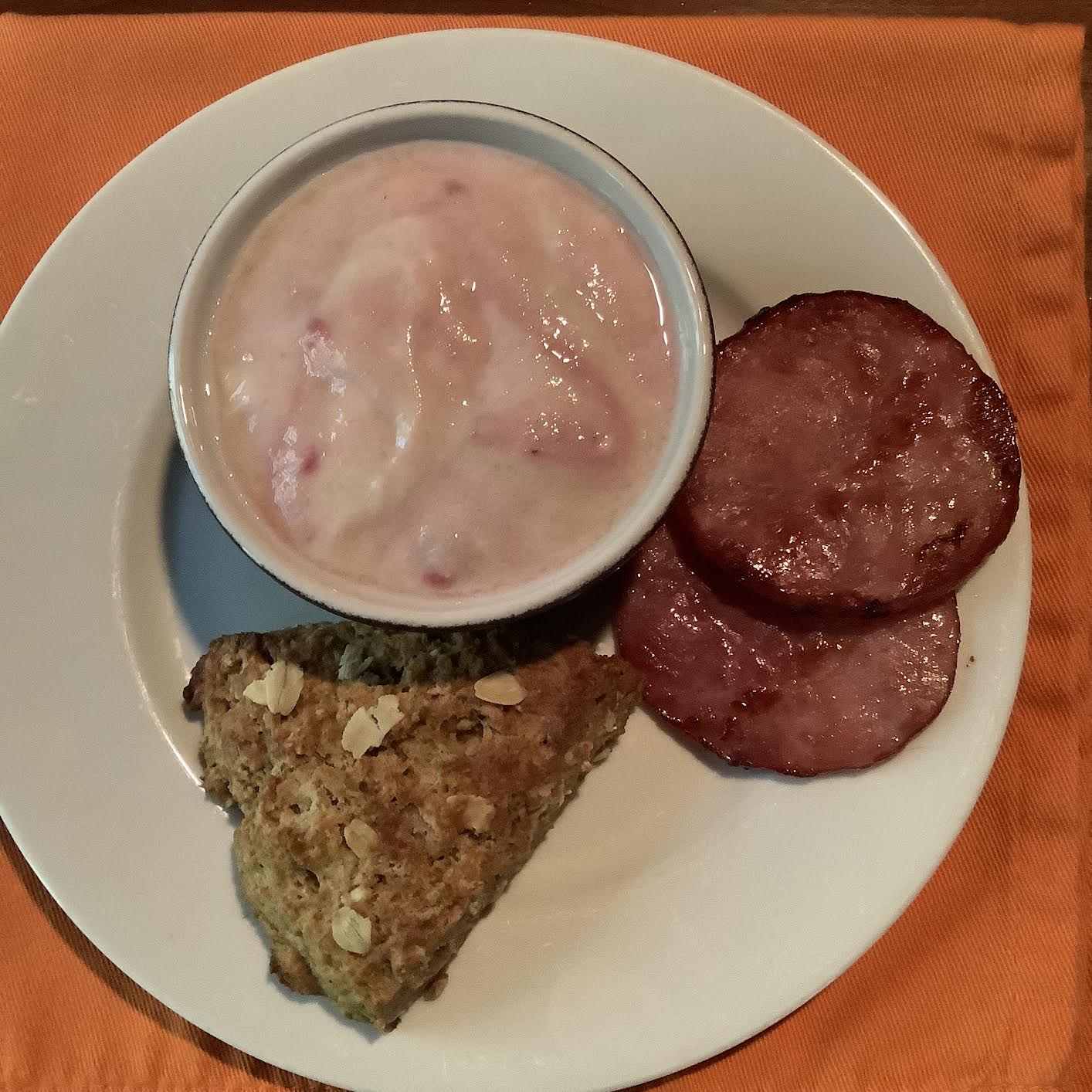
We like to slice it and toast it lightly to serve at breakfast. A nice treat to mark the passing of the political year.

Election Cake served warm with fruit yogurt, bacon, apple cider, and frothy mocha cafe au lait: this is a breakfast to make one optimistic about an election outcome.

Slow Days: The Tale of a Chicken.

People who are new to Fasting often pose the questions: “Can I really eat ‘anything I want’ on a Slow Day?” and “What should I eat on Slow Days?” To answer those questions, I have decided to add some blog posts to show some of the foods we eat on what the world calls NFDs [non-fast days] but which, in our house, we call ‘Slow Days.’ This feature will appear sporadically. 

Now for the answers. Can you really eat ANYTHING you want on a Slow Day? Not really. If you eat too many calories every Slow Day, you will not lose weight. There are many questions asked on the FastDiet Forum which attest to that. Once in a while you can splurge, as long as it isn’t everyday. For what to eat on Slow Days, Dr. Mosley recommends a Mediterranean Diet. As for how we eat, an example follows.

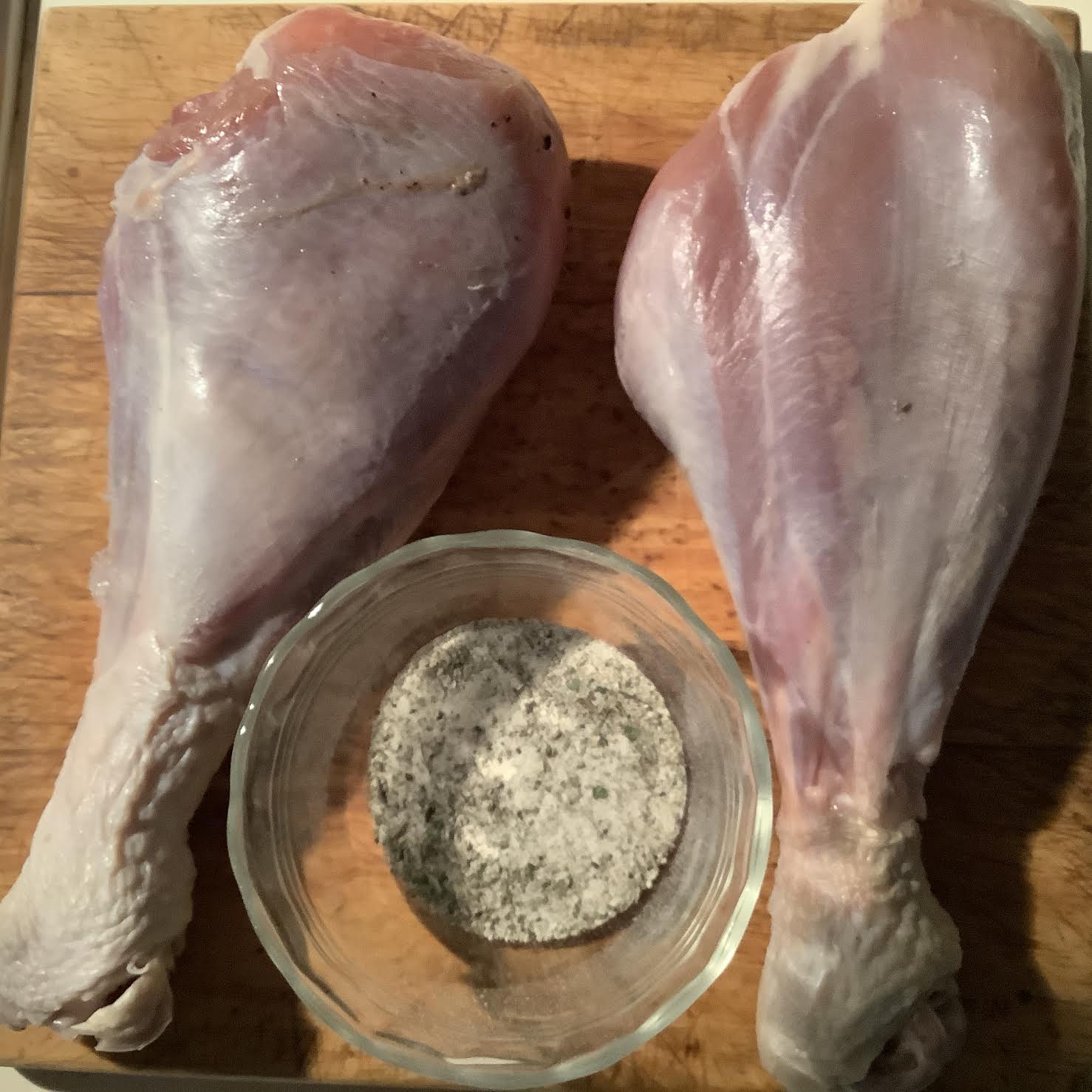
When I was growing up, my mother served chicken for dinner every Sunday. It was delicious. When Dear Husband and I moved to the country [our dirt road looks much more ‘suburban’ after 40 years], we decided to raise chickens: for eggs and for meat. Since then, we have always had a supply of chicken: whole roasters and parts. We are very lucky to be so well fed. When our sons were in residence, we would eat chicken every other Sunday: roasted and served with mashed potatoes, gravy, and a side of peas. Classic. And then there were left-overs. Now that the boys are off on their own, a chicken goes a lot farther. Here is the tale of one chicken. [no, we don’t give them names nor are they our pets]

We’ll draw the veil of secrecy between chicken in-the-straw and chicken in the freezer. Dear Husband roasts a darned good chicken, with his herb and spice flavorings, and the carrots and onion in the cavity. Once it has been roasted and carved, one is left with a carcass that still has plenty of meat.

The onions and carrots were roasted inside the chicken.

Savory Roll, a recipe from the Fannie Farmer Cookbook, is a favorite use for cooked chicken. One and a half cups of shredded chicken meat, along with the vegetables, plus some gravy or stock for moistening, some dark leafy greens, chutney, egg, and bread crumbs: all goes into the Food Processor to produce 2 cups of ground filling.

clockwise from left: onion, chicken shreds, egg, spinach, crumbs, carrots, and chutney in center.

A pie crust or biscuit dough is then rolled out, and the filling placed down the middle of the dough, log-shaped. The log of filling is then encased in the dough, sealing the edges.

This roll provided 12 slices.

Baked in a hot oven until the dough is brown and cooked, the Savory Roll is now done. This time, I sliced it and served it like a ‘country pate’, with mustard and side vegetables. When encased in biscuit dough, it can be napped with gravy.

What’s next? Chicken stock [some call it ‘bone broth’] from cooking the carcass in seasoned water until, as Julia Child would say, ‘It has given its all.’ I then pressure can it to store in the pantry until it is time to make soups.

How to Stay

How this Fast Diet Lifestyle works: Eat these meals tomorrow, for a calorie total of less than 600. On another day this week, eat the meals from a different post, another day of eating 600 calories or less. Eat sensibly the other days of the week. That’s it. Simple way to lose weight and be healthier.

Starting any new behavior is easy — staying on it is more difficult. Having gone through this myself, I have some tips for you. 1] If you haven’t done so, watch Michael Mosley’s TV presentation Eat, Fast, Live Longer. That’s what motivated us to get on board. 2] We talked about planning and purchasing ahead, so continue to do that. Make it easy for yourself to follow the diet. 3] Make the meal special. On my Home Page is a photo of a demitasse cup. It is the only one I have and I think it is very pretty. I use it on Fast Days only, filling it from a small pitcher of mocha cafe au lait. Make your Fast Meals an occasion — use the good dishes; put the sparkling water in a nice glass with a twist of lemon. 4] Slow down your meals. The little demitasse cup means that I have to stop my breakfast once in a while to refill the cup. Wait until you have swallowed your food before you cut your next mouth-full. 5] Set goals by the clock. From breakfast to noon, put no calories in your mouth. Then set the timer for two hours, and don’t eat during that time. When it rings, set it for another two hours. Its a mind-game, but it works. 6] Distract yourself. Plan projects for Fast Days which will keep you focused on the task for 2-3 hours, so you will think less about food. 7] Think about tomorrow, when you will weigh less and you can eat more freely. Rather than think “I can’t eat that today,” you can think, “I can eat that tomorrow.”

Today’s menus are typical for us on a Thursday: a savory scramble and a hearty soup. The nice thing about soup is that you get to store future meals in the freezer.

Capicola ScrOmelette:  147 calories 8 g fat 1.0 g fiber 13.8 g protein 7.5 g carbs [6.6 g Complex] 72 mg Calcium  NB: Food values shown are for the ScrOmelette and fruit only, and do not include the optional beverages.  GF Capicola is a dried ham which is full of flavor yet low in fat and calories. It goes very well with eggs.  

1½ two-oz eggs  HINT: If you are serving one person, crack three 2-oz eggs into a small bowl or glass measuring cup. Whip up those eggs and pour half of their volume into a jar with a lid and put it in the ‘fridge for next week.   1/3 oz uncured capicola ham, sliced thinly large pinch oregano 1.7 oz apple   Optional: blackish coffee [53 calories] or blackish tea or mocha cafe au lait [65 calories] or lemon in hot water   Optional: 5 oz fruit smoothie or berry-yogurt smoothie  [88 calories]

Chop the capicola and slice the apple. Beat the eggs with the oregano. Heat a non-stick pan and spritz it with non-stick cooking spray. Put the capicola in the pan to heat very briefly, then pour in the eggs. Scramble or cook as you would an omelette. Serve with the beverages of your choice.

Czech Garlic Soup Česneková polévka: 194 calories 4.7 g fat 4 g fiber 9 g protein 27 g carbs [18.4 g Complex] 84 mg Calcium  PB GF – if using GF rye bread What could be better on a cool night than a cozy bowl of soup? This is a classic from czechcookbook, but feel free to make it your own. The calorie count is so low that you could add other vegetables or low-fat meat.  HINT: This recipe makes 8 cups of soup. One serving = 1 cup

1 Tbsp unsalted butter OR bacon fat   
7 cloves garlic
Chop garlic and saute in butter/fat in a stock pot.
7 cups water OR Chicken Broth OR Beef Broth
1½ tsp salt
3 cups cubed potatoes 
3 cups cubed parsnips
Peel potatoes and parsnips and cut in cubes. Add to broth and salt in the stock pot. Simmer for 20 minutes, until vegetables are just under-done. Remove ½ cup soup stock and cool.
1 egg
1 tsp marjoram
Whisk the egg, then whisk it into the reserved ½ cup of soup stock. Return to the stockpot, stirring, and add marjoram. Taste for seasoning. Let sit 8-24 hours.
Per person: ¼ oz rye or whole wheat bread, cubed
Per person: ¼ oz Swiss cheese
Per person: side salad
Toast the cubes of bread. Grate the cheese over them while hot. Use to garnish the reheated soup when serving.

Ingredients for next week: Breakfast, single portion for Monday ……… single portion for Thursday:

1 two-oz egg + corn kernels + basil3 two-oz egg whites 
tomatoes + black beans + olive oil2 egg yolks + sugar
crushed red pepper + melon blueberries + raspberries
red onion + red wine vinegarother berries + Armagnac
Optional smoothieoptional smoothie
optional hot beverageoptional hot beverage

Dinner, single portion for Monday: …………………………. single portion for Thursday:

corn kernels + beef steakchicken breast + polenta + green beans
tomato + canned black beans onion + red bell pepper + garlic
red onion + red wine vinegar green bell pepper + tomatoes + thyme
basil + olive oilred wine + piment d’esplette + olive oil
Sparkling waterSparkling water

How To Start

How this Fast Diet Lifestyle works: Eat these meals tomorrow, for a calorie total of less than 600. On another day this week, eat the meals from a different post, another day of eating 600 calories or less. Eat sensibly the other days of the week. That’s it. Simple way to lose weight and be healthier.  Welcome to Adeoye Emmanuel who is now Following.

How does one begin the Fasting Lifestyle? It isn’t difficult. You won’t have to count calories or calculate nutrients — if you use my recipes, I have done it for you. 1st: designate the day or days that you plan as Fast Days. Write it on the calendar. Have your phone or tablet remind you, just as you would any appointment. We like Monday and Thursday. 2nd: Look in this blog’s archives for breakfast menus and choose four for Mondays and four for Thursdays. Write them on the calendar. Now you know what to eat for 8 breakfasts in the month. We like a baked egg dish on Monday, and an omelette/scramble on Thursday. But there are eggless breakfasts too. 3rd: Do the same for dinners for Mondays and Thursdays, and write them on the calendar. We like seafood/meatless dinners on Monday and meals with meat on Thursday. There are vegetarian meals on this blog too. 4th: Go shopping for the ingredients, at least for the first week. While shopping, resist the temptation to put snack foods or highly processed foods into the basket — even on the Slow Days, you should cut down on those empty calories. 5th: If, like me, you are not a morning person, prep part of the breakfast the night before. If you rush home just before dinner time, choose a Fast meal that could be thawed out when you get home. Soup is often a good choice for Fasting. These behavior changes will help to prevent you from getting processed breakfasts on the run or take-out for dinner. You will save money too. 6th: Can you delay breakfast — even by an hour? Can you move up dinner/supper? If you usually breakfast at 7 am and dine at 8 pm, that’s a long stretch for a beginning Faster. See what you can do about that.

Try these meals tomorrow. They are fairly easy to prepare and they have a lot of flavor. Good flavor, good fiber, and eye appeal will help you to appreciate a meal more. Drink lots of water or tea, and get into Fasting.

Creole Bake: 137 calories 6.5 g fat 2 g fiber 8.4 g protein 11.6 g carbs [10 g Complex] 67 mg Calcium   NB: The food values given above are for the egg bake and fruit only, not the optional beveragesPB GF  Creole flavors add zip to the morning eggs.

1 two-oz egg 1 Tbsp tomato dice or puree 1.5 tsp onion, minced 1 Tbsp bell pepper, minced 1 Tbsp bacon, chopped and measured raw 1.5 tsp Cheddar cheese, finely grated Pinch file powder 1.5 tsp creole seasoning  2 oz pear or apple   Optional: blackish coffee [53 calories] or blackish tea or mocha cafe au lait [65 calories] or lemon in hot water  Optional: 5-6 oz fruit smoothie or berry-yogurt smoothie  [88 calories]

Put the tomato, onion, bell pepper, and bacon in a small pan and cook until the bacon is mostly cooked. Drain the bacon fat from the vegetables. HINT: You could do this the night before. Spritz an oven-safe pan with non-stick spray and set the oven to 350 F. Whisk the egg and then stir in the cheese, vegetables, and seasonings. Pour into the prepared pan and bake for 12-15 minutes. Prepare your beverages of choice and slice the fruit.

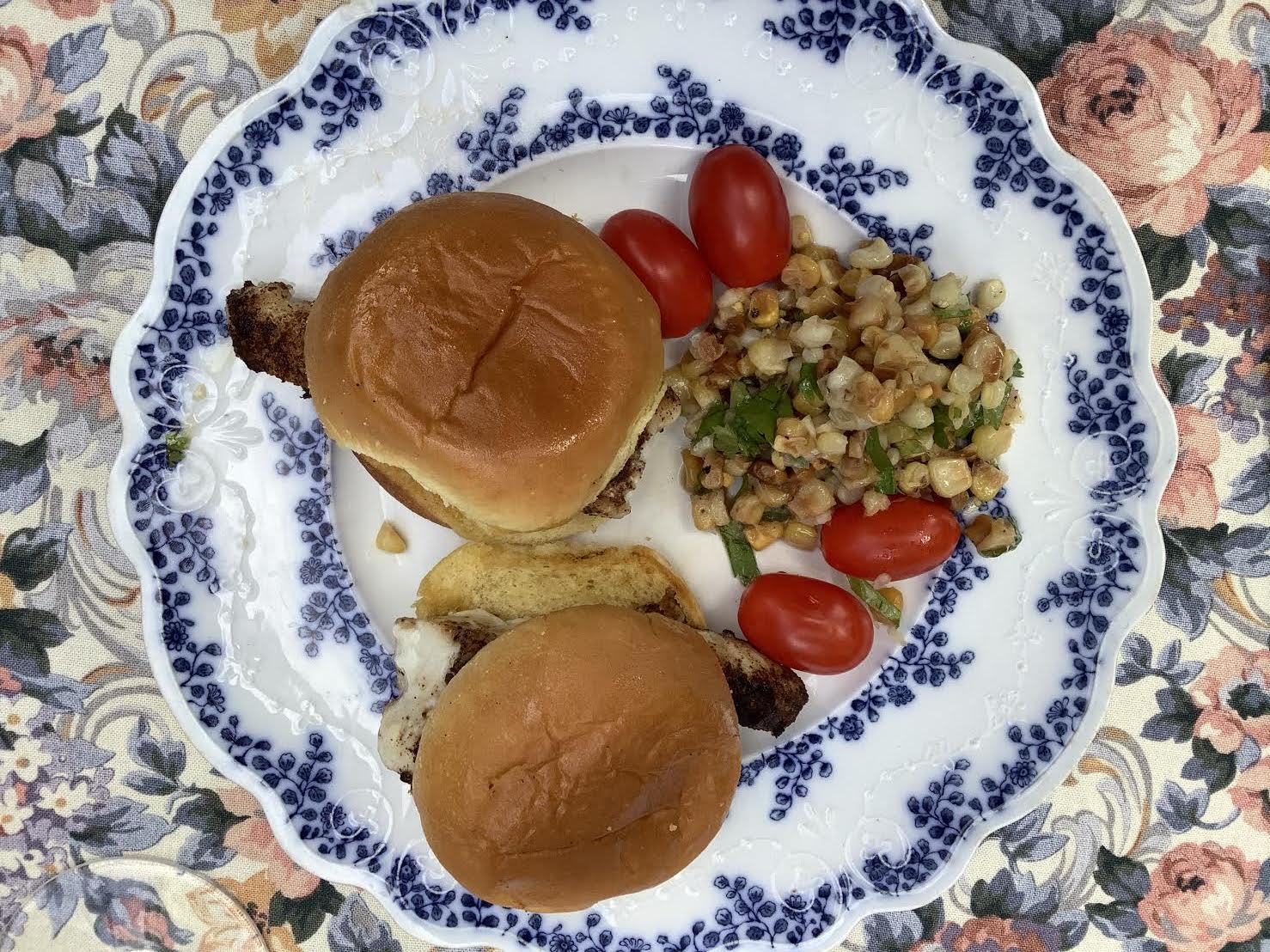
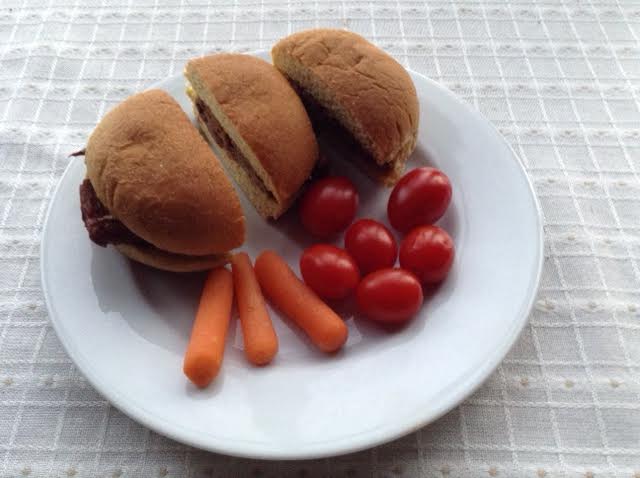
Tuna Salad Sandwich, country-style:  Per Serving: 281 calories 9 g fat 4 g fiber 20 g protein 31 g carbs 91 mg Calcium   PB GF – if using a GF bun  Mayonnaise is a problem for me – I’d rather spend my calories on something else. So I came up with a different way to moisten my tuna salad, improving the protein and Calcium along the way. Try it. HINT: These amounts make enough for three [3] sandwiches. Dinner for three or dinner + two lunches.

One 5-oz can of white tuna in water [4.5 oz drained/ 115 g/ ¾ cup] 1 hard-boiled egg 4 Tbsp 2% milk-fat cottage cheese 2 Tbsp minced celery 2 Tbsp minced onion salt and pepper 3 hot dog buns   per serving:  ¼ cup 4-bean salad + ½ ear corn on the cob

Drain the tuna and turn it into a bowl. Break up the tuna with a fork. Chop the egg and add it to the tuna along with the cottage cheese, celery, onion, salt and pepper. Stir to incorporate. Boil the corn for 8 minutes. Divide the tuna salad among the hot dog buns and plate with the vegetables.

Slow Day: Dutch Babies

People who are new to Fasting often pose the questions: “Can I really eat ‘anything I want’ on a Slow Day?” and “What should I eat on Slow Days?” To answer those questions, I have decided to add some blog posts to show some of the foods we eat on what the world calls NFDs [non-fast days] but which, in our house, we call ‘Slow Days.’ This feature will appear sporadically. 

Now for the answers. Can you really eat ANYTHING you want on a Slow Day? Not really. If you eat too many calories every Slow Day, you will not lose weight. There are many questions asked on the FastDiet Forum which attest to that. Once in a while you can splurge, as long as it isn’t everyday. For what to eat on Slow Days, Dr. Mosley recommends a Mediterranean Diet. As for how we eat, an example follows.

Some people call these “German Pancakes” while others call them “Dutch Babies.” Since ‘Dutch’/Deutsch often refers to ‘Germans,’ we can guess that this might be related to the German Pflannkuchen, but the recipe for this breakfast dish seems to have been invented in American West-Coast kitchens in the early 1900s. Several restaurants claim to have been the first to serve it, and it appears without attribution in many cookbooks. We enjoy this on Sundays. And I do mean ENJOY. Our recipe and method are from Marion Cunningham’s The Breakfast Book.

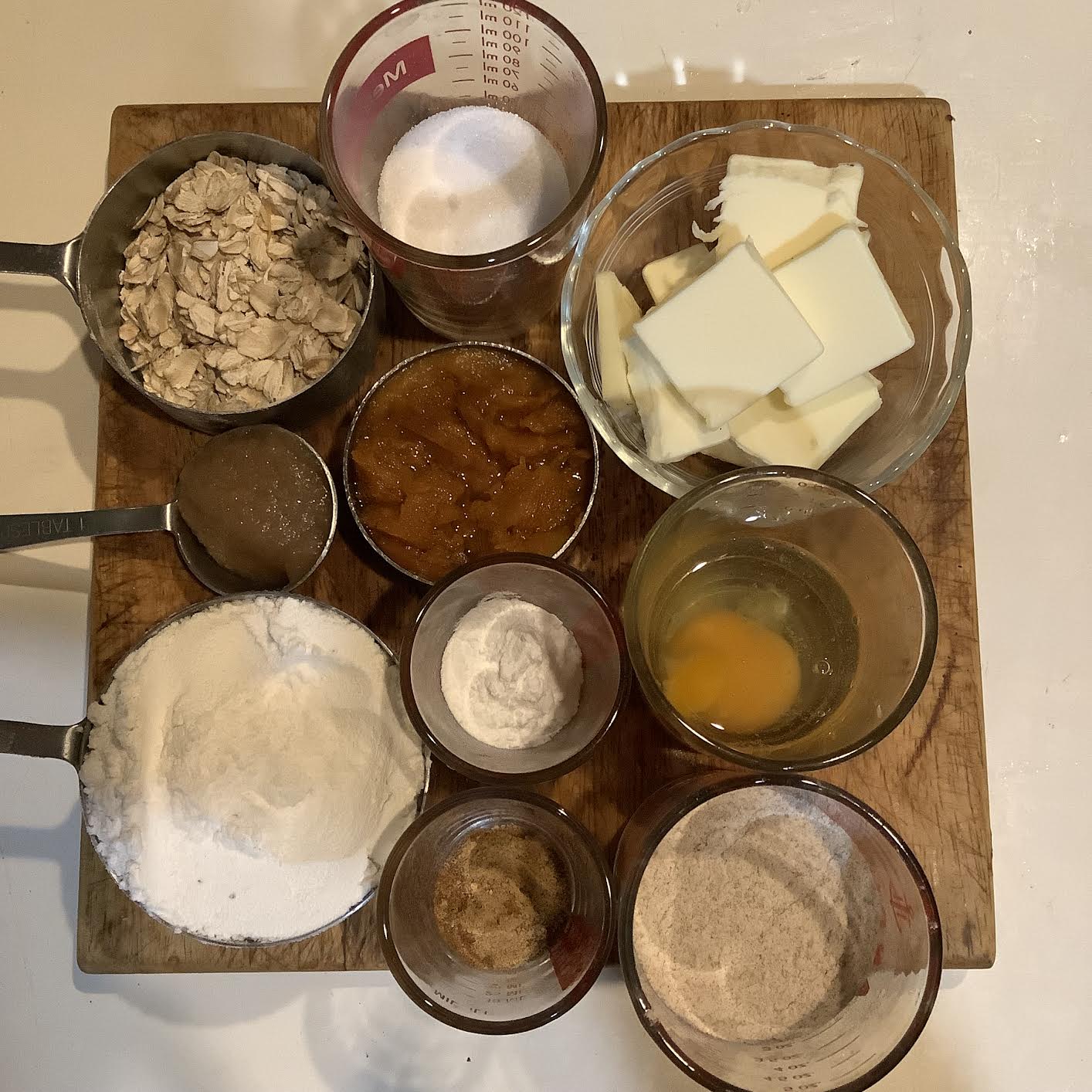
The mise en place above shows how easy this recipe is: 3 eggs, 1/2 cup flour, 1/2 tsp salt, 1/2 cup milk, 2 Tbsp butter. These were set out on the counter the night before so the eggs and butter could be at room temperature. Heat the oven to 450 and generously butter a 10 or 12″ cast iron skillet or, as we use, two 8″ skillets. Use an egg beater to break up the eggs in a bowl, then add the milk. Add the flour and salt, again deploy the egg beaters. Then mix in the melted butter to make a smooth batter. Pour into the pan/pans and pop into the oven. Bake for 15 minutes for the small pans. For the larger pan, after 15 minutes at 450F, turn heat down to 350F and continue to bake for 10 minutes more.

Great big popover bowls! One for each of us.

Magically, the batter rises up the sides to form a serving bowl of huge proportions! Serve with any fresh fruit in season, or with thawed and drained unsweetened frozen fruit. Maple syrup, lingonberry syrup, or cloudberry syrup are our faves.

Slow Day: Eastern Mediterranean Sampler

People who are new to Fasting often pose the questions: “Can I really eat ‘anything I want’ on a Slow Day?” and “What should I eat on Slow Days?” To answer those questions, I have decided to add some blog posts to show some of the foods we eat on what the world calls NFDs [non-fast days] but which, in our house, we call ‘Slow Days.’ This feature will appear sporadically. 

Now for the answers. Can you really eat ANYTHING you want on a Slow Day? Not really. If you eat too many calories every Slow Day, you will not lose weight. There are many questions asked on the FastDiet Forum which attest to that. Once in a while you can splurge, as long as it isn’t everyday. For what to eat on Slow Days, Dr. Mosley recommends a Mediterranean Diet. As for how we eat, an example follows.

The meal at Troy

When we visit Wolfville, Nova Scotia, Canada, we enjoy dining at Troy. We usually order the Sampler Platter, along with local beer and cidre. Since dining there is not an option during these Covid Times, I decided to try my hand at preparing such a meal. Happily, the elements were at hand — in the freezer or in the ‘fridge or made from fresh ingredients.

From the left, going clockwise around the platter: Lamb Gozleme; turkey breast; beet hummus**; oil-cured olives; tomatoes; feta + green olives; red pepper spread; dried figs. The flat bread in the middle is the same as in the Gozleme, but un-stuffed and griddle fried. A delightful meal for two, served with memories of visits to the orchards and vineyards of the Annapolis Valley in Nova Scotia.

**HUMMUS: 1 Tbsp = 27 calories… 1.3 g fat… 0.6 g fiber… 0.7 g protein… 3 g carbs… 0.7 mg Calcium…   PB GF —makes 2 cups— Recipe from Moosewood Cookbook by Mollie Katzen . ++++ 1 can chickpeas, drained + rinsed ++++ 4 cloves garlic ++++ 1½ tsp salt++++ 4 tsp lemon juice ++++ 5 T tahini pepper +++ cayenne ++++ ¼ c chopped scallions Put everything in the food processor and whiz until smooth. Taste for seasonings. Freezes well. Variation: Add a few slices of cooked beet to obtain an amazing pink color.

Frederick Douglass

How this Fast Diet Lifestyle works: Eat these meals tomorrow, for a calorie total of less than 600. On another day this week, eat the meals from a different post, another day of eating 600 calories or less. Eat sensibly the other days of the week. That’s it. Simple way to lose weight and be healthier.

On September 3, 1838, Frederick Bailey escaped to freedom. He had been born to an enslaved woman in 1818 on a plantation in Maryland’s Eastern Shore. His mother was separated from him in childhood and he was raised by his enslaved grandmother and free grandfather. As an enslaved child, he was sold, traded, and loaned to various families: one taught him to read, one beat him frequently. Eventually he met a free Black woman, Anna Murray, who helped him to escape. He boarded a train in the guise of a free sailor, traveled through two pro-slavery states, took a ferry boat up river to Philadelphia, and after 24-hours of travel, ended up in New York City. Free. Frederick and Anna married soon after, choosing ‘Douglass’ as their surname. If he hadn’t had enough excitement for one life, Douglass became a pastor, a publisher, a public speaker, a women’s rights advocate, an abolitionist, a social reformer, and statesman. Frederick Douglass was the most photographed person in the 1800s and a tireless worker for the rights of ALL people. He believed that “Right is of no sex, Truth is of no color, God is the Father of us all, and we are all Brethren.” Amen to that.

In trying to decide what recipes to feature today, I vetoed the idea of ‘slave food’ like hoe cakes and salt cod, in favor of the foods of the sort eaten by free, middle-class, educated people of Douglass’ time: watercress would have been served in nice restaurants [certainly in England where he toured and lectured], while ham with oysters is a popular dish of the Chesapeake Bay area from which he escaped.

Watercress ScrOmelette: 150 calories 8 g fat 0.6 g fiber 10.7 g protein 5.4 g carbs 74 mg Calcium  NB: Food values shown are for the ScrOmelette and fruit only, and do not include the optional beveragesPB GF  Having Watercress Sauce in the freezer in handy cubes sure makes this meal a snap. And is it good!

1 ½ two-oz eggs  HINT: If you are serving one person, crack three 2-oz eggs into a small bowl or glass measuring cup. Whip up those eggs and pour half of their volume into a jar with a lid to store in the ‘fridge for next week.  ½ Tbsp Watercress Sauce, well drained    ½ Tbsp ricotta, drained  HINT: I set them both out to drain through a fine sieve the night before to make sure there was no extra liquid. 1/8 tsp dry mustard 1.5 oz peach   Optional: blackish coffee [53 calories] or blackish tea or mocha cafe au lait [65 calories] or lemon in hot water  Optional: 5 oz fruit smoothie or berry-yogurt smoothie  [88 calories]

Combine the drained watercress, drained cheese, and mustard. Whisk the eggs and cook in a hot saute pan spritzed with olive oil or non-stick spray. As the eggs begin to set, spread the cress/mustard/cheese on top. Cook the way you like them and plate with the peaches. Pour the beverages and enjoy the summer taste of watercress all year long. 

Ham & Oyster Pie: 256 calories 4.6 g fat 3 g fiber 20.7 g protein 25.5 g carbs 125 mg Calcium  PB GF — if using GF bread   This dish was popular in the Colonial American South at Christmastime. I first enjoyed it in the Fox Tavern  at the Hancock Inn. As long as oysters are available, one can have it anytime. HINT: This recipe serves 2 [two].

This dish will serve two diners.

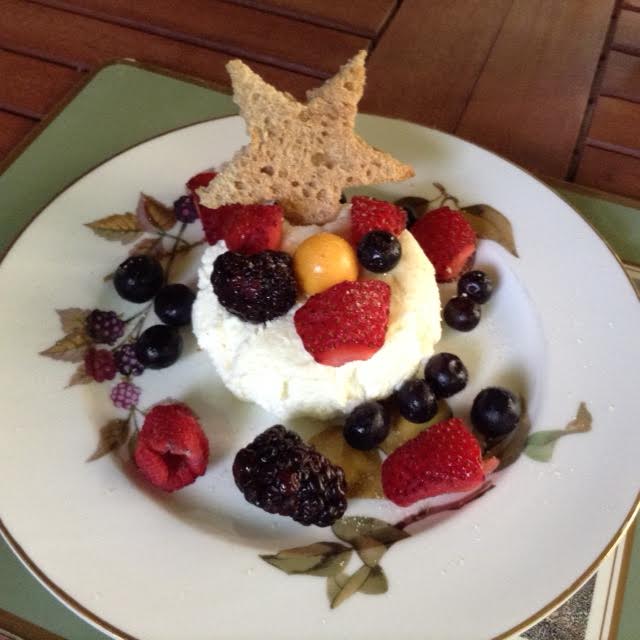
3 oz [2/3 cup] roast ham in ½” dice 1 cup/about 19 oysters with their liquid ½ cup onions, chopped ¼ cup milk 2 Tbsp white wine 2 tsp potato starch ½ cup peas, frozen 4 small stars cut from a 70-calorie slice of whole-grain bread, 0.55 oz bread

Drain oysters and reserve their liquid. Combine onion and oyster liquid in a small pan. Simmer, covered, until onions are transluscent. Stir wine, milk, and potato starch into the liquid until it is smooth. Add oysters and ham. Stir and heat over low until sauce has thickened. Add peas, stir, and turn into a two-cup casserole. Bake uncovered at 400 F. for 15 minutes while you lightly toast the stars. Before serving, nestle the stars into the bubbling sauce.

Ingredients for next week: Breakfast, single portion for Monday ……… single portion for Thursday:

1 two-oz eggtofu + sugar
cepe or porcini mushroomsstrawberries
tomato + prosciuttobanana
Parmesan + peachplain fat-free yogurt
Optional smoothieoptional smoothie
optional hot beverageoptional hot beverage

Dinner, single portion for Monday: …….. single portion for Thursday:

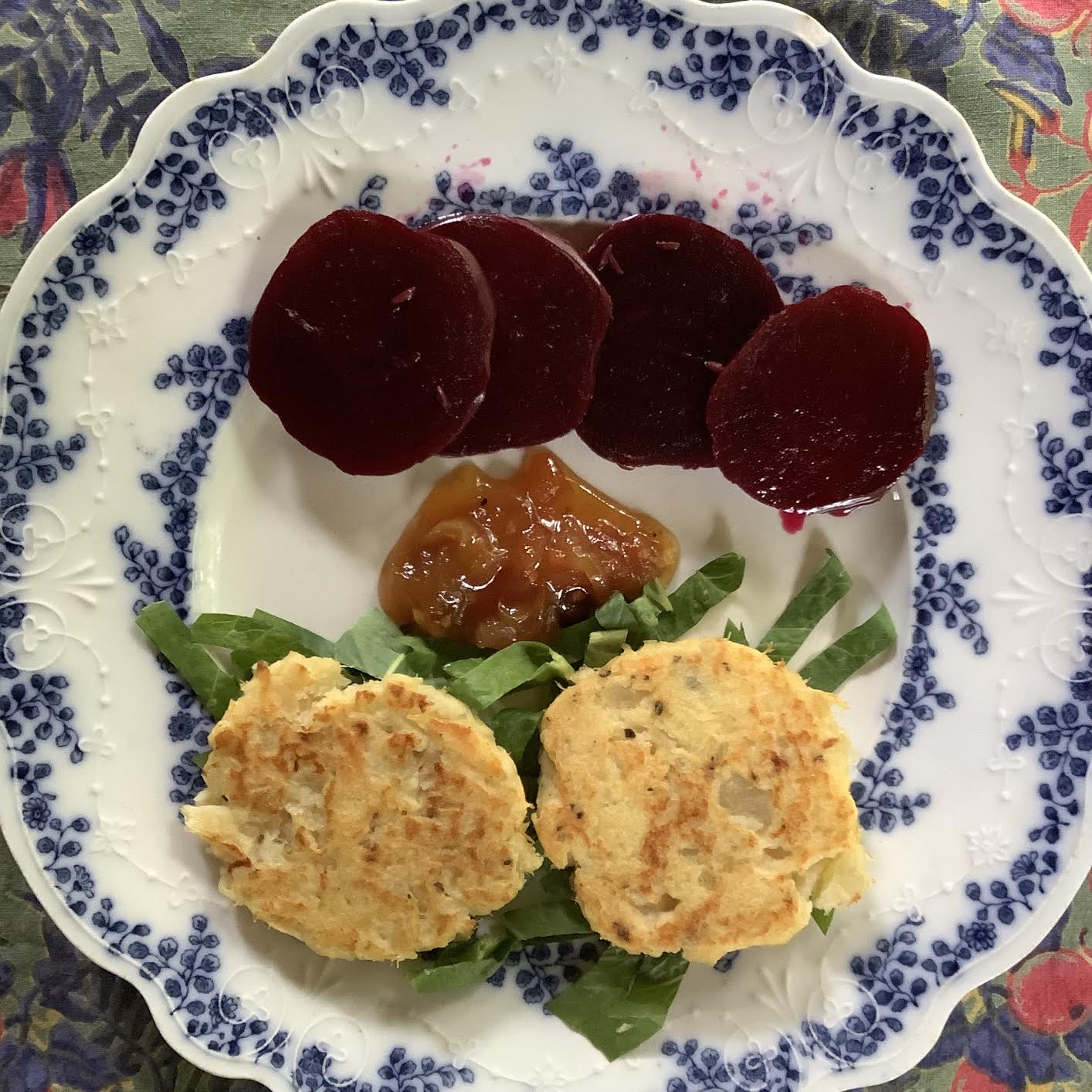
3%-fat ham, sliced thinlytwo 2-oz eggs + paprika + pickled beets
skimmed milk + 4 eggsparmesan cheese + Swiss chard
white whole wheat flourgarlic powder + paprika
allspice + thyme + green beansolive oil optional: sourdough bread
Sparkling waterSparkling water

Chicken Corn Soup Supper

How this Fast Diet Lifestyle works: Eat these meals tomorrow, for a calorie total of less than 600. On another day this week, eat the meals from a different post, another day of eating 600 calories or less. Eat sensibly the other days of the week. That’s it. Simple way to lose weight and be healthier. 

Every August, small country churches in my family’s area of South-Central Pennsylvania used to put up the signs: Chicken Corn Soup Supper. Organized and run by the ladies of the church [with some help from the men-folk], these can be at once a social event, a cherished link to the agrarian culture, and a major fund-raiser. In August, the sweet corn is ripe and half of the laying flock is 2-years old which means that the stars are aligned for Chicken Corn Soup. The best broth is from older chickens [fowls], so they would be dispatched early in the morning and stewed for hours. The chickens’ meat, off the bones and shredded, would be added to the broth, along with the herbs and onions they were cooked with. Kernels from sweet corn [as opposed to the taller, coarser field corn], and chunks of potatoes would be be added. One hot August evening many years ago, Dear Husband and I attended one of these dinners at an old stone chapel near Newville, Pa. Tressle tables and benches were set up the lawn, covered with butcher paper. You squeezed in among the other diners and partook of the delights of the table: a big bowl of hot soup, dinner rolls fresh from the oven, butter, iced tea, and cake or pie for dessert. The air was conditioned by the breeze in the Black Locust trees and the entertainment was the hum of cicadas. All around, a sense of contentment as the rhythm of the seasons was observed.

Here is my attempt at the tastiest soup of August, and a breakfast that a busy farm wife could assemble in minutes, from her kitchen garden, while she stewed the fowl and let the bread rise.

Allium Bake: 136 calories 6.6 g fat 1.2 g fiber 10 g protein 9 g carbs 108 mg Calcium   PB GF  The genus Allium contains all the onions and their relatives. This bake contains three of them along with two cheeses for even more flavor and goodness.

One 2-oz egg ½ oz sliced leek, green +/or white parts ½ oz minced onion 1 Tbsp minced chives 1 Tbsp cottage cheese 1 Tbsp grated Parmesan cheese 2 oz peach Optional: blackish coffee [53 calories] or blackish tea or mocha cafe au lait [65 calories] or lemon in hot water    Optional: 5-6 oz fruit smoothie or berry-yogurt smoothie  [88 calories]

Spritz an oven-proof ramekin [for 2 people, Dear Husband likes to use a 6×4” oval casserole] with non-stick spray and set the oven for 350 degrees F. Slice/chop the leeks and onions. Spray a skillet/saute pan with non-stick spray and cook the alliums until they are limp. Put them, along with the chives and any seasonings you like, in the prepared oven-safe dish. Whisk the egg with the two cheeses and pour over the alliums. Bake for 12 minutes or until done as you like it. Plate with the peach, pour your beverage of choice, and savor a flavorful day.

Chicken Corn Soup:  159 calories 4 g fat 2 g fiber 12 g protein 20 g carbs 21.6 mg Calcium NB: the above food values do not include the optional bread   PB GF – if using GF bread or eliminating it.

1½ cups corn cut from the cob [about 3 ears] 1½ cups potato, cut in ½ inch cubes 3 cups rich chicken broth ½ cup water from cooking the corn and potato ½ cup raw chicken meat, cut in small pieces many sprigs thyme + 1-2 sage leaves one ½-inch slice onion salt & pepper to taste   per serving:  ½ hard-boiled egg   Optional: 1 slice [1 oz] sourdough bread [add 100 calories]

Pour the chicken broth into a sauce pan, adding the onion and thyme. Simmer, uncovered, for 20 minutes or until it cooks down to 2-½ cups. Let stand off heat. Put the corn in a skillet with water half-way up the sides of the ears. Cover with a lid and steam for 5 minutes. Remove the corn and add the potato cubes to the water. Cook the potato for 10 minutes or until tender. Remove the potato from the water and save the cooking water. Chop the chicken and put it in the hot chicken stock to cook off the heat. Cut the kernels off the corn cobs and measure the volume. Remove the thyme sprigs and the onion from the stock, and chop the onion. Put the corn and potato into the stock, along with the chopped onion and any thyme leaves you can remove from the boiled sprigs. Add ½ cup of the corn/potato water to the soup. Gently heat the soup until the chicken is cooked. Taste for seasonings. One portion = 1 cup. Top each portion of soup with chopped hard-boiled egg and a bit of parsley. If you wish, serve with a slice of sourdough bread. Freeze the remainder. This is truly the taste of Summer. Cue the cicadas.