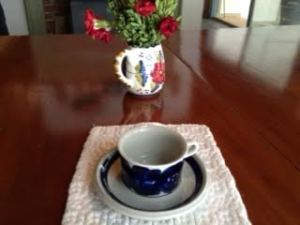
How this Fast Diet Lifestyle works: Eat these meals tomorrow, for a calorie total of less than 600. On another day this week, eat the meals from a different post, another day of eating 600 calories or less. Eat sensibly the other days of the week. That’s it: a simple way to lose weight and be healthier. Welcome to the Fasting Lifestyle.

Notre-Dame de Paris was in ruins, and decisions had to be made. Should the old cathedral be torn down? This was not April, 2019, when the church went up in flames. This was 1842. Notre Dame then was not in good shape since its building 682 years before. Worse, the angry citizens really trashed the place during the French Revolution. But now it was the age of Romanticism, when old things were of value and people, influenced by Victor Hugo’s 1831 novel The Hunchback of Notre-Dame [in French, Notre-Dame de Paris] had a new interest in preserving the church. Enter Eugène Emmanuel Viollet-le-Duc. He was born in Paris on January 27, 1814, into a family of architects. From his youth, Eugène was interested in how buildings were put together. He learned from architects, from builders, from traveling the country to visit historic places, from sojourning in Italy. When he was only 28 years old, Viollet-Le-Duc and colleague Jean-Baptiste Lassus were given the chance to rescue Notre-Dame. Having restored another church, Le-Duc had an idea of how to proceed, which was handy since Lassus died soon afterward. Le-Duc’s idea of restoration was not to put a structure back the way it was before. He wrote: “To restore a building is not to preserve it, to repair, or rebuild it; it is to reinstate it in a condition of completeness which could never have existed at any given time.” In other words, make it the way Le-Duc, an ardent medievalist, thought that it ought to be. He added windows and ornamentation. Most famously, he created the spire over the transept and the Chimerae on the roof. Through several changes in national government, Le-Duc continued to find favor and work ‘restoring’ buildings. In addition to Notre-Dame, he worked on nine other churches, two town halls, six castles, and the walls of Carcassonne. Le-Duc’s work and writings influenced generations of architects and artists. He died in 1879.
Our meals are from France [of course], with breakfast from Western France, and dinner from the South near Carcassonne.
Pissenlit ScrOmelette: 142 calories… 8 g fat… 1.5 g fiber… 12 g protein… 4.6 g carbs… 121 mg Calcium… NB: Food values shown are for the ScrOmelette only, and do not include the optional beverages. PB GF Susan Loomis found this recipe in the Dorgogne Region of France, and included it in her French Farmhouse Cook Book. If you like slightly bitter greens, you’ll enjoy this. HINT: This recipe is for 2 [two] servings. Use the rest, wrapped in a crepe or galette for lunch tomorrow.

++ 3 two-oz eggs ++++ 1 Tbsp water ++++ 1.4 oz/ 40 g/ 2 cups dandelion leaves, trimmed and washed ++++ ½ tsp garlic, minced ++++ 1 slice/0.7 oz uncured bacon ++++ Optional: blackish coffee [53 calories] or blackish tea or mocha cafe au lait [65 calories] ++++ Optional: 5 oz fruit smoothie or berry-yogurt smoothie [88 calories] ++
First collect your dandelion leaves, which I did the day before. Cut the leaves off just below the ground surface. TIP: You could just purchase the leaves. Trim off any dead leaves and roots. Put the leaves in a large bowl of cold water and agitate the water to remove any soil. TIP: You can do this the day before.
Dice the bacon and mince the garlic. Heat a saute pan to medium, and cook the bacon for 4 minutes: it will be almost cooked, but not crisp. There should be only a little fat in the pan – pour off any extra. Add the garlic and continue to cook 1½ minutes: the garlic should not be browned. Take the dandelions out of the water and give them a brief shake before adding them to the saute pan. Cook 4 minutes, stirring now and again, until leaves are wilted. Whisk the eggs with the water, plus some salt and pepper. Pour over the dandelions and rearrange them if they are not evenly distributed. As the eggs set, lift one side of the omelette and let the liquid egg run underneath to cook. Put a lid on the pan and cook for two minutes more. Fold and plate the omelette.
Camargue Bowl: 288 calories… 4 g fat… 10 g fiber… 23.5 g protein… 29 g carbs… 98.5 mg Calcium… PB GF This meal is all about the flavors and products of the central Mediterranean coast of France, the Rhone Delta: vegetables from the sunny gardens, garbanzo beans [introduced by the Berbers], shrimp from the shallows, and Camargue rice from the marshes. HINT: This recipe serves 2 [two] and it is worth making the whole thing.

++ 1½ cups Mediterranean Vegetables, without chickpeas ++++ 1 cup chickpeas ++++ 4.5 oz shrimp, shelled, tails removed, cut in ½” pieces if large ++++ ½ cup cooked red Camargue rice ++
Drain and rinse the chickpeas, if canned. Gently heat the Vegetables and chickpeas until warm. Place the shrimp on top. Cover the pan and heat further until the shrimp are cooked, about 6 minutes. Stir in the cooked rice and heat through. Heap the servings into bowls and love it.
 Eating well, with creative recipes, to follow the Fasting Lifestyle according to Michael Mosley's "Fast Diet."