
How this Fast Diet Lifestyle works: Eat these meals tomorrow, for a calorie total of less than 600. On another day this week, eat the meals from a different post, another day of eating 600 calories or less. Eat sensibly the other days of the week. That’s it: a simple way to lose weight and be healthier.
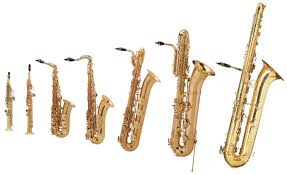
Antoine-Joseph Sax should not have grown up, but he did and he changed the way music is played. Between his birth in Dinant, Belgium, on November 6, 1814, and his 14th birthday, young Adolphe fell from a height of three stories; drank a bowl full of acid-water; swallowed a pin; was badly burned in a gunpowder explosion; burned his side when he fell onto a hot frying pan; was almost asphyxiated from sleeping in a room where varnished furniture was drying; and was hit on the head by a cobblestone, then fell into a river and almost drowned. Maybe that is why he changed his name to “Adolphe.” His father, Charles-Joseph Sax, an excellent wood-worker, was hired by William I of Orange to re-design the wooden instruments of the Belgian Army’s band, such as fifes and bugles. Adolphe grew up in his father’s workshop and learned the trade first-hand. When he was 14, he improved upon the clarinet. Adolphe studied flute, voice, and clarinet at the Royal Conservatory of Brussels. Sax wanted to invent a range of new instruments that would cover a wide range of notes. Combining a reed [found in clarinets and oboes, both wooden wind instruments] with a wooden instrument that had larger fingerings, Sax produced a hybrid. He called it the ‘Saxphone’. He entered an instrument-building competition in Belgium in 1840, and when he did not win, he went to Paris, France. There he hoped to supply the French Army with new band instruments. He was off to a rough start until he met Hector Berlioz, composer and music critic. Berlioz was enraptured by the new sound of the saxphone and wrote glowing praise about it. The original instrument was made of wood, but soon Sax switched to brass, creating the ‘saxophone’ we know today. But wait! Not just one saxophone, but eight sizes of different ranges! Then Sax made a wide array of other brass instruments which defy description. The French Army Band adopted the saxophone right away and Sax should have been raking in the money. Unfortunately, he did not patent it until 1846, then spent many years and much money fighting off those who would copy his invention. Sax was a lousy money manager, going bankrupt three times. His invention is still in use — in brass bands, in orchestras, and in jazz bands. Yet Sax died in poverty. Even brilliant innovators need good financial advisors.
French meals today, for Adolphe Sax’s adopted nation.
French Toast: 187 calories 6 g fat 2.6 g fiber 12.6 g protein 15 g carbs 95 mg Calcium NB: Food values given are for the plated foods only, and do not include the optional beverage. HINT: This recipe makes French Toast for 2 people or two breakfasts. If serving one, prepare all the toast, but put the remainder in a bag in the freezer for a really fast breakfast later.
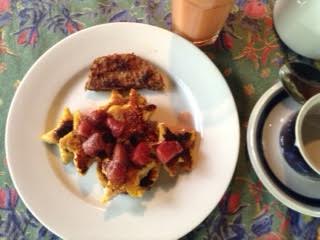
4 slices 70-cal whole grain bread one 2-oz egg 2 Tbsp fat-free milk per person: 1 oz strawberries, fresh or unsweetened frozen per person: 1½ tsp maple syrup per person: one 60-cal chicken breakfast sausage Optional: 5 oz fruit smoothie or berry-yogurt smoothie [88 calories] Optional: blackish coffee [53 calories] or blackish tea or mocha cafe au lait [65 calories]
THE NIGHT BEFORE: Whisk the egg and milk together. Cut the pieces of bread into appropriate shapes using a cookie cutter small enough to cut two shapes from each slice of bread. [This step is important for the calorie count to come out right, so don’t skip it even if it seems too much like ‘crafty food.’ The bread that is left over can be fed to the birds or saved to make Stuffed Clams] Put the bread into a pan with a rim which is just big enough for the bread pieces. Pour the egg/milk mixture over the bread, making sure it is all wetted. Let stand OVERNIGHT. Also, mash the strawberries and stir into the syrup.
THE NEXT MORNING, cook the batter-soaked bread in a hot non-stick pan with a spritz of non-stick spray. Cook until browned on both sides. NOW PUT ½ OF THE PIECES ASIDE TO COOL. PUT INTO A BAG AND FREEZE THEM FOR A LATER DATE. Cook the sausage, too. Warm the mix of berries and syrup, and smear onto the plated toast. Enjoy with the sausage and beverage of choice.
Asparagus Omelette: 270 calories 14.5 g fat 3.5 g fiber 18 g protein 10 g carbs 178 mg Calcium PB GF Susan Herrmann Loomis comes up with another super dinner omelette. HINT: This recipe serves two [2], but you could cut it if you wish, or double it to serve four [4].

| 4 two-oz eggs ½ oz [3 Tbsp] Parmesan-Reggiano cheese | Whisk eggs, just to blend in the yolks. Grate cheese and stir it in. |
| 4 oz asparagus, tough ends snapped off | Cook until tender, ~7 mins. Cut off bud ends and slice the stalks thinly. |
| 2 slices uncured bacon [30 cal/slice], cut into ½” pieces | Cook in a non-stick pan until ‘lightly golden’, 2-3 minutes.Drain off all but ½-1 Tbsp fat. |
| 1 scallion [1 oz], thinly sliced reserved bud ends cooked bacon | Saute in fat until transluscent and add asparagus. Heat until hot. Add eggs without disturbing the other ingredients. Sprinkle with chopped bacon. |
| Cook until top is done to your liking. Fold and plate. Garnish with bud ends. | |
| Side salad with beet and tomato | Toss the salad and plate with the omelette. |
 Eating well, with creative recipes, to follow the Fasting Lifestyle according to Michael Mosley's "Fast Diet."