
How this Fast Diet Lifestyle works: Eat these meals tomorrow, for a calorie total of less than 600. On another day this week, eat the meals from a different post, another day of eating 600 calories or less. Eat sensibly the other days of the week. That’s it: a simple way to lose weight and be healthier.

On September 18, 1837, Charles Louis Tiffany and John Young opened a store in New York City. Born in 1812, he left school at age 15 to run his father’s general store in the neighborhood of the family cotton mill. Ten years later, after continuing his education in between selling flour and yard goods, Charles borrowed money from dad to begin his own store. The enterprise had some things working against it: 1837 was a time of financial panic, and the shop was located uptown — not a desirable location. Also, Tiffany and Young insisted on charging fixed prices and being paid in cash. No haggling, no bartering. They sold stationary and ‘fancy goods’ including costume jewelry. In two years, the store added home goods to their inventory and in 1841, Tiffany added wife Harriet, who was Young’s sister. A new partner, J.L. Ellis, was knowledgeable about European jewelry, so those were offered for sale. No more costume jewelry for Tiffany, Young, & Ellis! Branch stores were opened in Paris and London. A silversmith was engaged to design and produce silver flat ware and jewelry. After his partners retired, Tiffany continued to make a name for himself in fine jewelry — in 1887, he purchased the Crown Jewels of the deposed French Royal Family, earning the nickname “King of Diamonds.” Aside from luxury goods, Tiffany made a name for himself in several ways: his was the first ever mail-order catalogue; working with Thomas Edison, Tiffany brought electric foot-lights to the Broadway stage; and he helped to establish 925 parts of silver per thousand as the US standard. Then of course there was Truman Capote’s novella Breakfast at Tiffany’s. From selling stationary, Tiffany’s has come a long way.
The Tiffany name invokes thoughts of luxury and wealth. Thus, for breakfast we will eat “Rolex” — but I don’t mean the watches. For dinner, a meal of lobster in a delicious sauce — ought one to wear diamonds while dining, like society people of New York late in Tiffany’s life?
Rolex: 218 calories 10.5 g fat 2.4 g fiber 12.6 g protein 18.5 g carbs 67.5 mg Calcium NB: Food values shown are for the Rolex and fruit only, and do not include the optional beverages. PB Ugandan street vendors have a sense of humor. While some vendors sell “Rolex watches,” others sell rolled eggs and call it Rolex. This is easy to prepare and fun to eat.
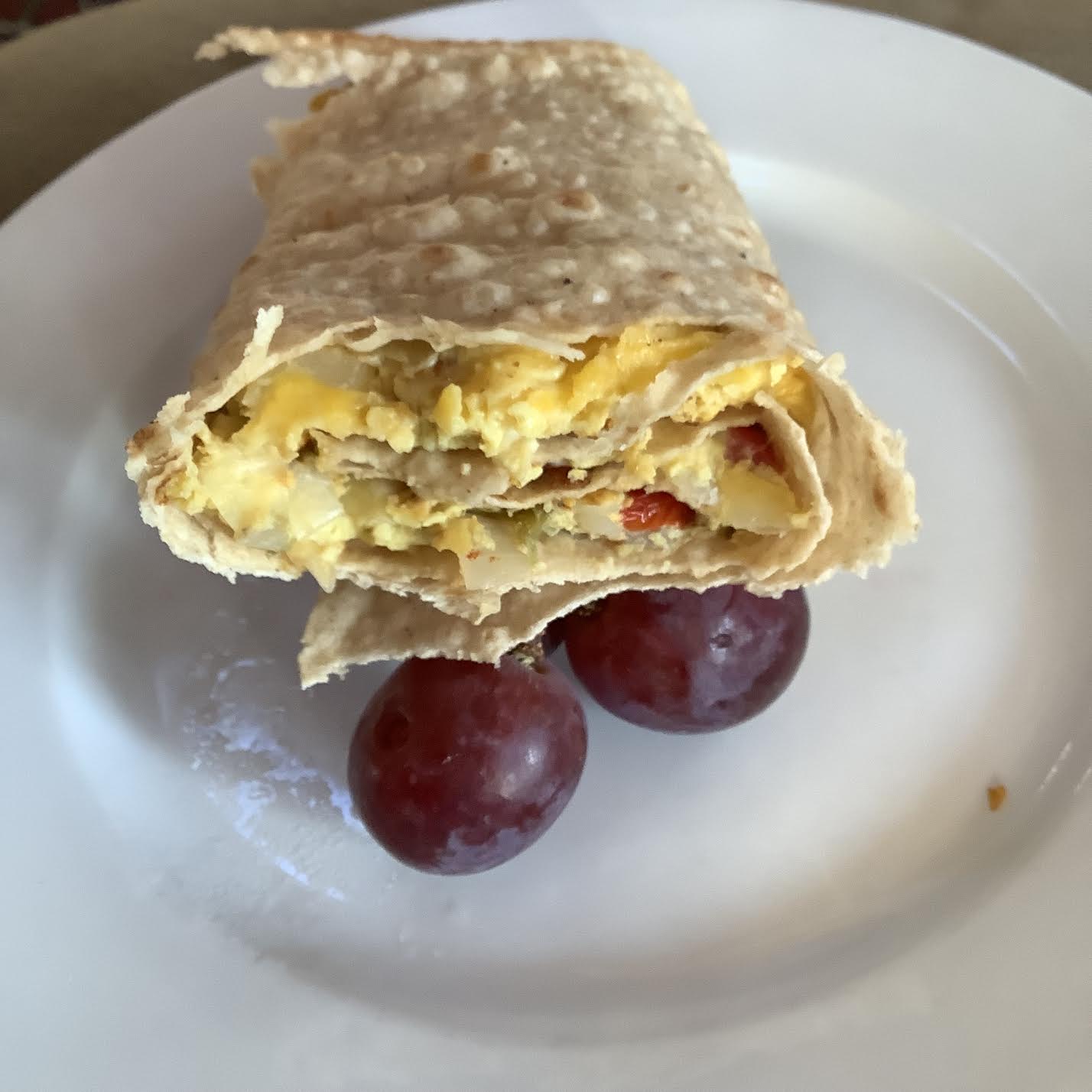
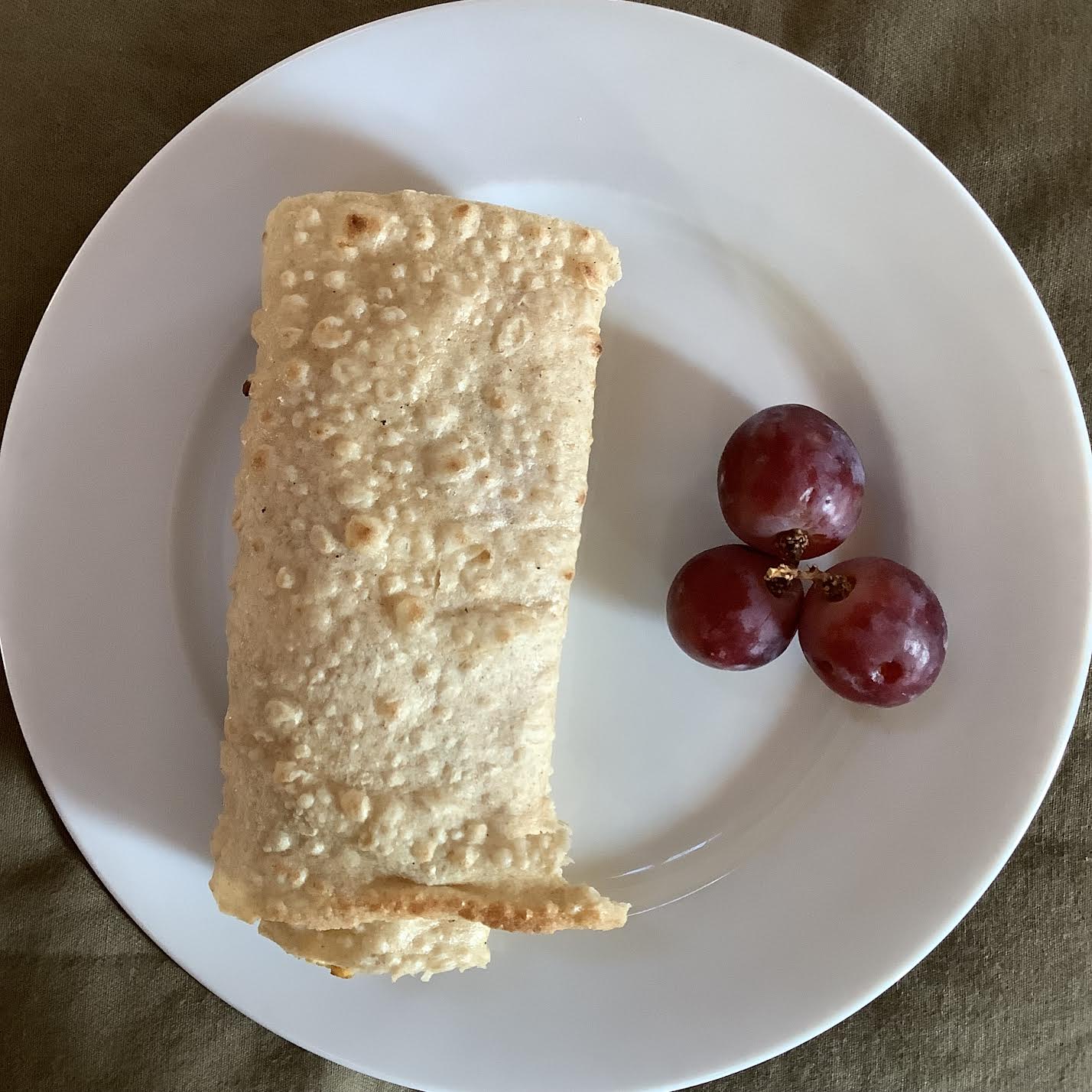
1½ two-oz eggs HINT: If you are serving one person, crack three 2-oz eggs into a small bowl or glass measuring cup. Whip up those eggs and pour half of their volume into a jar with a lid and put it in the ‘fridge for next week. ¼ c finely sliced cabbage 2 Tbsp onion, chopped 1 tsp oil 2 Tbsp diced tomatoes 2 Tbsp New Mexico Green Chilis two 1-oz pieces of Lavash bread 1 ounce of one of these fruit choices: pineapple, 14 calories; melon, 10 calories; mango, 17 calories; grapes, 20 calories; watermelon, 8 calories Optional: blackish coffee [53 calories] or blackish tea or mocha cafe au lait [65 calories] Optional: 5 oz fruit smoothie or berry-yogurt smoothie [88 calories]
Heat oil in a non-stick saute pan and cook cabbage and onion until wilted. Add tomatoes and chilis and heat until warm. Pour whisked eggs over vegetables in pan and cook until vegetables are set. Covering with a lid helps to set the top of the eggs. Warm Lavash briefly in a covered pan, until pliable. Spread out the Lavash and top with eggs. My Lavash was 5” wide by 14-16” long. Cut and adjust eggs so that they are distributed over most of the length of the bread. Roll up into a tight log and plate with fruit of your choice. More delicious and less expensive than a fake watch!
Lobster a l’Armoricaine: 282 calories 3 g fat 2.5 g fiber 21.5 g protein 12 g carbs 142 mg Calcium PB GF No, it isn’t a typo. This lobster dish is from the Armor coast of Brittany, therefore: Armoricain, “from the Armor.” The recipe is from Brittany Gastronomique by Kate Whiteman. Elegant yet simple.

3 oz lobster, cooked or uncooked 2 Tbsp shallot, minced ½ clove garlic 1 oz cognac or other brandy 2 oz dry white wine [not cooking wine] ½ cup tomato, diced 1 tsp tomato puree [not paste] 1 Tbsp half & half [10% fat, called ‘blend cream’ in Canada] 1 Tbsp Gruyere cheese, grated 1 oz broccoli florets 1 oz carrots, in coins or batons
Remove lobster meat from shell and cut into 1” pieces. Put the shallot and garlic in a pan spritzed with oil. Saute over low heat until soft. Add the lobster meat, and cognac. Tip the pan to distribute the brandy, then flame the contents off the heat until the flames die. Put into a heat-proof dish and keep barely warm. Add the wine, tomatoes, and puree to the pan and cook until syrupy. Add the cream and heat slowly to reduce in volume a bit. Do not let if boil lest the sauce separate. Meanwhile, cook the vegetables. Pour the sauce over the lobster and top with grated cheese. Heat under the broiler or in an oven until bubbly. Plate with vegetables.
 Eating well, with creative recipes, to follow the Fasting Lifestyle according to Michael Mosley's "Fast Diet."