How this Fast Diet Lifestyle works: Eat these meals tomorrow, for a calorie total of less than 600. On another day this week, eat the meals from a different post, another day of eating 600 calories or less. Eat sensibly the other days of the week. That’s it: a simple way to lose weight and be healthier.

Remember studying the Punic Wars in school? Of course you do –War Elephants crossing the Alps and all that? There were three parts to the wars and they provide a lesson for our times. ”Punic” referred to people of Phoenecian origin who lived in the city of Carthage [in what is now Tunisia]. Prior to 264 BCE, Carthage was the premier city of the western Mediterranean, and trade had made the people rich and comfortable. When Carthage got into a dispute with the little city of Rome over control of Sicily, a war ensued. Despite Carthage’s long sea-faring experience, the neophyte Roman sailors won many battles by boarding the enemy ships with a special gangplank to fight hand-to-hand. Thus Rome gained Sicily and Corsica, and there was peace in 256 BCE. That lasted until 218 BCE, when Carthage tried to get revenge by taking over a city in Spain/Iberia. Those citizens appealed to Rome for help, and the war was on again! The skilled general Hannibal decided to take the fight to Rome. He lead an army through southern France/Gaul and over the Alps — elephants and all!! — into Italy/Roman Empire. After initial victories, the Carthaginian invasion was defeated in 202 BCE. The defeat was due to Carthage not paying its soldiers and not having invested in building up its offensive capabilities. By the third Punic War, 149 BCE, Carthage had become very lazy about treaties and keeping up an army. When Carthage attacked another neighboring kingdom, the Romans — who had built up their army and navy and were ready for anything — decided that Carthage had to be destroyed. And so it was — reduced to rubble. [That story of ‘salting the soil’ afterward… just a legend.] So, was 146 BCE the end of the Punic Wars? Not exactly… On February 5, 1985, 2,131 years after the fighting ended, Ugo Vetere and Chedli Klibi, the mayors of Rome and modern Carthage signed a symbolic peace treaty to end the war and to strengthen ties between the two countries. THAT’S how we should be acting today — maintain your defenses, pay people what they are owed, and make treaties.
Our day begins in Tunisia with a traditional meal. The day will end in Sicily, cause of the 1st Punic War, where our dinner was invented.
Tajine Maadnous: 215 calories 10.5 g fat 1 g fiber 20 g protein 9 g carbs 146.5 mg Calcium NB: The food values given above are plated foods only, not the optional beverages. PB GF This popular Tunisian dish is a bit like a quiche, a bit like a fritatta — and completely delicious. The recipe is adapted from one by Kristina Todini at 196flavors.com HINT: this recipe serves 4 [four] people. Since it can be eaten cold, the left-overs would be fine for another breakfast or for lunch on a Slow Day. Or, if serving two people, cut the recipe in half and bake 18-20 minutes.
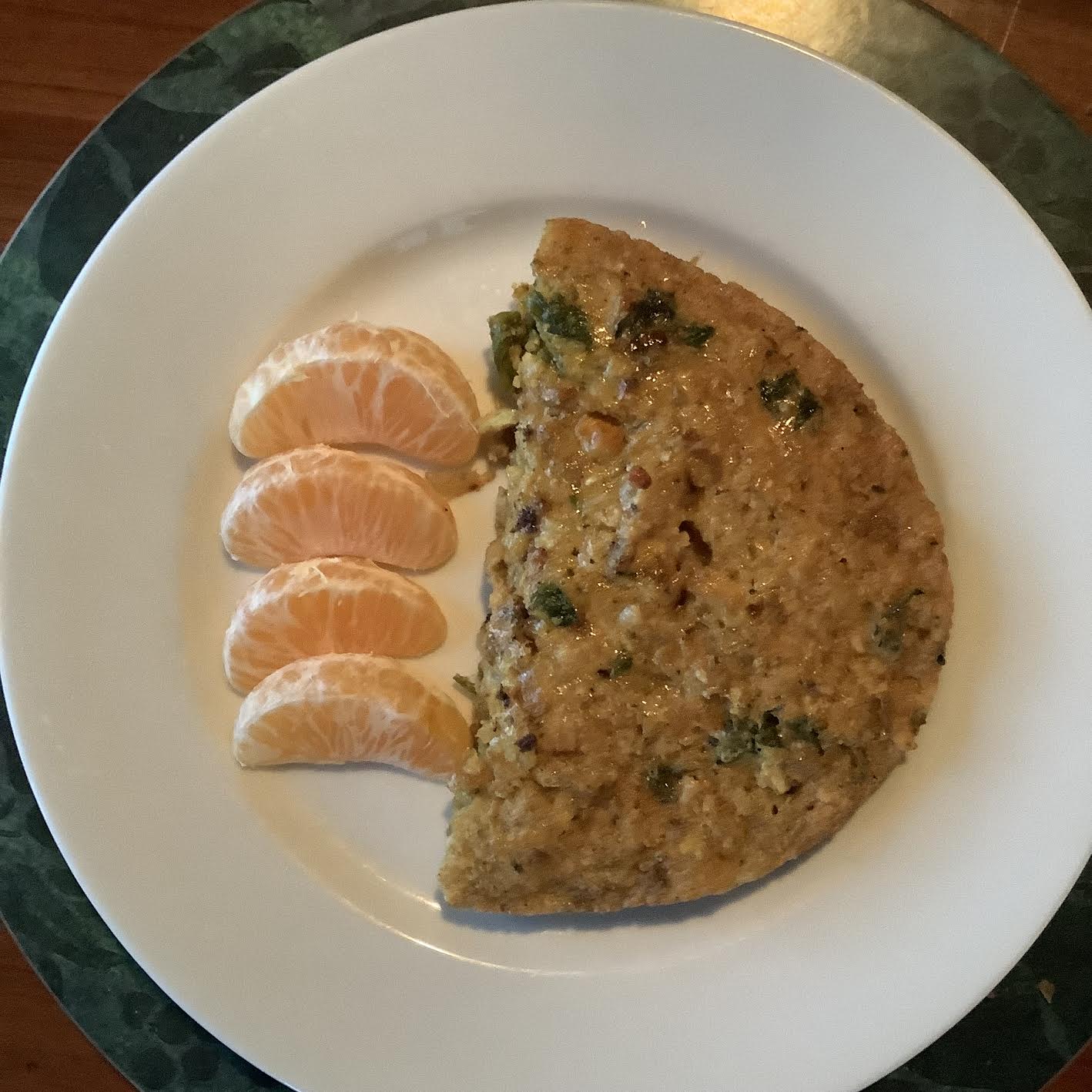
| Sv 4 | |
| ¼# chicken breast, raw | Cut into small cubes |
| ½ tsp olive oil | Heat oil and brown meat briefly |
| ¼ tsp turmeric 1 tsp tomato paste | Add these to the pan, along with salt + pepper. |
| 1 cup water OR 1 cup chicken stock | Add, simmer until liquid is reduced to almost nothing. |
| 2 tsp oliveoil ¼ bunch flat parsley ½ c. onion | Chop vegetables finely. Saute in oil in another pan a few mins. Cool. |
| 4eggs,beaten 4 T. dry breadcrumbs 2 oz. grated mozzarella | Whisk in eggs, add crumbs, cheese. |
| Mix well, pour into an oil-spritzed baking dish. | |
| Bake @ 350 F/180˚C for 30 mins until top is set and golden. |
Shrimp Arrabbiata: 287 calories 8.5 g fat 6.4 g fiber 16 g protein 30 g carbs 240 mg Calcium PB GF – if using GF pasta The box of pasta says that this recipe is from Sarah Leah Chase’s book Cold-Weather Cooking. I added the shrimp and I’m glad I did. HINT: This recipe serves three [3] people.
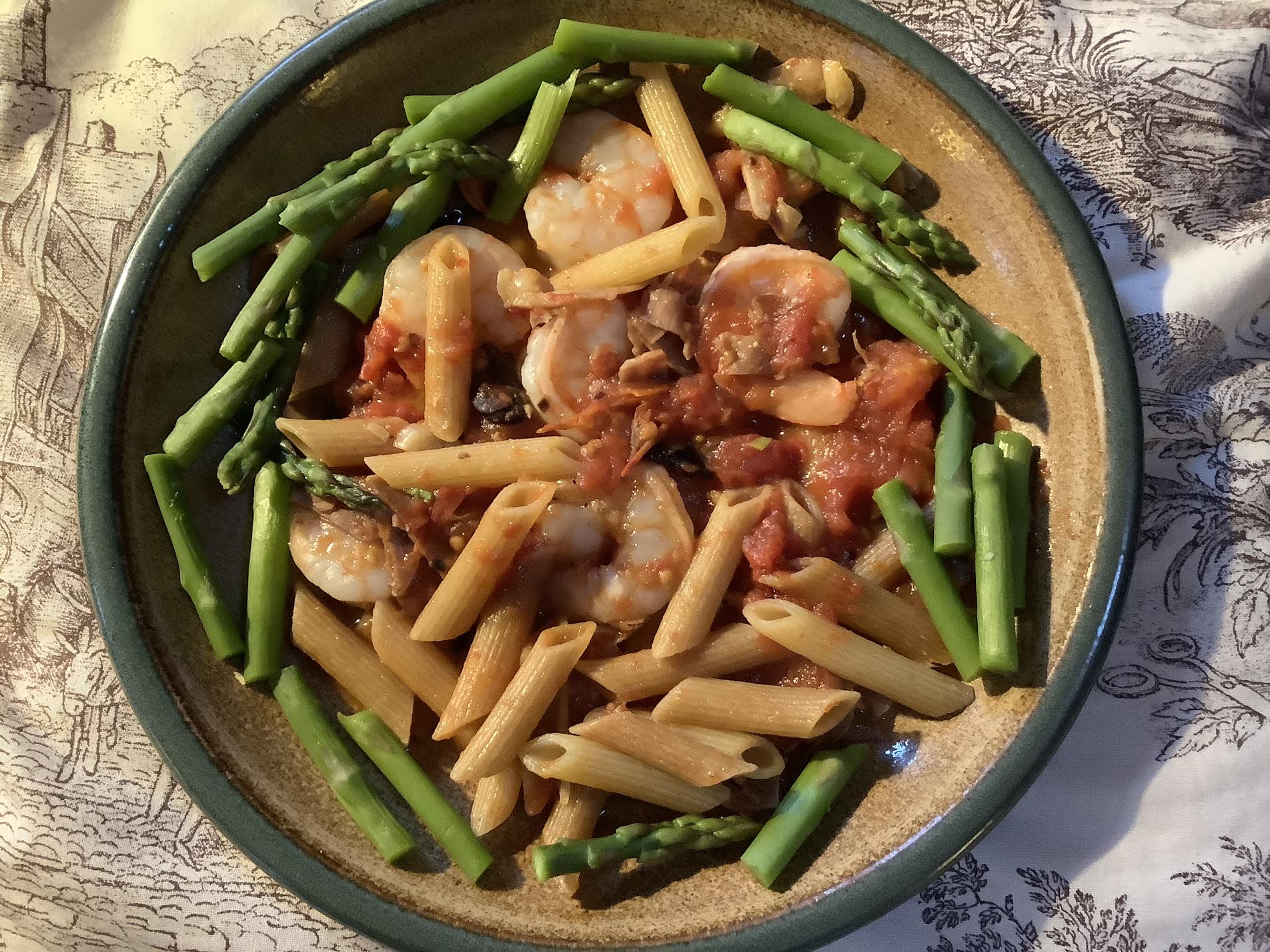
1½ oz pancetta or serrano ham, sliced in ribbons 3 cloves garlic, sliced 1 tsp red pepper flakes or more to taste 6 plum tomatoes, diced 3 oz whole-grain ‘penne’ pasta 6 oz shrimp 1 Tbsp grated Parmesan or Romano cheese per person: 3 oz asparagus + 1 Tbsp grated Parmesan or Romano cheese
Remove the shells from the shrimp and set aside. Spray a saute pan with non-stick spray. Add the pancetta and garlic and cook until garlic is golden-colored. Add the crushed red peppers and cook for another minute. Add the tomatoes and simmer. Meanwhile, put the pasta in boiling salted water and cook for 3 minutes, then remove pan from heat but do not drain. Scoop out the pasta and add to the tomatoes, along with several tablespoons of the pasta-cooking water. Add the shrimp, some salt, and 1 Tbsp grated cheese to the tomatoes and cook until the shrimp are done. The pasta will continue to cook in the liquid from the tomatoes – if getting too dry, add some more water. Cut the asparagus into 1” pieces and cook in boiling water until soft to your taste. Test the pasta to find out when it is done. Portion and plate with grated cheese on top. Restaurant quality food, at home.
 Eating well, with creative recipes, to follow the Fasting Lifestyle according to Michael Mosley's "Fast Diet."