
How this Fast Diet Lifestyle works: Eat these meals tomorrow, for a calorie total of less than 600. On another day this week, eat the meals from a different post, another day of eating 600 calories or less. Eat sensibly the other days of the week. That’s it: a simple way to lose weight and be healthier. Welcome to paris400 who is now Following.
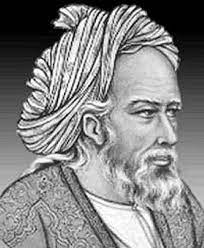
“A book of verses underneath a bough, a jug of wine, a loaf of bread, and Thou beside me, singing in the wilderness. Ah! Wilderness were paradise enow!”
Many people know of that bit of verse from the Rubaiyat of Omar Khayyam. But what do they know of the author? Omar was born in Nishapur in 1048 CE, under the Seljuk Empire. His father was either a wealthy physician or a tent-maker — ‘khayyam’ means ‘tent-maker’ in Arabic. The son was treated to an excellent education under a mathematician who, although living in a newly Muslim country, followed the older Zoroastrian religion. When Omar was 18, his father and his tutor died, so the boy joined a caravan to take him to Samarkand, now in Uzbekistan, to be with his father’s friend. In a new empire, Omar found favor with the ruler who fostered his further studies. Before he was 25 years old, Khayyam had published a books about arithmetic, algebra, and music. He was known as an astronomer, and so was invited to return to his homeland to over-see the building and running of an observatory in Esfaha. For 18 years, Omar devoted his life to astronomy. Among other findings, he calculated the length of the year as having 365.24219858156 days — which is astonishingly accurate. Khayyam died on December 4, 1131, and his name was largely forgotten until it came up again in 1859. Omar had written 120 quatrains, called rubáiyáts [from the word for ‘4’], which were translated into English by Edward Fitzgerald. At that time, literary works from southern Asia, like the 1001 Nights, were all the rage in Europe. Persia was unknown territory, so the poems depicting life in and out of taverns, lolling under trees, and fearing imminent death, were read extensively. As children, my sister and I would pour over our mother’s copy, amazed by the exotic illustrations as we read the curious verses.
Our breakfast is a real treat, with sparkles of cranberry in each bite. Served cool, it might be a nice picnic item when ‘underneath a bough’ with that book of poetry. The dinner is rich in flavor. These are prime examples of Mediterranean meals, even though they originated far from that inland sea.
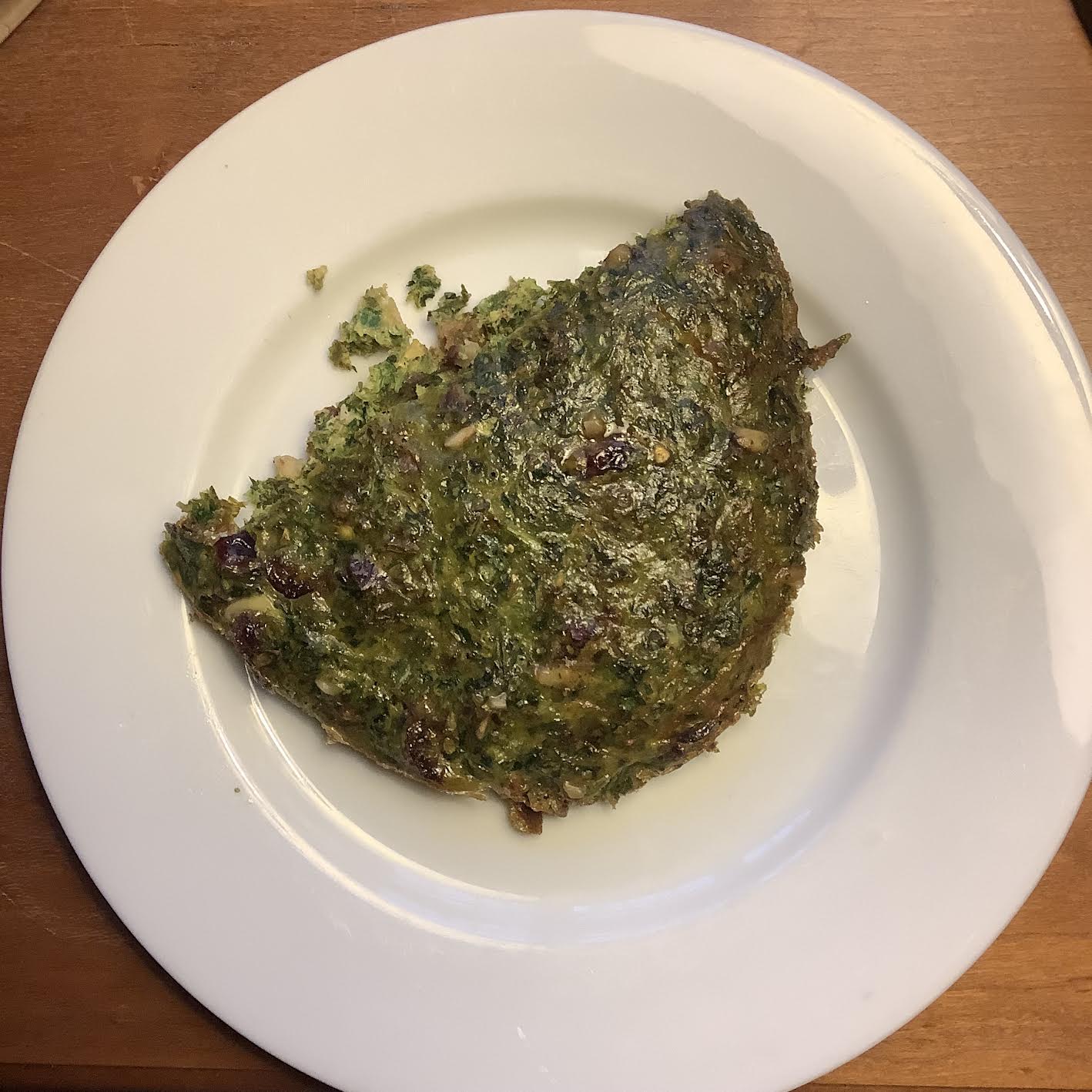
Kuku Sabzi: 223 calories 16.6 g fat 2 g fiber 8.5 g protein 12 g carbs 80 mg Calcium NB: The food values given above are for the egg bake only, not the optional beverages. PB GF Herbs abound in this Persian egg dish. The recipe is from themediterraneandish. HINT: Serves two [2].
| Sv 2 4×6” oval casserole | Put rack in upper-middle oven, heat to 375F. |
| 1 tsp olive oil | Coat bottom and sides of pan with oil. Fit a piece of parchment paper into the pan, then flip the paper so both sides are oiled. |
| 2/3 c. flat-leaf parsley, leaves 2/3 c. cilantro leaves + stems 1/3 c. fresh dill 2 scallions, trimmed 2 tsp extra virgin olive oil | Roughly chop dill, scallions. Combine everything in a food processor. Process until finely ground. Set aside. |
| ½ tsp baking powder 1/3 tsp kosher salt ¼ tsp ground green cardamom ¼ tsp ground cinnamon 1/8 tsp ground cumin pinch ground black pepper | In a large bowl, whisk these together. |
| 1 two-oz egg | Add egg, whisk until blended, |
| 1 two-oz egg | add egg, whisk until just combined. |
| Herb mixture 2 T. walnuts, toasted, chopped 2 T. dried cranberries, chopped | Fold in herb-scallion mixture, then nuts, fruit. Pour into prepared pan and smooth top. |
| Bake in heated oven until center is firm, 20-25 mins/15 mins for smaller pan. | |
| dollop of plain yogurt. | Let cool in pan undisturbed 10 mins. Run a thin knife around edges to loosen. Invert onto a plate, remove the paper. Then re-invert on serving plate or a cutting board. Slice, serve warm or at room temp. |
Mirza Ghasemi: 264 calories 11.5 g fat 10 g fiber 10 g protein 35.5 g carbs 44.5 mg Calcium PB GF – if omitting bread This Persian dip contains ingredients from Northern Iran’s Gilan Province. Rich in flavor and high in nutrients. Serve slightly warm or at room temperature. The dish was invented by the Persian ambassador to Russia in 1960.

| 1# eggplant 1.5 big tomatoes | Cook these over a fire: on a barbecue or a gas stove top. If you don’t have an open fire, broil or roast them. Tomatoes only need to be lightly cooked. But eggplant must be cooked so that juice is dripping out, flesh is soft and skin peels off easily. |
| 2 cloves garlic | Peel, put on a skewer/cocktail stick. Lightly cook over flame or under broiler. Crush garlic and chop finely. |
| Once cooled a bit, peel tomato and eggplant. Keep flesh, discard skins. Chop both into large chunks, keep apart. | |
| 1 T. olive oil | Heat oil, cook garlic on low-med heat – sizzling slightly. |
| 1 T. tomato puree | Once lightly browned, add puree and cook 5 mins. |
| Grilled tomatoes ½ tsp salt ½ tsp black pepper ½ tsp paprika ½ tsp turmeric | Add grilled tomatoes to pan. Add spices and cook another 5 mins. |
| Grilled eggplant | Add aubergines to pan. Stir and cook 5 mins. I ran it all through the food processor to make a chunky paste. |
| chopped hard-boiled egg chopped herbs 1.5 oz Lavash each person | Garnish with egg and herbs. Serve as a spread for the bread. |
 Eating well, with creative recipes, to follow the Fasting Lifestyle according to Michael Mosley's "Fast Diet."