How this Fast Diet Lifestyle works: Eat these meals tomorrow, for a calorie total of less than 600. On another day this week, eat the meals from a different post, another day of eating 600 calories or less. Eat sensibly the other days of the week. That’s it: a simple way to lose weight and be healthier. Join me in the Fasting Lifestyle.
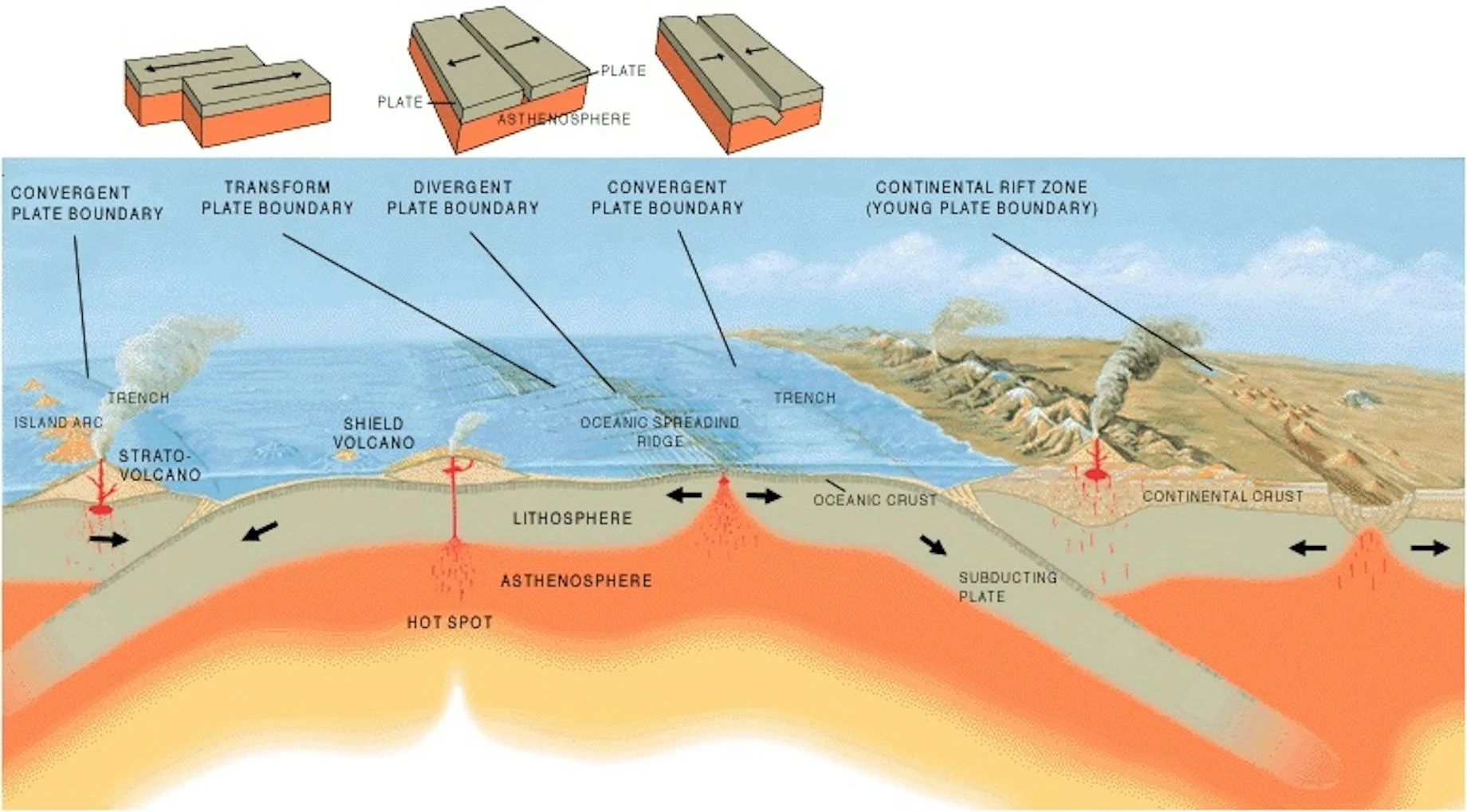
Ever since there have been humans, we have been fearful of and confused by earthquakes. The Chinese thought that the world was balanced on the back of a turtle. When the turtle moved, the earth shook. The Romans called the ground they walked on ‘terra firma‘ or ‘solid ground’, and they thought that earthquakes were caused by the anger of the gods. But the ground is anything but solid. The earth’s crust, which is from two to 20 miles thick in places, is broken into many pieces called Tectonic Plates. The largest pieces are either Oceanic or Continental Plates, their names explaining where they are found. Despite their thickness, the plates are floating on molten rock below them in the Asthenosphere. As that molten rock flows, it pulls the plates, moving them toward each other, away from each other, or sliding past each other — as seen in the illustration above. When the plates move, earthquakes happen: small ones when plates diverge, much stronger ones when plates converge or slide past. The strength of an earthquake can be measured on the Richter Scale or on the Modified Mercalli Intensity Scale [MMI]. It seems odd when some similar events occur on similar dates in history. One such coincidence had to do with plate motion. On January 26, 1531, Lisboa, Portugal was rocked by a massive earthquake, a number IX on the MMI. Hundreds died, many more were injured, up to 1500 buildings were destroyed, and ships in the harbor were damaged by a tsunami. The cause given for the disaster? The wrath of God. In 1700, on the same day, people in the First Nations villages along Vancouver Island, British Columbia were just going to sleep when the largest earthquake in North America struck. The quake most likely had an MMI of X, based on the destruction of entire villages due to the shaking, the landslides, and the 50-foot tsunami. The tsunami traveled across the Pacific to Japan, where there was more structure damage and loss of life. Earthquakes are fascinating geological events. Where they happened once, they can reoccur. Given modern population densities, strong earthquakes in those same areas today would cause enormous damage.
Our menus today honor the regions struck by those major quakes on January 26th. In the 1700s, the Russians dominated the Pacific North-West of North America, as they exploited fur-bearing animals along the coast. For them, blini at breakfast. The Lisbon earthquake had its epicenter in the estuary of the Targus River, thus a Portuguese fish recipe seems appropriate.
Buckwheat Blini Breakfast: 213 calories… 5 g fat… 3 g fiber… 9 g protein… 31 g carbs… 67.6 mg Calcium… NB: The food values shown are for the plated items only, not for the optional beverages. Blini are associated with Russia and caviar. Here they appear in more common company at breakfast. Sour Cherry Syrup is just the thing to top them, though cherry jelly thinned with water would be good too.
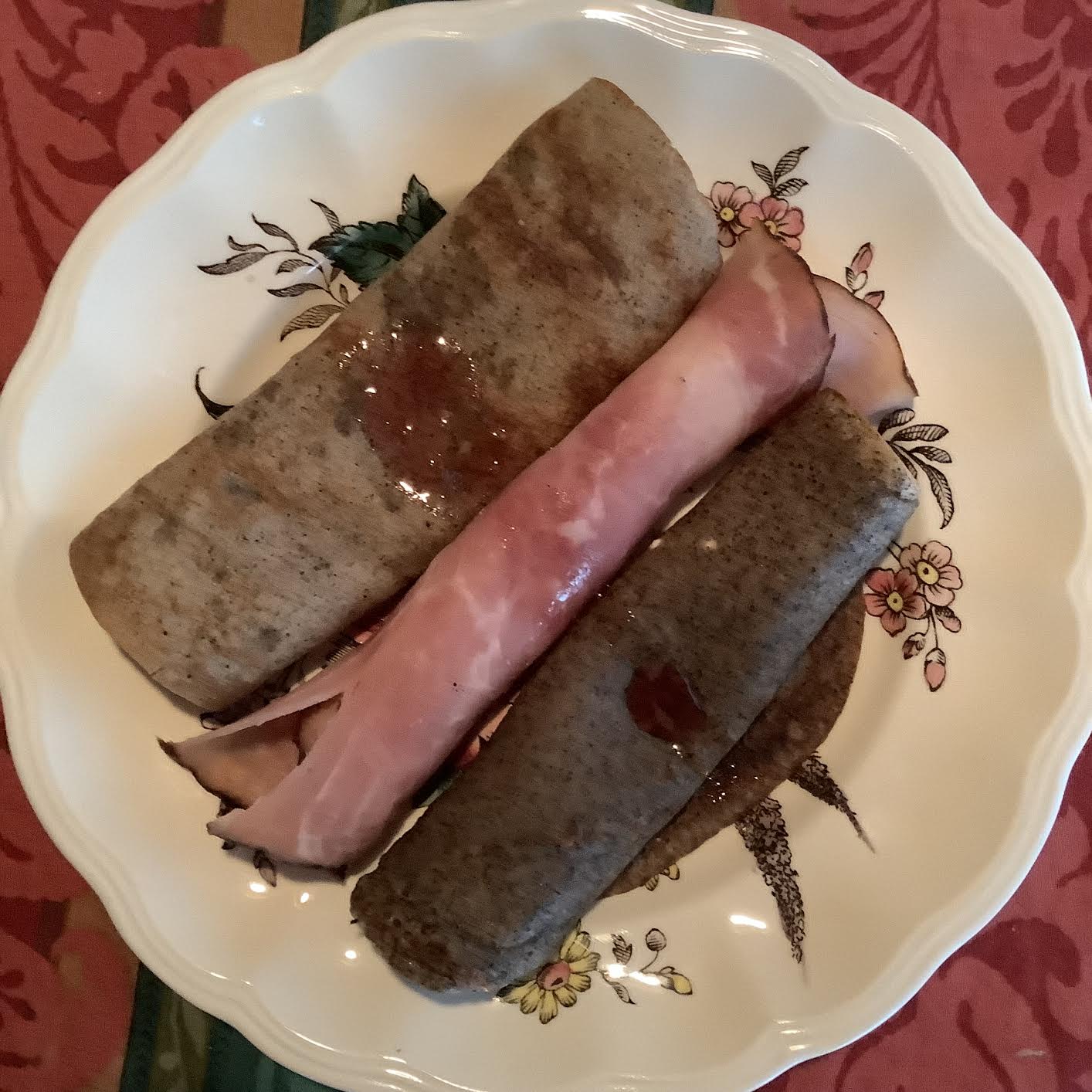
++2 buckwheat blini** ++++ 1 oz ham ++++ 1 Tbsp/ ½ fl oz Sour Cherry Syrup ++++ Optional: blackish coffee [53 calories] or blackish tea or mocha cafe au lait [65 calories] ++
If previously-made, warm the blini and roll them. Warm and roll the ham, too. Plate them all and lash with the syrup. A simple and tasty meal.
BUCKWHEAT BLINI: one batch yields 16 six-inch pancakes, ~1 oz each each = 72 calories —- 2 g fat —- 1.6 g fiber —- 2 g protein —- 10 g carbs —- 30 mg Calcium — ++1¼ c skim milk ++++ ½ c all-purpose flour ++++ ½ c white whole wheat flour ++++ ½ c buckwheat flour ++++ ¾ tsp dry yeast ++++ 1 tsp salt ++++ 2 two-oz eggs ++++ 2 Tbsp butter ++++ 3-4 Tbsp water ++
Heat milk until warm to the touch. Whisk together flours, yeast, and salt. Melt butter and let cool a bit. Mix with the warm milk, then whisk in the eggs. Combine wet and dry ingredients until no lumps remain. Let rest 90 minutes on the counter or 12 hrs in a cool place. After the resting, stir the batter and heat a well-seasoned or non-stick skillet. Spritz with non-stick spray, then wipe with a bit of paper towel. To make 6” diameter blini, I used a 3 Tbsp scoop. The batter is thicker than crepe-batter, but thinner than most pancake-batter. It begins to cook as soon as it hits the pan, so tip/rotate the pan with one hand as you add batter with the other. Then use a scraper to nudge the batter over to the edges. Cook on one side, as holes form on the top. Then turn and cook on the other side. TIP: they freeze well
Portugese Fish & Chips: 260 calories… 6 g fat… 5 g fiber… 24 g protein… 28 g carbs… 60 mg Calcium… PB GF – if using GF flour From our favorite dinner place in Souris, PEI, 21 Breakwater, comes this house specialty from the chef’s native cuisine. The batter is so light that it lets the lime-infused fish shine through. The recipe takes little time to accomplish. I have described it in detail so you can be successful.
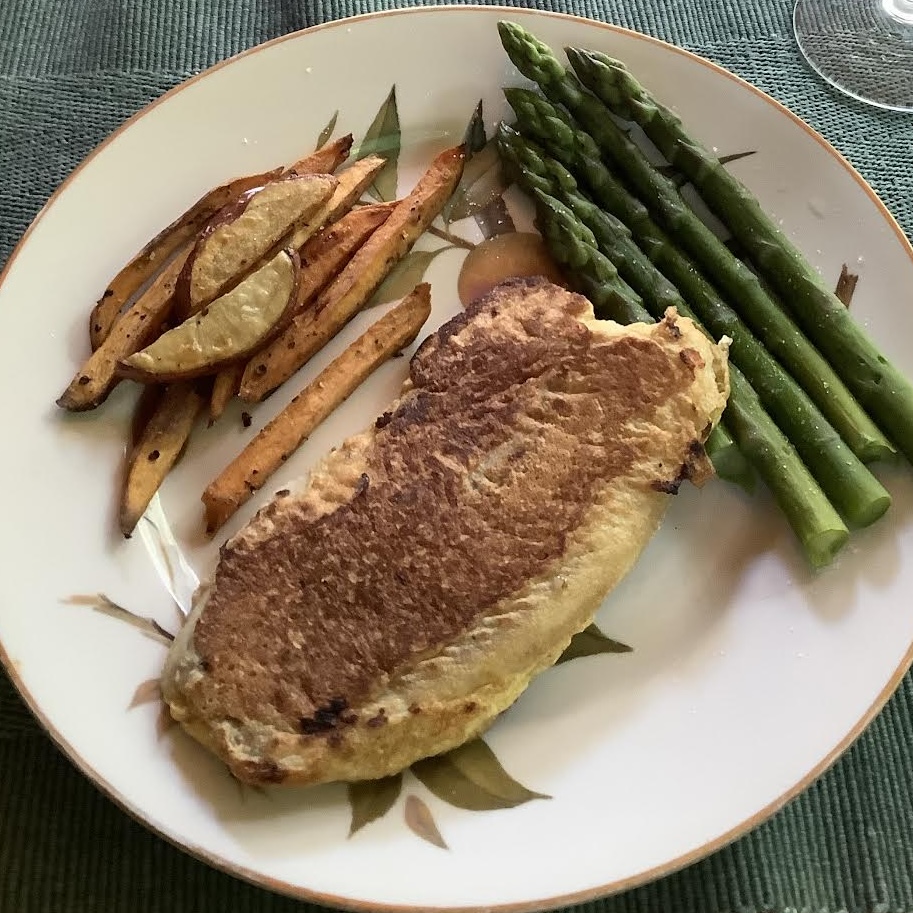
++ 3 oz tilapia or hake ++++ 1 fl. oz lime juice or lemon juice ++++ 1 egg white + 1 egg yolk ++++ 2 Tbsp white whole wheat flour ++++ 3 oz sweet potato, peeled ++++ ½ tsp canola oil ++++ ½ tsp granulated garlic++++ ¼ tsp paprika ++++ black pepper ++++ 2 oz asparagus ++
Marinate the fish in the lime juice with a pinch of salt and pepper for up to 30 minutes. Set the oven to 425 F. Peel the sweet potato and cut lengthwise into ¼” slices. Cut each slice into ¼” sticks. Put the oil in the non-stick pan that you will use to cook the fish. Add the potato sticks to the pan and toss about to coat with oil. Combine the granulated garlic, paprika, and pepper, and sprinkle on the potato sticks. Toss to distribute the seasonings. Line a baking sheet with aluminum foil with the dull side up. Spray liberally with non-stick spray. HINT: You could do this 1-2 hours in advance. Distribute the potatoes on the pan so they do not touch. Put in oven for 10-12 minutes. Meanwhile, put the asparagus on to cook. Take the fish from the marinade and pat dry with paper towels. Dredge lightly with flour. Whip the egg white into soft peaks. Fold in the egg yolk and remaining flour from dredging the fish. Heat the non-stick pan and spray with non-stick spray. Remove the fries from the oven and turn them over. Return to oven for 10 minutes more. Dip the fish in the egg batter so that it is coated on all sides. Cook the fish on one side over medium heat for 6 minutes, then on the other side for 6 minutes or until fork tender. When fries are done, turn off oven, open the door, and leave the fries in there for up to 5 more minutes. Plate all that good food and live it up, Portuguese style.
 Eating well, with creative recipes, to follow the Fasting Lifestyle according to Michael Mosley's "Fast Diet."