Slow Days: Salmon for the 4th of July

People who are new to Fasting often pose the questions: “Can I really eat ‘anything I want’ on a Slow Day?” and “What should I eat on Slow Days?” To answer those questions, I have decided to add some blog posts to show some of the foods we eat on what the world calls NFDs [non-fast days] but which, in our house, we call ‘Slow Days.’ This feature will appear sporadically. 

Now for the answers. Can you really eat ANYTHING you want on a Slow Day? Not really. If you eat too many calories every Slow Day, you will not lose weight. There are many questions asked on the FastDiet Forum  which attest to that. Once in a while you can splurge, as long as it isn’t everyday. For what to eat on Slow Days, Dr. Mosley recommends a Mediterranean Diet. As for how we eat, an example follows.

Time was, salmon ran up the rivers of New England by the thousands every year on the way to their breeding streams. They were so common that servants had clauses written into their contracts to prevent their employers from feeding them salmon every day. By early July, there is a wonderful confluence of ingredients: fresh salmon, the new green peas, and the tiny first potatoes. These became the makings of a classic meal for a traditional 4th of July in the 1800s, before anyone had ever heard of hot dogs and hamburgers and barbecue grills. If you don’t believe me, you may consult James Beard’s American Cookery [pg.119] and the Boston Globe.
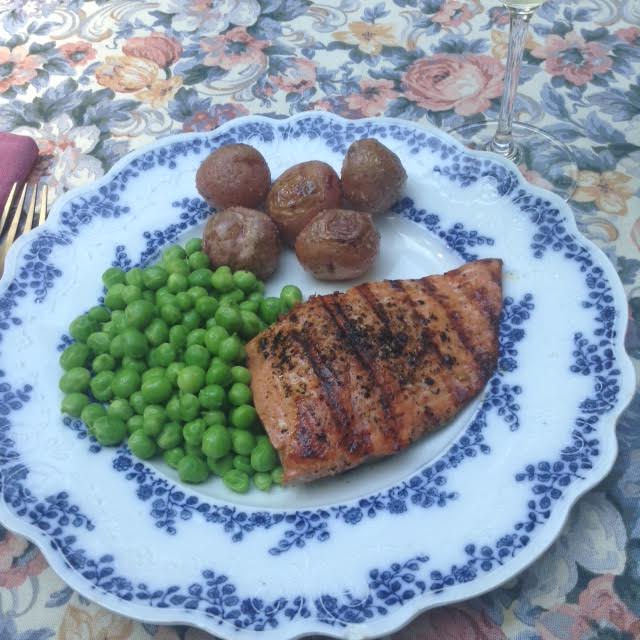
The salmon may be grilled, poached, or baked. The peas are newly liberated from their shells. The potatoes are roasted with olive oil, salt, and rosemary. A traditional [and attractive, and delicious] way to celebrate our Independence Day.

Slow Days: Artistic Bread

People who are new to Fasting often pose the questions: “Can I really eat ‘anything I want’ on a Slow Day?” and “What should I eat on Slow Days?” To answer those questions, I have decided to add some blog posts to show some of the foods we eat on what the world calls NFDs [non-fast days] but which, in our house, we call ‘Slow Days.’ This feature will appear sporadically. 

Now for the answers. Can you really eat ANYTHING you want on a Slow Day? Not really. If you eat too many calories every Slow Day, you will not lose weight. There are many questions asked on the FastDiet Forum which attest to that. Once in a while you can splurge, as long as it isn’t everyday. For what to eat on Slow Days, Dr. Mosley recommends a Mediterranean Diet. As for how we eat, an example follows.

You’ve heard of ‘artisan bread,’ but have you ever seen bread that is artistic? I hadn’t, until our older son suggested it while we discussed what to serve at a small dinner party. We start with his recipe for ‘No-Knead Foccacio’ which is simplicity itself.

2 breads to serve 6-101 bread to serve 3-5
500 grams bread/strong flour
375 g water
10 g salt
6 g dry yeast
25 grams bread flour
187 g water
5 g salt
3 g dry yeast
Put all ingredients in a bowl with some mixing and rising room. Combine, using a fork, a spoon, or your hands, until it looks like a shaggy ball.
Cover the bowl and let rest 8-12 hours – overnight works well.
After rising over-night, the dough is ready to use.

Lightly brush olive oil onto two 8×15” pans or one large sheet pan. Divide the dough in half. Pat each half into an 8×12” rough oval on the pan. Let stand 1-2 hours

Each half of the dough is patted out on an oiled pan as a rough 8×12-inch canvas.

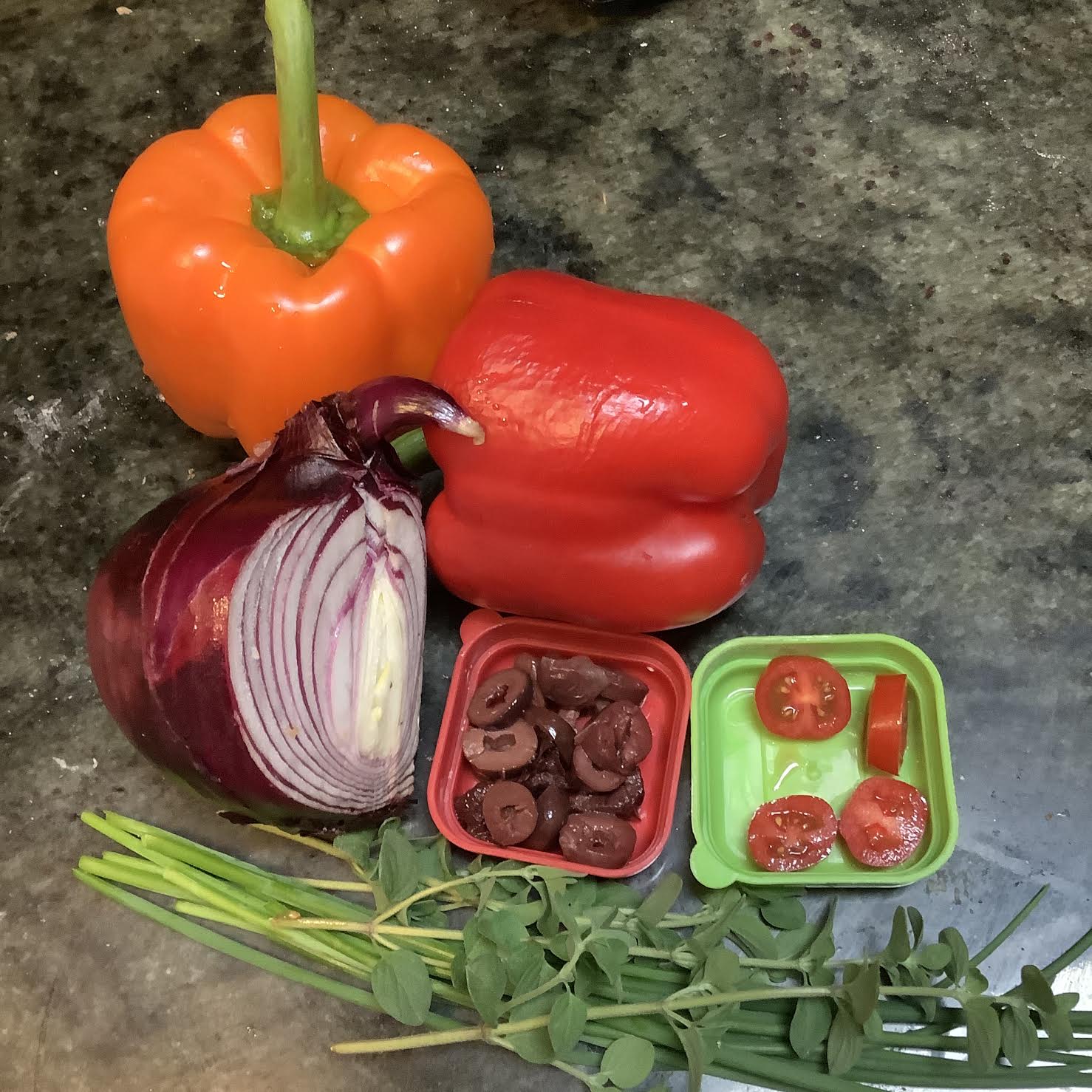
Two colors of bell peppers, red onion, black olives, cherry tomatoes, chives, and marjoram sprigs are the ‘paints’ you use to create your picture.

NB: I had drawn a design in advance to guide me in planning the vegetable placement. Brush the dough with olive oil and sprinkle with finishing salt. Cut the vegetables into the shapes you want for your design, then place them on the dough in a way that pleases your eye.

Ready to go in the oven, after a 15-minute rise.

Bake at 400F for 20 minutes, until crust begins to golden and the bottom of the bread is cooked. Serve warm or at room temperature to rave reviews. Should there be any left-over, it freezes very well.

On the table, ready for the guests.

Slow Days: Naan DIY

People who are new to Fasting often pose the questions: “Can I really eat ‘anything I want’ on a Slow Day?” and “What should I eat on Slow Days?” To answer those questions, I have decided to add some blog posts to show some of the foods we eat on what the world calls NFDs [non-fast days] but which, in our house, we call ‘Slow Days.’ This feature will appear sporadically. 

Now for the answers. Can you really eat ANYTHING you want on a Slow Day? Not really. If you eat too many calories every Slow Day, you will not lose weight. There are many questions asked on the FastDiet Forum which attest to that. Once in a while you can splurge, as long as it isn’t everyday. For what to eat on Slow Days, Dr. Mosley recommends a Mediterranean Diet. As for how we eat, an example follows.

Today, I thought it would be fun to make a batch of naan, a bread of India. More than 2500 years ago, ‘chapati’ was the peoples’ bread: unleavened flatbread baked on a griddle. After yeast was introduced to India from Persia or Egypt, experimentation lead to making naan. Originally it was the food of royalty, savored for its light texture. One author says how difficult it is to make, and therefore limited to palace kitchens. When I found out how simple naan is to prepare, I just had to try them. Even thought the dough is made with yeast, it is much less involved than making a loaf of bread. The recipe is by Aarti Sequeira.

1 tsp dry yeast
1 tsp sugar
3/4 c 110 F water
In a large glass or 16-oz measuring cup, combine the yeast, sugar and water. Let stand until foamy, 5 to 10 minutes.
2 c white whole wheat flour**
1 tsp salt
1 tsp sugar
1/8 tsp baking powder
Sift the flour, salt, sugar and baking powder into a large, deep bowl. Whisk to blend. 
3 Tbsp plain yogurt
2 Tbsp vegetable oil
Once the yeast is frothy, pour the yogurt and the olive oil into the glass, and stir to combine.
****If you would like to make this gluten-free, you can substitute in 2 1/4 cups of gluten-free all-purpose flour mix for the regular flour, plus 1 1/4 tsp xanthum gum.
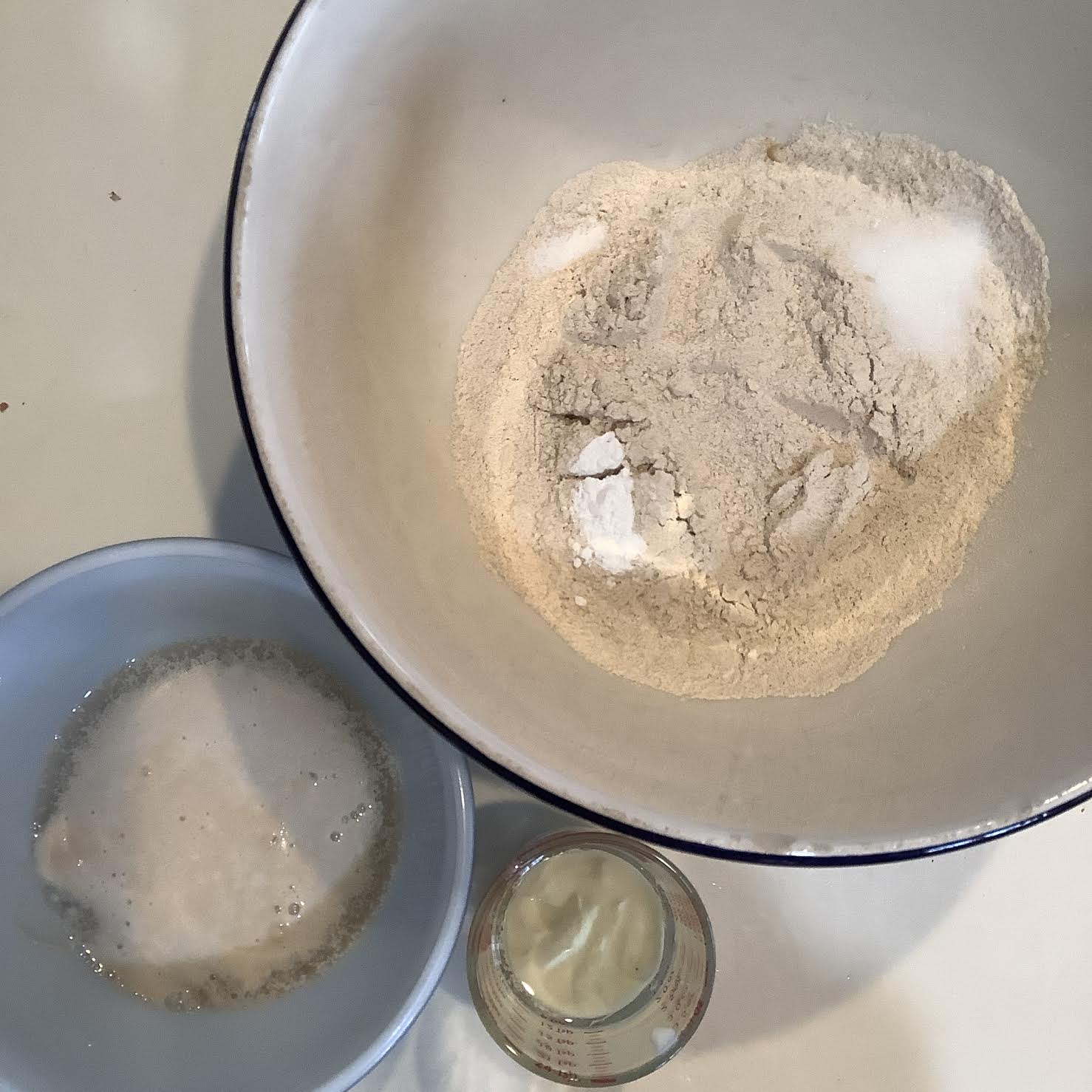
Ingredients for the first three steps of the recipe await mixing.
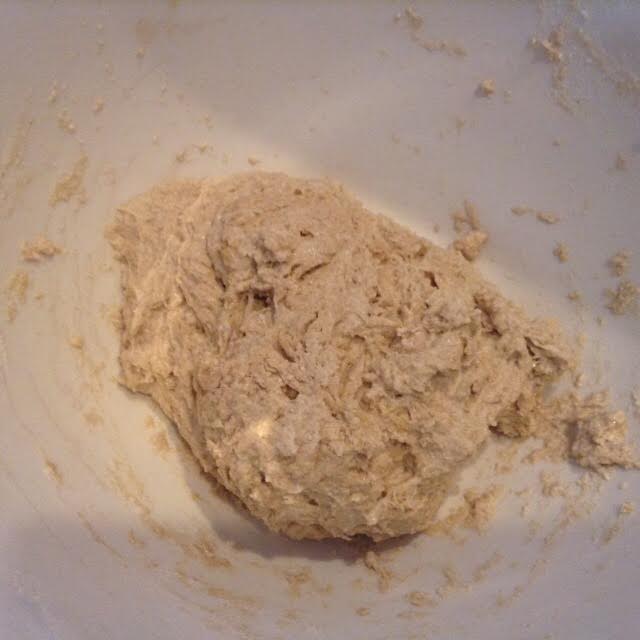
Pour the yogurt mixture into the dry ingredients and gently mix the ingredients together with a fork. When the dough is about to come together, use your hands to mix. It will feel as if there isn’t enough flour at first, but keep going until it transforms into a soft, slightly sticky, pliable dough. As soon as it comes together, stop kneading.
Cover the dough with plastic wrap or a damp tea towel and let it sit in a warm, draft-free place for 2-4 hours.
Have two bowls near-by: one with flour in it, + one with water. The dough will be extremely soft and sticky — the way it should be! Divide dough into 8 or 10 or 12 equal portions and lightly roll each portion in the bowl of flour to prevent sticking to each other.
++if using gluten-free flour, pat the naans into shape with your hands and fingers.With a rolling pin++, roll out each dough ball on a lightly floured work surface into a tear-drop shape about 4-6“ in diameter and 1/4” thick. Lift up by one end and wiggle it — the dough’s own weight will make it stretch a bit. Repeat with remaining dough.
Have: Cast iron skillet
lid to fit the skillet
Warm the skillet over high heat until it’s nearly smoking. Dampen your hands in the bowl of water and pick up one of your naans. Patty-cake it from one hand to the other to dampen it slightly.
Gently lay each naan in the skillet + set timer for 1 minute. The dough should start to bubble. Flip the naan. It should be blistered + a little blackened, don’t worry – that’s typical! Cover the skillet with the lid and cook 30 seconds to 1 minute more. Repeat with remaining dough.

Here they are skillet-baked and ready to eat. You have seen the naan in some of my previous recipes, such as Indian Vegetables with Turkey and Naan. Create your own favorite way to eat this bread and imagine that you are an Indian Noble.

Slow Days: Vegetable Quiche

People who are new to Fasting often pose the questions: “Can I really eat ‘anything I want’ on a Slow Day?” and “What should I eat on Slow Days?” To answer those questions, I have decided to add some blog posts to show some of the foods we eat on what the world calls NFDs [non-fast days] but which, in our house, we call ‘Slow Days.’ This feature will appear sporadically. 

Now for the answers. Can you really eat ANYTHING you want on a Slow Day? Not really. If you eat too many calories every Slow Day, you will not lose weight. There are many questions asked on the FastDiet Forum  which attest to that. Once in a while you can splurge, as long as it isn’t everyday. For what to eat on Slow Days, Dr. Mosley recommends a Mediterranean Diet. As for how we eat, an example follows.

Mention ‘quiche’ and many thoughts are conjured: Quiche Lorraine; quiche on every restaurant menu for lunch; “Real Men Don’t Eat Quiche;” thick slabs of it; thin tarts of it; hors d’oeuvres; the best of quiche and the worst of quiche. My mother and her friend took a local French Cooking course in the 1960s, and came home to bake Quiche Lorraine. I thought it was rather boring. In the 1980s, Dear Husband and I frequented Peter Christian’s Tavern where we were served a wonderful, cheese-filled quiche. That recipe became one of our family-filling meals for a meatless night.

Although quiche is a French word, the dish comes from the former independent Duchy of Lorraine, a land that became a shuttlecock in a global badminton game between France and Germany, until it became French for good after WW2. The quiche of that country was originally bread dough in a pie plate, covered with a custard of milk/cream, egg, and a bit of bacon. After some evolution, pie crust lined the plate and cheese along with vegetables were added. Quiche was first popular in England after WW2, then in the USA in the 1950s, reaching its peak in the 1970s. Now it is making a comeback, and I invite you to put it on your menu: for the family, for friends — should you ever dine with friends again.

Our Vegetable Quiche is a combo of recipes from Peter Christian’s Recipes and the Town Farm Restaurant Cookbook [Bar Harbor, Maine]. We served it recently and fell in love with it all over again.

A pie crust, some onion, broccoli, and zucchini… Dill Havarti, Cheddar, Swiss Gruyere… eggs, milk. Very elemental ingredients.

That’s a 9-inch quiche/tart/flan pan.

Prepare a pie crust and fit it into a pie plate or tart pan. Sprinkle 2 Tbsp chopped onion over the pie crust. Measure 4 cups of chopped vegetables and steam them until they are just tender. Drain the vegetables and permit them to ‘out-gas’ for a bit while you grate the cheese. Use 2 cups Gruyere, 1 cup Cheddar, and 1 cup dill Havarti. Distribute the vegetables over the onions, then top with cheese. Set the oven at 400 F. Whisk 3 eggs with one cup of milk, salt, pepper, and herbs in abundance. Carefully pour the egg-milk over the contents of the quiche pan — it will be very full. Bake at 400F for 15 minutes, then lower the heat to 350F and bake for 20-30 minutes longer.

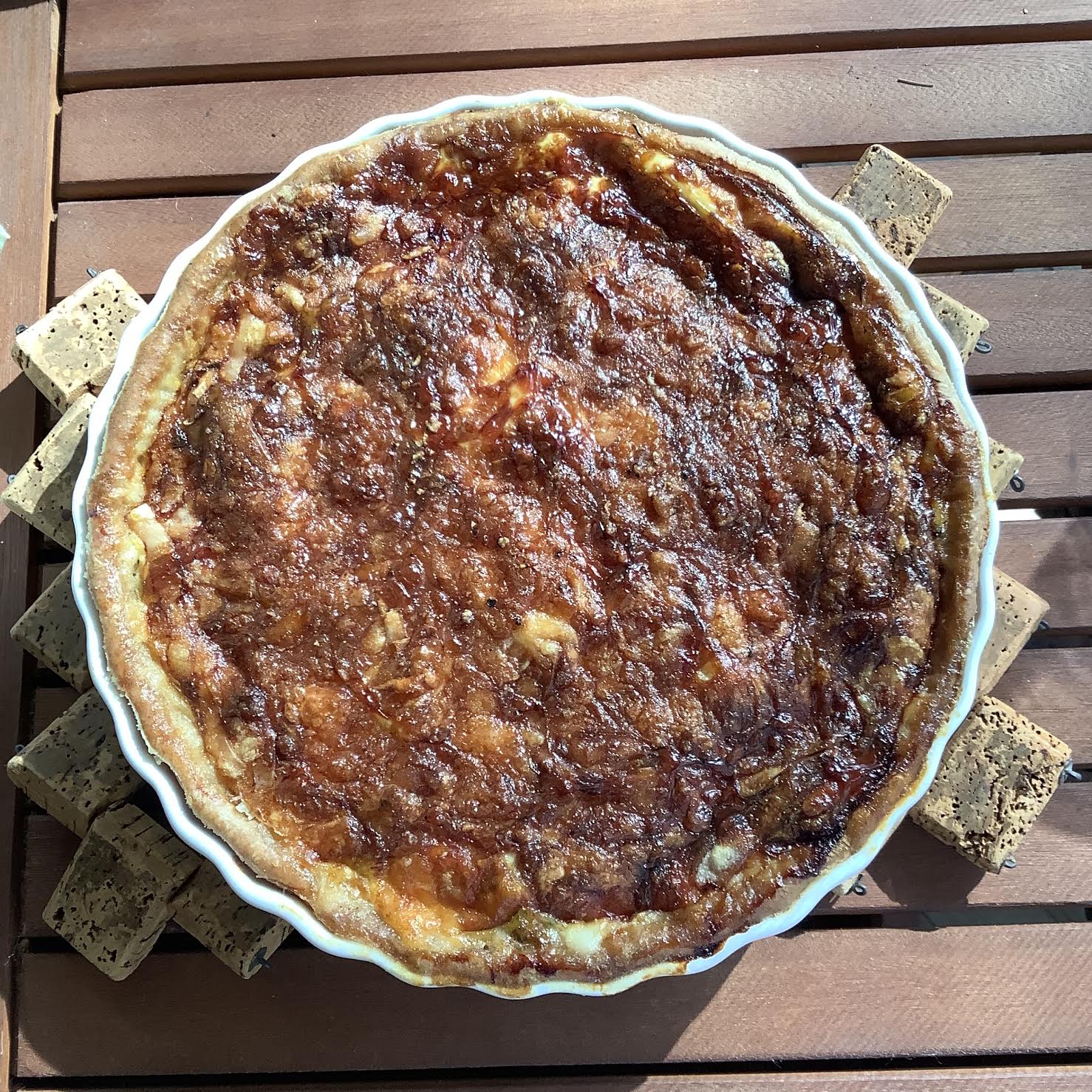
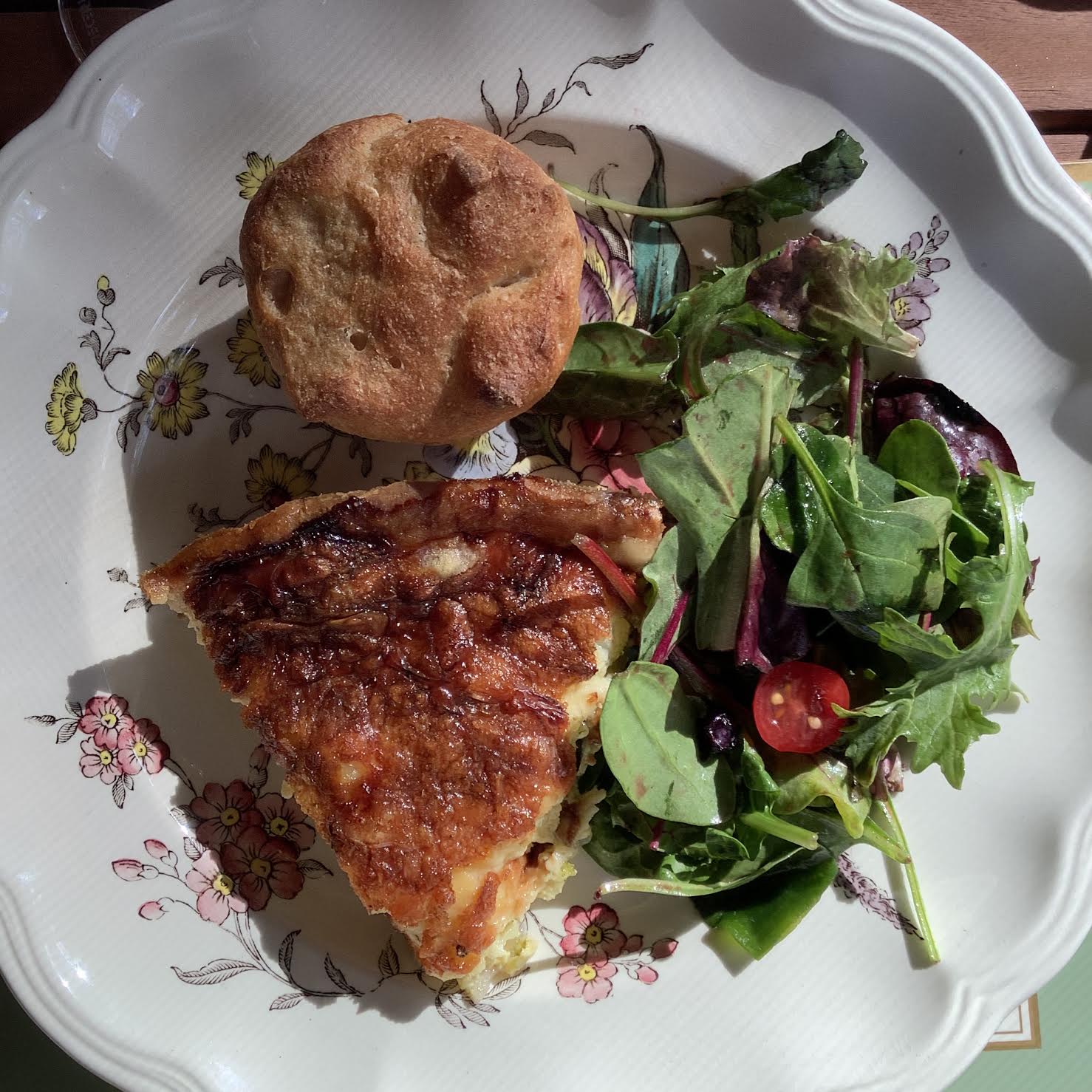
Out of the oven and on to the table.

The quiche should sit for 15-20 minutes before serving.

Served with a good green salad and airy home-made rolls — can’t be beat. Serves 6 easily.

Slow Days: Penne with Tuna and Tomatoes

People who are new to Fasting often pose the questions: “Can I really eat ‘anything I want’ on a Slow Day?” and “What should I eat on Slow Days?” To answer those questions, I have decided to add some blog posts to show some of the foods we eat on what the world calls NFDs [non-fast days] but which, in our house, we call ‘Slow Days.’ This feature will appear sporadically. 

Now for the answers. Can you really eat ANYTHING you want on a Slow Day? Not really. If you eat too many calories every Slow Day, you will not lose weight. There are many questions asked on the FastDiet Forum which attest to that. Once in a while you can splurge, as long as it isn’t everyday. For what to eat on Slow Days, Dr. Mosley recommends a Mediterranean Diet. As for how we eat, an example follows.

On Wednesday, which is a Slow Day in our house, we invariably dine on a pasta meal. There are so many fine ways to top a plate of pasta that it can be a while until a particular meal is repeated. What follows is a recipe from Diary of a Tuscan Chef by Cesar Casella & Eileen Daspin. The chef calls it “Garganelli con Tonno Fresco,” but we call it Penne with Tuna & Tomatoes. This is so special and so easy to prepare that we schedule it when we want a lot of impact even when there is little time.

My job is to prepare the mise en place and to cook the pasta.

Here we see fresh tuna cut into 1/2 inch cubes, along with garlic chopped with fresh oregano, and 2 cups of halved cherry tomatoes. Cook the pasta of choice in salted water. Meanwhile, saute the garlic and oregano in olive oil until the garlic begins to color. Add the tuna and a pinch of crushed red pepper, and cook, stirring, for 3-4 minutes until the fish is done to your liking. Remove the tuna from the pan to a plate or bowl. Drain the pasta, saving some cooking water. Deglaze the saute pan with about 1/3 cup white wine, and let it cook down while you scrape brown bits off the bottom of the pan. Add the pasta water and the tomatoes to the pan and cook for 2 minutes. Toss in the pasta, some chopped parsley, the cooked tuna, and a sprinkle of salt and pepper. That took less than 15 minutes.

Dear Husband cooks the meal and chooses the wine.

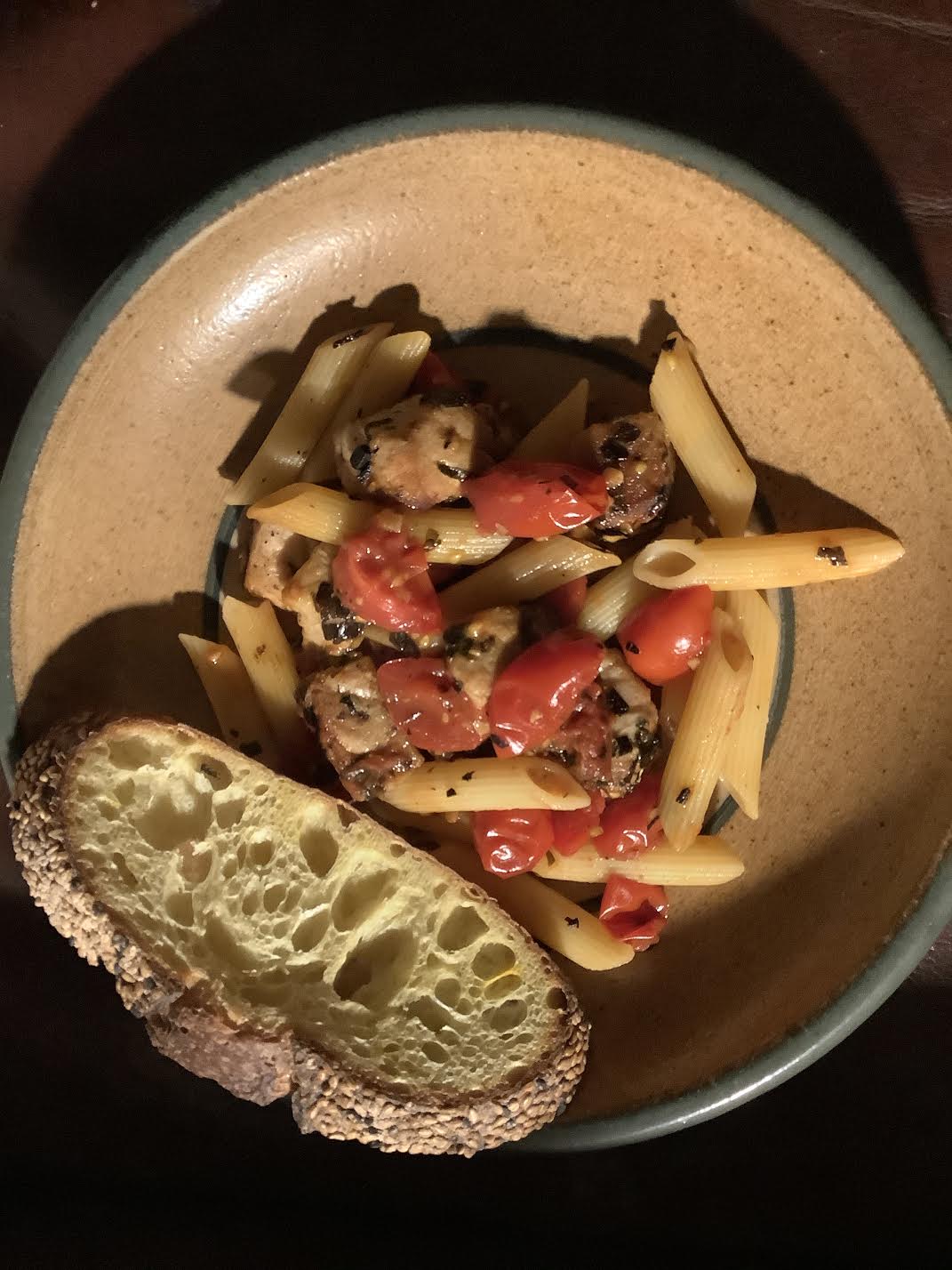
Plate with crusty bread and a crisp salad of many different greens. Easy and delicious — especially when Dear Husband does all the cooking.

Tomorrow marks the 8th anniversary of our Fasting Lifestyle. Our weight is still down where we want it to be, our health is good. And we continue to eat pasta on Wednesdays — what a life!

Slow Days: Hot Cross Bun Pancakes

People who are new to Fasting often pose the questions: “Can I really eat ‘anything I want’ on a Slow Day?” and “What should I eat on Slow Days?” To answer those questions, I have decided to add some blog posts to show some of the foods we eat on what the world calls NFDs [non-fast days] but which, in our house, we call ‘Slow Days.’ This feature will appear sporadically. 

Now for the answers. Can you really eat ANYTHING you want on a Slow Day? Not really. If you eat too many calories every Slow Day, you will not lose weight. There are many questions asked on the FastDiet Forum  which attest to that. Once in a while you can splurge, as long as it isn’t everyday. For what to eat on Slow Days, Dr. Mosley recommends a Mediterranean Diet. As for how we eat, an example follows.

The pre-Easter season of Lent calls for Hot Cross Buns. I love to make them and to eat them, but that is for a posting next year. If you want a real treat for a Lenten Sunday morning, try these pancakes. The recipe comes from the website Joy The Baker, where I have found many fine kitchen projects. Below, you will see the mixtures that will be combined for the batter: milk-egg-butter + flour-spices + fruit-zests.

2 T butter, melted/ cooled
1 cup buttermilk/soured milk
1 two-oz egg
1 tsp pure vanilla extract
In a small bowl whisk together butter, buttermilk, egg, and vanilla extract. Set aside.
1 cup white-whole-wheat flour
1 Tbsp brown sugar
1 tsp baking powder
½ tsp baking soda + ½ tsp salt
½ tsp ground cinnamon
¼ tsp freshly grated nutmeg
1/8 tsp ground cardamom
In a medium bowl, whisk together flour, sugar, baking powder, baking soda, salt, and spices. Add the wet ingredients all at once to the dry ingredients. Stir to combine. It is ok if the mixture is a bit lumpy.
¼ cup dried currants
1 tsp fresh lemon zest
1 tsp fresh orange zest
Add the currants and fruit zest and stir to combine. Allow mixture to sit for 5 minutes while the griddle heats.
Preheat oven to 150 F. Place an oven-proof plate in the oven. This is where the pancakes will stay warm while the entire batch is cooked.
1 tsp butter for cooking 
splash oil for cooking
pure maple syrup for serving
Heat griddle (or nonstick skillet) over medium. Heat fat until hot, then wipe off with paper towel. Save the towel. Spoon 2 Tbsp batter** onto the griddle for each ‘cake. Fry until golden, flipping once. Place cooked pancakes on warm plate in oven and cover with a clean towel. Wipe griddle with the buttery paper towel and spray with non-stick spray for each batch.
**Dear Husband just free-formed them, yielding 10 pancakes. If one used 2 Tbsp of batter, as described in the recipe, one would probably produce more pancakes. Suit yourself.

Joy The Baker says to top your stack of pancakes with a piped icing cross. Look, when the pancakes are hot off the griddle, we don’t mess around — they go straight to the table for eating. We used a cross of good New Hampshire maple syrup instead of icing. Delicious pancakes!

Slow Days: Pastitsio

People who are new to Fasting often pose the questions: “Can I really eat ‘anything I want’ on a Slow Day?” and “What should I eat on Slow Days?” To answer those questions, I have decided to add some blog posts to show some of the foods we eat on what the world calls NFDs [non-fast days] but which, in our house, we call ‘Slow Days.’ This feature will appear sporadically. 

Now for the answers. Can you really eat ANYTHING you want on a Slow Day? Not really. If you eat too many calories every Slow Day, you will not lose weight. There are many questions asked on the FastDiet Forum which attest to that. Once in a while you can splurge, as long as it isn’t everyday. For what to eat on Slow Days, Dr. Mosley recommends a Mediterranean Diet. As for how we eat, an example follows.

My friend Nick, a pure Greek-American from the Greek neighborhoods of Manchester, NH, called pastitsio ‘Greek macaroni and cheese.’ If your mac&cheese is in a rut, try this variation — it is really good. And don’t even think of telling Nick’s mom that pastitsio originated in Italy!

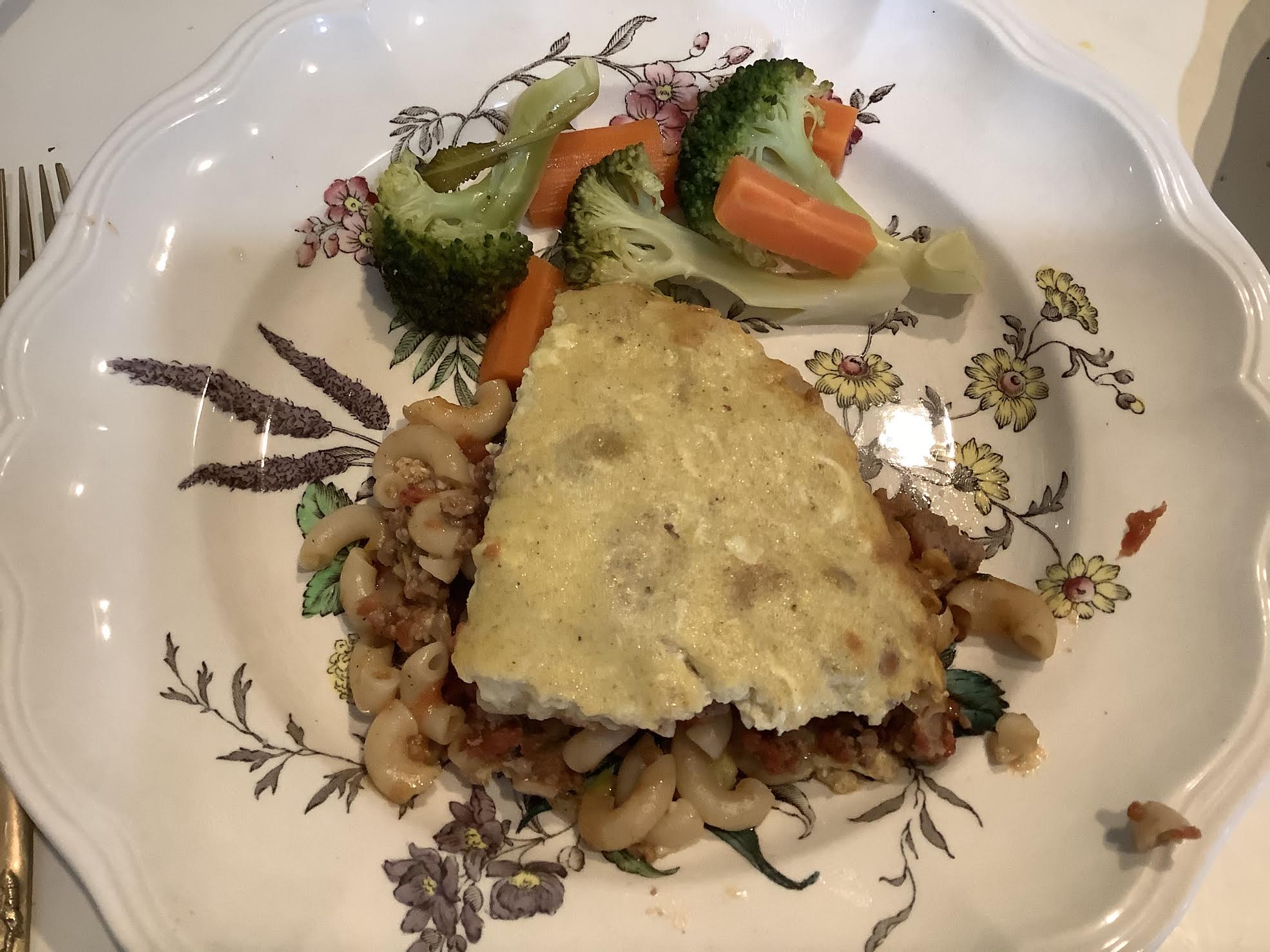
Ground lamb meat, onion, tomatoes, cinnamon, Greek oregano, butter [not the entire stick], elbow macaroni — here is the basis of Pastitsio. The oregano and cinnamon tell you how Greek it is. Nick always wondered how the early Greeks got tomatoes, but he was willing to give that a pass….

Pastitsio Sauce + Casserole
1 cup chopped onion
½ pound ground lamb
Saute onion and meat in a heavy saucepan while stirring sometimes until the meat is brown and the onions are golden.
1 cup crushed or whole tomatoes
1½ tsp salt freshly ground pepper
1 tsp Greek oregano
1½ tsp cinnamon
Stir in these ingredients and simmer 5 mins.
½ cup Gruyere cheese, gratedStir in the cheese and taste for seasonings.
3 oz elbow macaroniCook the elbows. Stir them into the tomato sauce and turn the mixture into an oil-sprayed 1-Qt casserole.
Salsa BesamelTop with salsa besamel and bake at 350F for 30 minutes.

The meat sauce is combined with cooked pasta and then you prepare a besamel…..

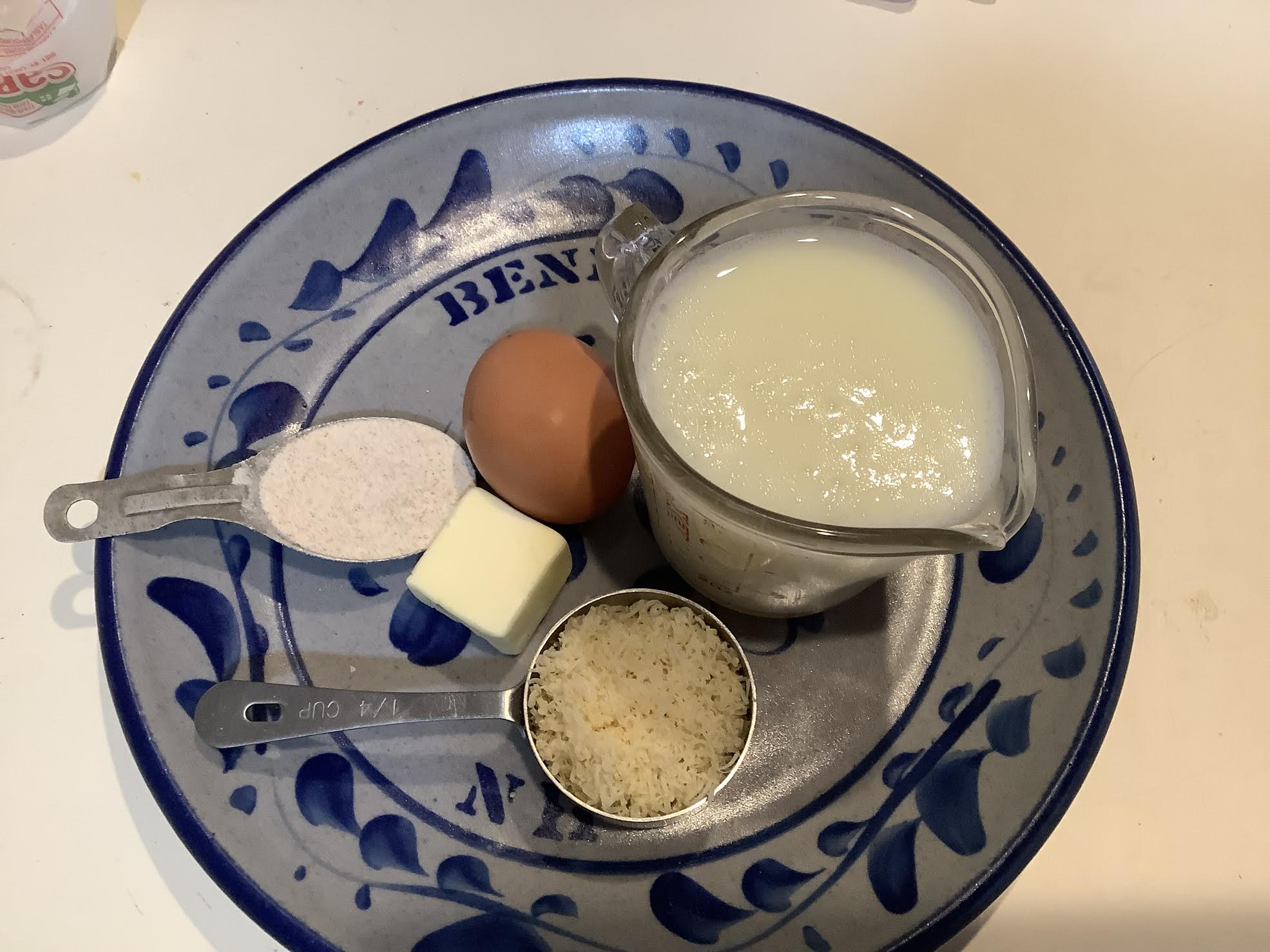
The salsa besamel goes on top. Milk thickened with a butter-flour mixture, grated cheese and egg all combine in a sauce that is poured on top of the pasta and sauce prior to baking.

Salsa Besamel
2 Tbsp butter Melt butter in a saucepan. Take off heat.
1 Tbsp flour
½ tsp salt
1/8 tsp white pepper
1 cup milk
Stir in flour, salt, and pepper, then add the milk gradually and stirring all the time. Put on low heat and stir for 5 minutes.
1 egg yolk
¼ c grated Parmesan cheese
Beat together in a small bowl, then slowly add the warm white sauce and stir constantly.
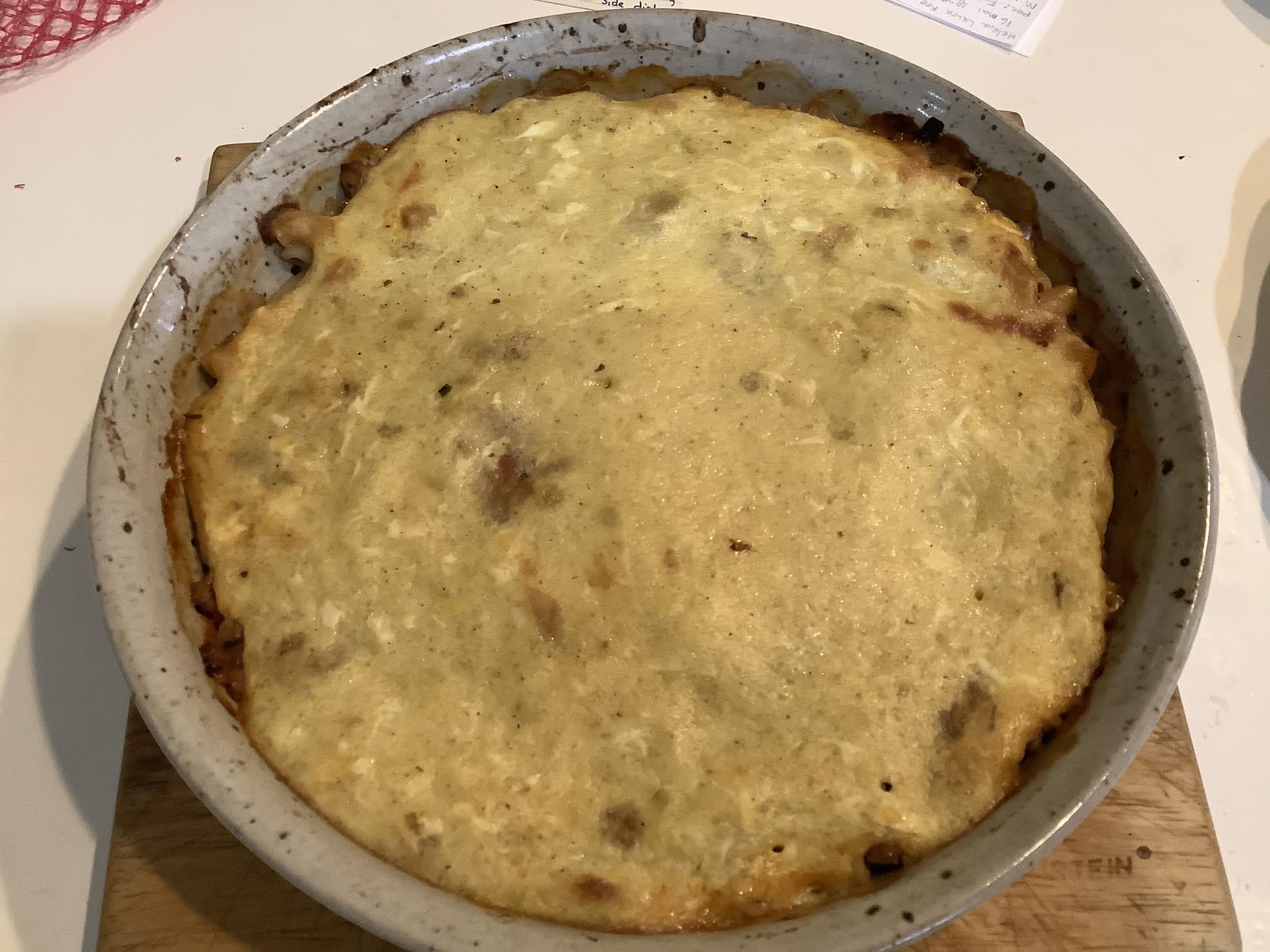
Baked to a golden turn.

Serve with Winter Vegetables, as seen here, or with a Greek Salad, Pastitsio makes for a hearty mid-Winter meal. Delicious.

Slow Days: Fastnachts

People who are new to Fasting often pose the questions: “Can I really eat ‘anything I want’ on a Slow Day?” and “What should I eat on Slow Days?” To answer those questions, I have decided to add some blog posts to show some of the foods we eat on what the world calls NFDs [non-fast days] but which, in our house, we call ‘Slow Days.’ This feature will appear sporadically. 

Now for the answers. Can you really eat ANYTHING you want on a Slow Day? Not really. If you eat too many calories every Slow Day, you will not lose weight. There are many questions asked on the FastDiet Forum which attest to that. Once in a while you can splurge, as long as it isn’t everyday. For what to eat on Slow Days, Dr. Mosley recommends a Mediterranean Diet. As for how we eat, an example follows.

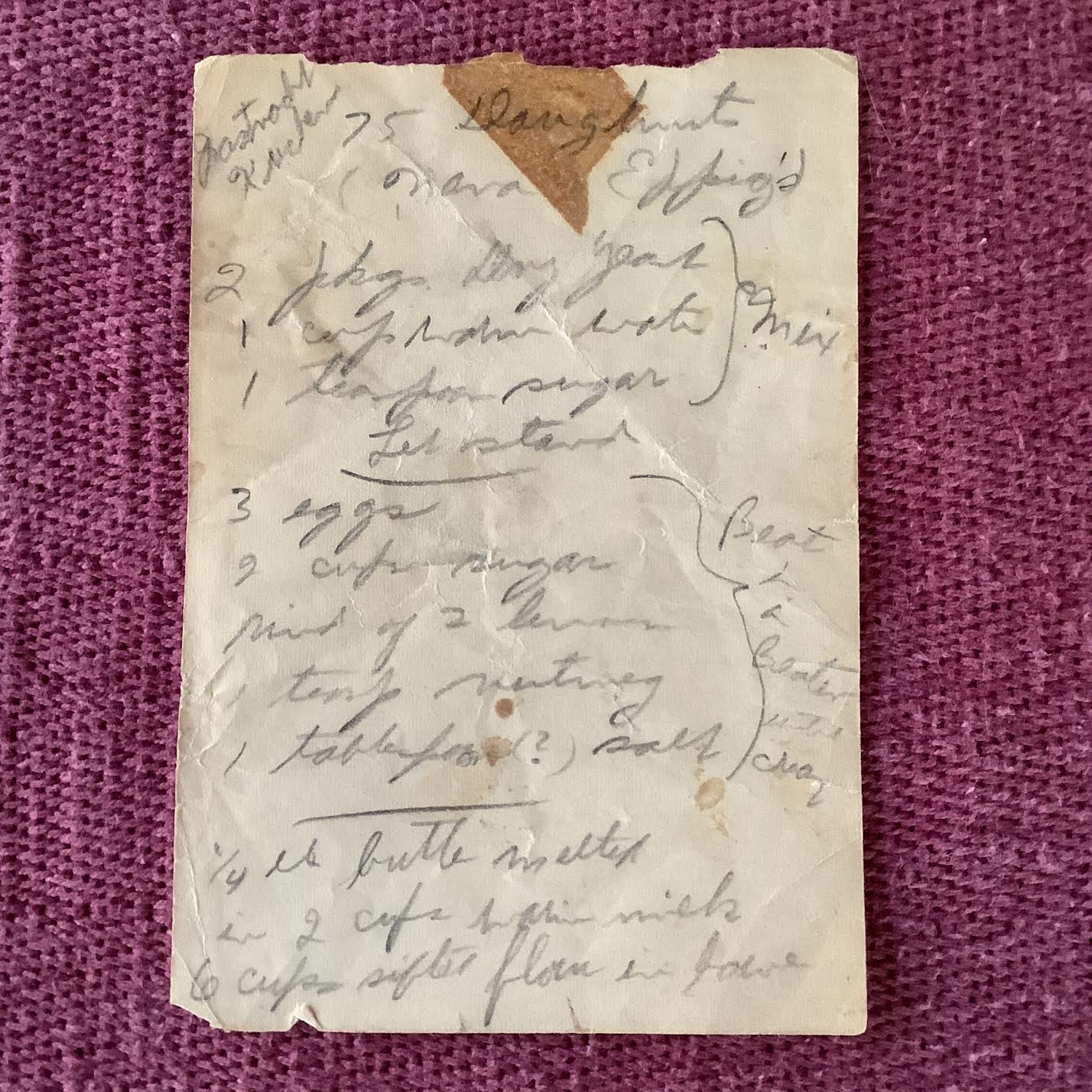
In England, it is Shrove Tuesday. In N’Orleans, it is Mardi Gras. In Brazil, it is Carneval. In Poland, it is Pączki Day. But in Germany and “Pennsylvania Dutch Country”, it is Fastnacht Day. When I was a child, my mother [who’s distant ancestors were French/Swiss/German but who was raised in South Central Pennsylvania] often made doughnuts with us on the last Tuesday before Ash Wednesday, “To use up all the eggs and fat in the house before the start of Lent.” Of course, we still had lots of butter-sugar-Crisco-eggs in the house, so it was more a cultural food tradition. Dear Husband’s father came from a very German family: half of his grandparents were born in Bavaria, where the day is called Fasching. Dear Husband remembers that his father used to fry Fastnachts for breakfast the day before Lent began. I am delighted to have Dear Husband’s grandmother’s recipe for “Fastnacht Kuchen,” as written out by one of her daughters.

Here is Nana’s recipe, written out by her daughter Josephine.

After struggling with the recipe for years without success [compounded by the fact that I’m lousy at deep-fat frying], I developed my own method while still using the original ingredients and proportions. A major change: mine are baked, not deep fat fried. Dear Husband loves them.

ORIGINAL RECIPE
Makes 75
Original directions MY VERSION makes 10 Here’s how I do it.
1 cup warm water
1 tsp sugar
2 pkg dry yeast
“Mix” 3 Tbsp warm water
pinch sugar
¾ tsp yeast
Start before noon the day before you want to serve them. Combine and let stand until yeast is bubbly.
Three 2-oz eggs
2 cup sugar
rind of 2 lemons
1 tsp nutmeg
1 Tbsp salt
“Beat together with a beater until ___[can’t read]____” 1 oz beaten egg
1/3 c sugar
2 tsp lemon zest  
2 pinches nutmeg
½ tsp salt
Stir together these ingredients in a medium-sized bowl, then add the yeast mixture.
Combine well with a hand-held electric mixer.
¼ pound butter
2 cup milk
“Melt the butter in 2 cups warm milk.” 3 Tbsp butter
1/3 cup milk
Heat milk to scalding and melt butter in it. Let cool to lukewarm.
6 cups sifted flour“In a bowl. Add alternately until mixed well. Let stand overnight in a warm place.”  ½ c white whole wheat flour
¾ c all-purpose flour
Place the flour in a bowl and add the egg mixture and the butter mixture alternately to the flour. Stir to combine well. Let rise, covered, 6 hours in a warm place. Do the next step in the evening.
More flour for kneading
Lard for frying
“Flour waxed paper and knead 2 Tbsp at a time. Cut out doughnuts**. Let rise 2 hours. Fry in lard.” [last word underlined twice!]   More flour for kneading The dough is very sticky. Kneading alone will fix that, trying not to add much flour. Knead on a buttered or lightly-floured board until it can be handled and will hold its shape but is not stiff. Form into balls [non-traditional] or squares with a slit in the middle [traditional] and put in the refrigerator overnight. [**Not supposed to be doughnut-shaped] 
Melted lard for brushing 
Icing sugar
Heat oven to 425 F. Grease a baking sheet with melted lard. Brush the Fastnachts with melted lard and bake 10+ minutes. Shake icing sugar on top and serve warm. They freeze well.

Ready for breakfast, complete with Mardi Gras beads

Slow Days: Chicken Chasseur

People who are new to Fasting often pose the questions: “Can I really eat ‘anything I want’ on a Slow Day?” and “What should I eat on Slow Days?” To answer those questions, I have decided to add some blog posts to show some of the foods we eat on what the world calls NFDs [non-fast days] but which, in our house, we call ‘Slow Days.’ This feature will appear sporadically. 

Now for the answers. Can you really eat ANYTHING you want on a Slow Day? Not really. If you eat too many calories every Slow Day, you will not lose weight. There are many questions asked on the FastDiet Forum which attest to that. Once in a while you can splurge, as long as it isn’t everyday. For what to eat on Slow Days, Dr. Mosley recommends a Mediterranean Diet. As for how we eat, an example follows.

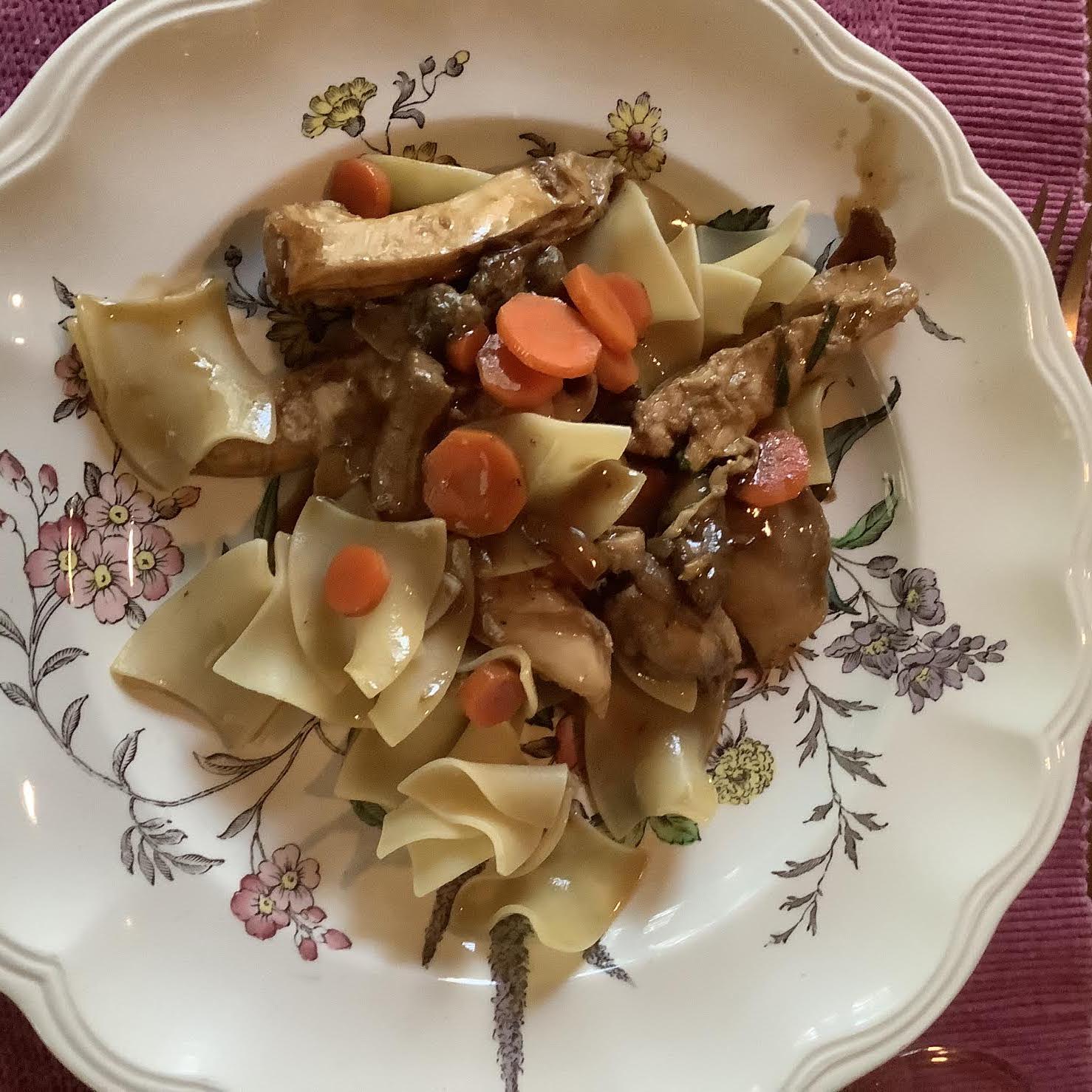
We enjoy eating the chickens that we raised ourselves — it is good to know that we have them in the freezer. Besides that, chicken is good for you: recommended in the Mediterranean Diet and the MIND Diet. When we schedule chicken for two Sundays each month, the cook must have many, varied ways to prepare it. Roast Chicken is wonderful, producing meals and soup stock. And then there is Chicken Chasseur. The name ‘chasseur’ refers to hunters, as does its Italian equivalent ‘cacciatore.’ This marks it as a meal of Autumn, when the hunting parties would be in the woods finding game AND wild mushrooms. Mushrooms are the hallmark of any proper chasseur recipe. We seek wild mushrooms all year ’round, but this meal is specifically for cool weather.

mise en place for Chicken Chasseur Recipe is from Salute to Healthy Cooking by the French Culinary Institute.

To serve two, I’m using two leg-thigh pieces which have been browned in a little oil. Even though the meat will be braised/stewed, it is a good idea to brown it first since that enhances the flavor. Here is the full recipe:

24 oz bone-in chicken parts
salt & pepper
1 tsp oil
Season chicken and sear, skin-side down, for 3 mins in a Dutch oven or heavy cast-iron pan with a lid. Bake 20 mins @ 350F. Remove chicken from the pan, then skin and bone it.
½ cup sliced onion
1 carrot, chopped
2 c. brown stock or Veal stock
Put the veggies in the pan you used to roast the chicken. Cook 3 mins until caramelized. Add stock and simmer until reduced to 1 cup. Strain through a sieve and skim fat.
1 tsp oil
2 c. [5 oz] sliced mixed mushrooms
2 shallots, minced
Good mushrooms can be found in most supermarkets if you are not able to hunt for them. Saute shallots with mushrooms 5 mins or until mushrooms are golden. Add a sprinkle of salt and remove from heat.
2 Tbsp cognacAdd cognac to hot mushrooms and flame the mixture.
1/3 cup dry white wineAdd to pan and return to heat. Bring to a boil, reduce heat, and simmer 10 mins. Add sieved, defatted stock and simmer 5 mins, until sauce coats the back of a spoon.
Fresh tarragon leaves
boned chicken meat
Add to sauce and warm while the noodles and carrots [see below] are cooking.
3 oz broad egg noodles
¾ cup carrot coins
½ tsp sugar
Cook noodles as the package describes. Cook the carrots in as little water as possible, along with the sugar. You want the water to boil away at the point when the carrots cook, which leaves them with a slight sugary glaze.

This is really quite easy to prepare and worth all the little steps. It makes a fine meal for Autumn into Winter.

For the perfect wine to pair with it, go to https://wordpress.com/post/peterspicksblog.com/7063

Slow Days: DIY Sauerkraut

People who are new to Fasting often pose the questions: “Can I really eat ‘anything I want’ on a Slow Day?” and “What should I eat on Slow Days?” To answer those questions, I have decided to add some blog posts to show some of the foods we eat on what the world calls NFDs [non-fast days] but which, in our house, we call ‘Slow Days.’ This feature will appear sporadically. 

Now for the answers. Can you really eat ANYTHING you want on a Slow Day? Not really. If you eat too many calories every Slow Day, you will not lose weight. There are many questions asked on the FastDiet Forum which attest to that. Once in a while you can splurge, as long as it isn’t everyday. For what to eat on Slow Days, Dr. Mosley recommends a Mediterranean Diet. As for how we eat, an example follows.

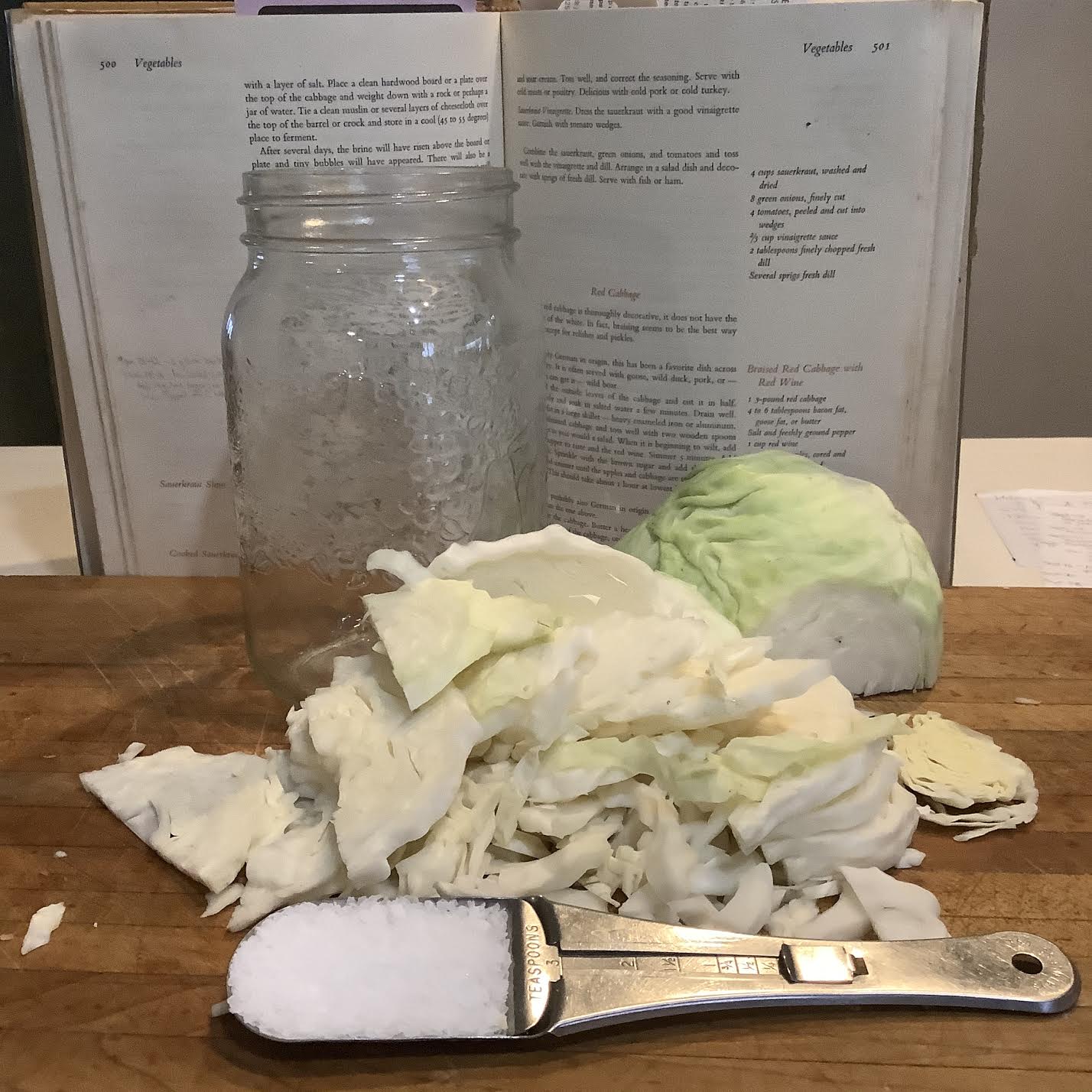
I like sauerkraut. My mother served it, redolent with caraway seeds and topped with pork. Dear Husband used to dislike it — but he has since come around. How delighted I was to find out how easy it is to prepare one’s own pickled cabbage: from huge batches to one jar at a time. The method is from James Beard‘s American Cookery, page 500. For each quart jar, you need enough sliced cabbage to fill it and 1 Tablespoon of kosher salt.

Lightly pack the cabbage into the jar, add the salt, and pour in lukewarm water up to within a 1/2 inch of the top of the jar. You want to keep the cabbage submerged in the water so it doesn’t turn brown. I floated a small, upturned lid on the jar contents and then weighted it with one of those tiny jam jars. That worked. Then you put the jar in a not-too-cold place — mine was in the coolest corner of the kitchen, but the unheated basement would have been OK too. Check the jar every day or so — you are looking for bubbles to form amid the cabbage. It could be that you don’t see them until you jiggle the jar and then they emerge and race to the top. Depending on the temperature, this can take 5-10 days.

In the jar, with water and salt, weighted down.
After several days, it has fermented.

If using it within a week, put a lid on it and keep it in the refrigerator. If you are a canner, you may process it in a hot-water bath in the same jar in which it fermented. Process for 20 minutes in boiling water to cover. When cool, store on the shelf to use for all sorts of good meals. Once the jar is opened, left-over ‘kraut can be kept in the refrigerator for weeks.

Our’s is braised in stock [the Alsacians will add white wine, the Germans will add beer] with sliced onions and caraway seed, then baked with chunks of sausage. Served with mashed potatoes, as my mother did, along with some rye bread. A feast! For a Fast Day, you could use the sauerkraut to prepare dinners such as: Sauerkraut & Sausage, or Baltic Bake. Or at breakfast in Reuben Matzo Egg.