Coal

How this Fast Diet Lifestyle works: Eat these meals tomorrow, for a calorie total of less than 600. On another day this week, eat the meals from a different post, another day of eating 600 calories or less. Eat sensibly the other days of the week. That’s it: a simple way to lose weight and be healthier. Join me in the Fasting Lifestyle.

There its much talk around the world about energy to run our daily lives. For millions of years, humans traveled and performed work using their own muscles. That took energy in the form of food. Later, we harnessed animals to carry us and to pull our loads. Again, food was the energy source. For heat, we burned wood, for light we used candles [made of bee’s wax] or oil-lamps [powered by olive oil]. Around 100-200 CE, the Romans in England used coal for heat. In North America, the Hopi Tribe burned coal for cooking, heating, and firing pottery in the 1300s CE. But mostly at that time, water power turned mill wheels and operated machinery. What is coal? It is the only rock that burns. Coal forms over millions of years as plant material from swamps is buried by sediments, slowly decaying without oxygen, until only the carbon remains. Because coal is made of ancient living things, it is classified as a “fossil fuel”. Partially decomposed plant material is called ‘peat‘. More decomposition forms ‘lignite‘, a dull, dusty, brown form of carbon that burns with much soot and less energy output. True coal is ‘bituminous‘ or soft coal, which is the most common type. If bituminous coal is put under pressure, say from mountain-building, it becomes the most prized coal, ‘anthracite‘, shiny and hard and long-burning. Most coal was formed from vast swamps that existed 300 million years ago, during a period of the geologic past called the “Carboniferous”. Coal became a hot commodity in 1769, when James Watt built a steam engine that ran on coal. This ushered in the Industrial revolution. For the next 200 years, coal fueled the development of 1st-World countries: ships, factories, home heating, electrical generation plants, trains — everything ran on coal. Eventually, coal burning gave way to fuel oil — coal use and coal mining waned. By the 1970s, environmentalists were recognizing the down-sides of the mining and burning of coal. From water pollution at the mine sites, to air pollution around sites where coal was used, coal was a problem. The famous fogs of London, described by Conan-Doyle and Dickens, were caused by coal smoke and a new word was invented: ‘smog’, meaning ‘smoke + fog’. Still today, coal burning produces 41% of the world’s electricity. Coal is still forming, but since it takes so long to turn into anthracite, we consider coal to be a ‘finite’ or ‘non-renewable’ resource — if we use up all of the better grades of coal soon, we will run out of it. Better to leave it in the ground as a reserve, while we expand our use of cleaner sources of energy.

Food is what gives our cells the energy to do their job. Today’s menu presents foods from two coal producing countries: the UK and Slovenia. December 18 is the anniversary of the closing of the last deep-site mine in the UK: the Kellingley Colliery in Yorkshire, which mined its last in 2016.

Rounds, with Pan Muffin: 193 calories… 5.5 g fat… 3 g fiber… 6.6 g protein… 30 g carbs… 20 mg Calcium…  NB: Food values given are for the plated foods only, and do not include the optional beveragePB All the foods in this meal are round, hence the name. Easy to prepare with Canadian bacon [back bacon to readers in Canada or the UK] and pre-made pan muffins.

++1 slice Canadian Bacon [‘back bacon’ to Canadians] NB: You could go to two slices of the Canadian Bacon for another 20 calories and 6 g protein. ++++ two pan muffin++++2 oz apple, sliced along the equator so the slices are round OR 2 oz applesauce, in a round dish++++  Optional:  5 oz fruit smoothie or berry-yogurt smoothie [88 calories] ++++   Optional: blackish coffee [53 calories] or blackish tea or mocha cafe au lait [65 calories] ++ 

HINT: For easiest breakfast preparation, mix and cook the pan muffin recipe the night before. Freeze remaining batter or save for muffins tomorrow. Slice the apple and plate it. Cook the Canadian Bacon. Warm the previously-cooked pan muffin. Done!

PAN MUFFIN each: 71 calories… 2.5 g fat… 1 g fiber… 2 g protein… 11 g carbs… 8.5 mg Calcium… ..1 cup Bob’s Red Mill 10-grain hot cereal mix…. 1¼ cup buttermilk…  combine cereal + milk, let sit while preparing other ingredients. .. 1/3 cup butter … 1/3 cup sugar …1 cup unbleached flour…1 tsp salt… 1 tsp baking powder …1 tsp baking soda..

Cream the butter and sugar; mix in the egg. Add the dry ingredients and the cereal/milk mixture. Stir until just combined. Use 2 Tbsp batter for each pan muffin.  [use 4 Tbsp batter to make each muffin for Slow Days] 

Jota169 calories…  4.5 g fat… 7.4 g fiber … 11.5 g protein… 25.5 g carbs… 83.5 mg Calcium … PB GF The flavors of Slovakia are in this bean stew. Very satisfying. HINT: This recipe is enough for 4 [four] 1-cup servings.

++ 1½ cups sauerkraut, drained ++++ 1½ cups canned red beans, drained and rinsed ++++ bay leaf ++++ 4 oz red potatoes, cooked and diced ++++ 1 clove garlic, crushed ++++ 2 oz meat from smoked ham hock, cubed ++++ ½ cup or more vegetable broth or water ++++   Optional*: 1 clove garlic, crushed ++++ 1 tsp flour+ 1 tsp oil ++++ Optional**: raw leaves of baby spinach ++

Spray a heavy sauce pan with non-stick spray and cook one of the garlics until golden brown. Add the sauerkraut to the pan with the broth, salt, and pepper. Simmer for 30 minutes. In another pan, heat the beans with the bay leaf until warm. Remove half of the beans and put them in a food processor with the cooked garlic and half of the potatoes. Puree, adding water/broth to adjust the liquids. Add the puree, whole beans, potatoes, and meat to the pan with the sauerkraut. Taste for seasonings. Add some water/broth to bring the volume to 4 cups. *Optional: Simmer the other garlic clove in 1 tsp oil until brown. Remove garlic and whisk in 1 tsp flour, then add some stock to make a roux. Stir into the stew as a thickener. **Optional: When the soup is in the bowl, tear the spinach leaves into bits and poke them into the hot liquid to add some extra color, texture, vitamins.

National Weather Service

How this Fast Diet Lifestyle works: Eat these meals tomorrow, for a calorie total of less than 600. On another day this week, eat the meals from a different post, another day of eating 600 calories or less. Eat sensibly the other days of the week. That’s it: a simple way to lose weight and be healthier. Join me in the Fasting Lifestyle. 

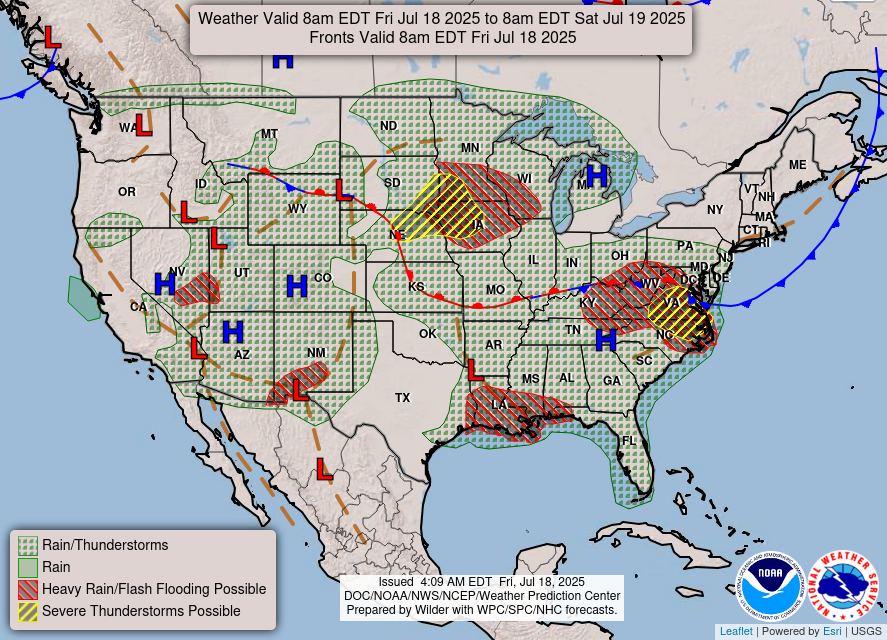
You wake up and turn on the TV or radio or internet to find out what the weather will be for the day. Why? So you know what to wear, whether you need an umbrella, if the weather will interfere with your commute. And where does that forecast come from? It is the work of observers at weather stations all over the world. Every day weather balloons are sent up to map the upper air currents that propel an air mass in your direction. You see, while it is true that ‘weather is local’, the weather that you have today was probably the weather that another locale had 1 or 2 days ago — and somebody ‘downwind’ will have it tomorrow. This is the value of many monitoring stations. People used to think that weather conditions were the same everywhere at once, but that was proved wrong in the 1500s when Tycho Brahe directed simultaneous observations in Denmark and Poland. In 1849, the new telegraph service provided a means of sending weather data to the Smithsonian Institute in Washington, DC for compilation. This was the beginning to weather maps that showed cold or warm air masses moving across the nation. Forecasting began in 1870, when the US Weather Bureau was created as an arm of the Army Signal Service’s Division of Telegrams and Reports. At first there was resistance to the idea of forecasting the weather, due to the perception of interfering with God’s power since the 3rd chapter of the Book of John says, “The wind blows where it wants… but [you] cannot not tell where it comes from, nor where it goes.” Then weather disasters ensued, showing the need for forecasting. The Weather Service was moved from department to department, and their job expanded to hurricane alerts and river flood warnings. Weather data was collected at airports, at military bases, from kites aloft, and from ships at sea as the need for accurate forecasting grew. From when to plant your garden to timing the D-Day Invasion, events large and small are weather dependent. Technology has advanced to include Doppler Radar, satellite feeds, and computer models. Now the National Oceanic and Atmospheric Administration gathers the data and studies weather past, present, and future in an effort to prevent disasters. None of us can change the weather, but we need accurate information to live safely with it. Will recent personel cuts hamper forecasting? Time will tell.

Whether you live in the streets of New York City or on the plains and mesas of New Mexico, weather matters to you. Having a strong network of weather workers from coast to coast means accurate, timely forecasting. Volunteers, such as those with CoCoRaHS, can be a big help — please consider joining today.

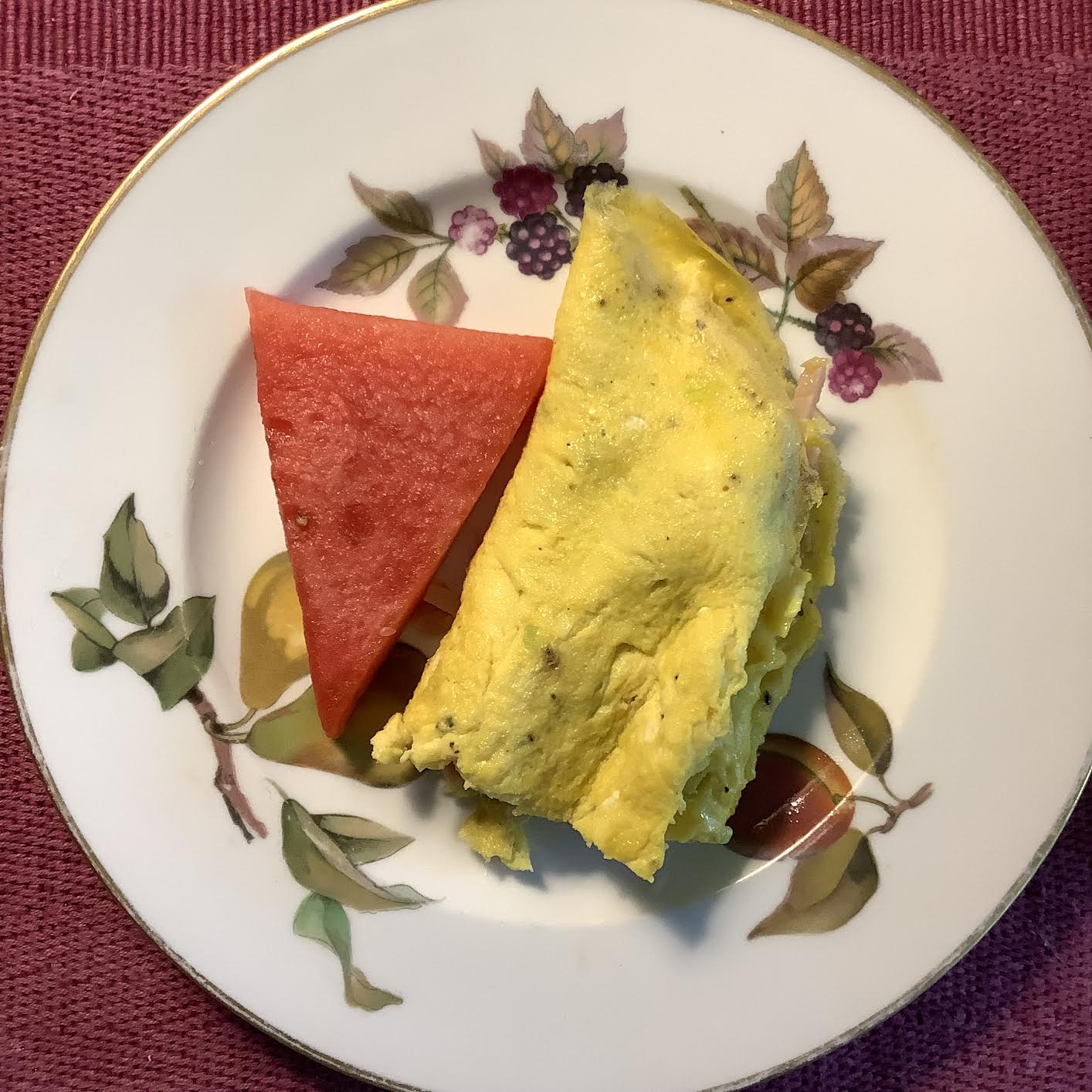
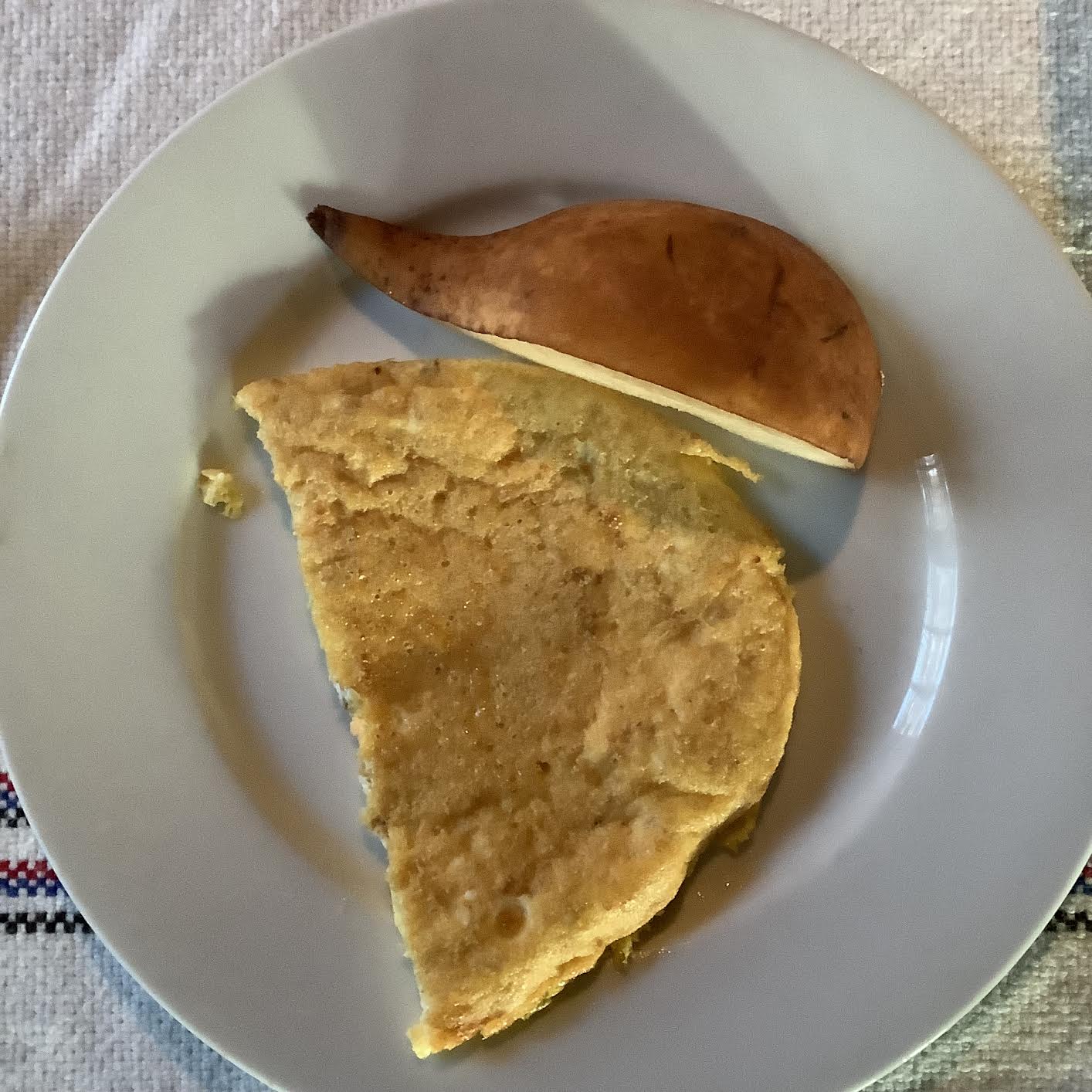
Horseradish-Cheesy Bake: 143 calories… 7.5 g fat… 1 g fiber… 8 g protein… 7 g carbs… 78.6 mg Calcium…  NB: Food values given are for the Bake and fruit only, and do not include the optional beveragesPB GF David Rosengarten’s unusual cookbook It’s All American Food takes the reader on a tour of American ethnic and regional foods, and tells you how to make those treats in your own kitchen. This recipe is from the Manhattan restaurant Barney Greengrass, where they are renowned for their breakfasts.

++ One 2-oz egg ++++ ½ Tbsp crushed tomato ++++ 1 Tbsp cheddar/horseradish spread*** ++++ 1 Tbsp chives, minced ++++ 2 oz pear or apricot ++++ Optional: 5 oz fruit smoothie or berry-yogurt smoothie  [88 calories] ++++  Optional: blackish coffee [53 calories] or blackish tea or  mocha cafe au lait [65 calories] ++

Set the toaster oven at at 350 degrees F. Spritz a ramekin with oil or non-stick spray. Vigorously whisk the egg, cheeses, and chives until well combined and pour into the ramekin. Put in the oven [it doesn’t need to be hot yet] and bake 12-15 minutes. Meanwhile, brew your beverage of choice and prep the fruit. This will kick-start your day.

***Cheddar-Horseradish Spread  ++ 2 Tbsp WisPride Cheddar spread OR Kraft Old English Cheddar spread  ++++4 [or more] tsp prepared horseradish [the kind in a jar] ++ Cream together thoroughly. Save the rest for another day or another use.

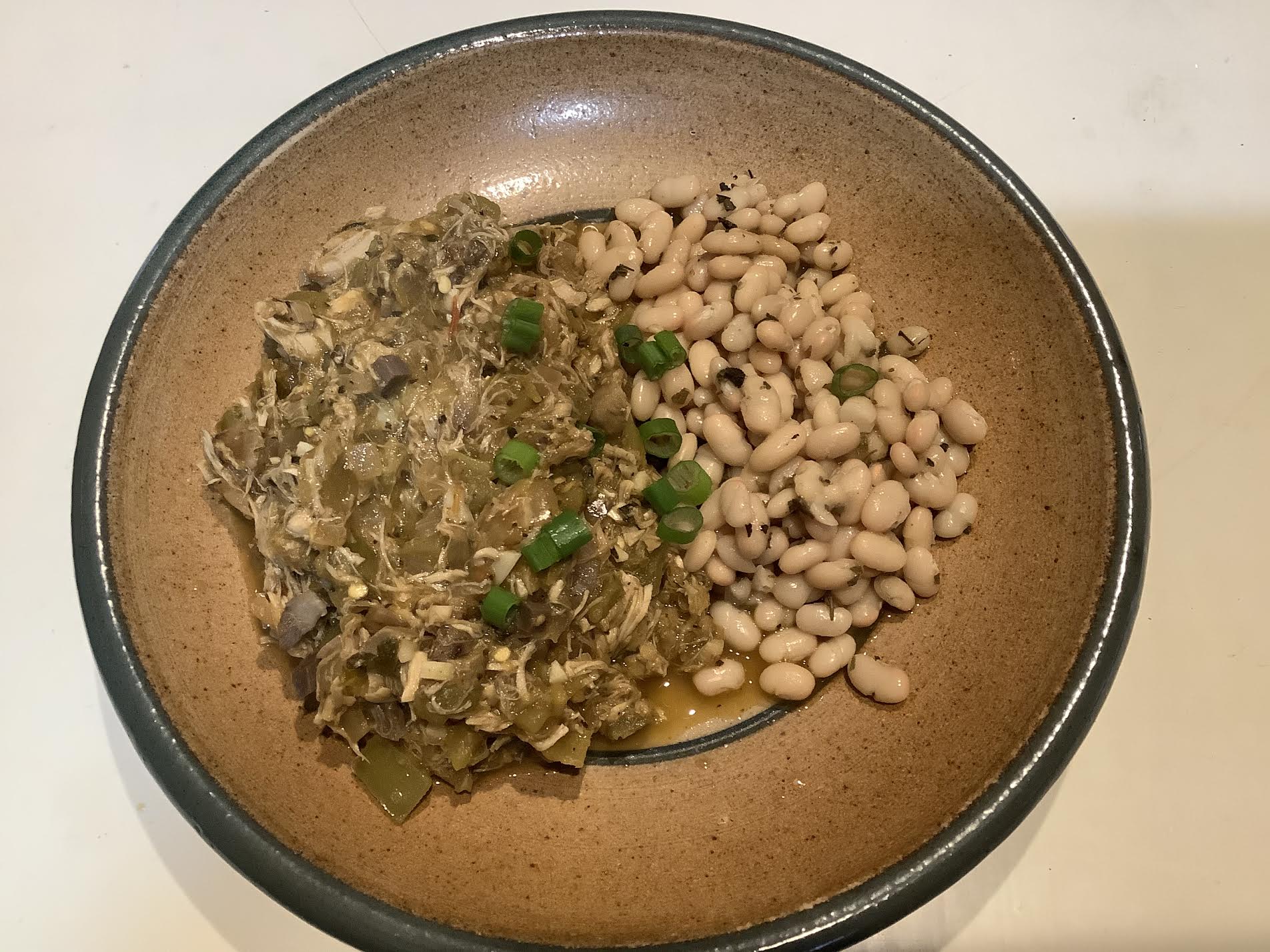
Chili Verde with Beans: 265 calories… 3 g fat… 5.4 g fiber… 14 g protein… 31 g carbs… 169 mg Calcium…  PB GF In the great debate about what makes ‘authentic’ chili, beans are often the issue. Here, they are served as a ‘side dish.’  HINT: This makes enough for 3 [three] servings.

½ tsp oil ++++++  ½ cup red onion, choppedCook onion until softened.
3 cloves garlic, mincedAdd to onion and cook 1 minute more
2 Tbsp tomato sauce+++2 tsp green chili powder +one 4-oz can New Mexico green chiles+++1 tsp ground cumin +++ 1 tsp [Mexican] oregano ++++
½ cup salsa verde [purchased is fine] +++¼ cup water
Stir in tomatoes and cook 1 minute
Add chilis, seasonings, salsa and water.
Turn heat down to a simmer.
Enough cooked turkey or chicken to make 1½ cups shredded meat – about 200 g ++++ pinch or two saltShred poultry or grind it and add to the pan. Cover, simmer 10 mins. Add salt.
Per serving: 1/3 cup small white beans, canned +++++ chopped green onionPlate with scallions on top and the beans on the side.

With or without the beans, this would be great in flautas or fajitas or corn tortillas.

<<<<<<<< Ingredients for next week >>>>>>>>> Breakfast, single portion for Monday …………………………… single portion for Thursday:

1 two-oz egg = US large1.5 two-oz eggs + 1 egg white
hamstrawberries + 2%-fat cottage cheese
chivesgarlic powder + nutmeg
pineapple or appleManchego cheese + cooked spinach
optional smoothieoptional smoothie
optional hot beverageoptional hot beverage

Dinner, single portion for Monday:………………………….. single portion for Thursday:

beef from a roast or from the deli + onionsalami + white beans + red wine vinegar
garlic + canned whole tomatoes + celerycooked chicken breast + rosemary + sage
carrot + beef bouillon cubes + bay leafmozzarella + lettuce/wild greens
dried basil + Finn Crisp crackersradish + celery + garlic
Sparkling waterSparkling water

Chocolate

How this Fast Diet Lifestyle works: Eat these meals tomorrow, for a calorie total of less than 600. On another day this week, eat the meals from a different post, another day of eating 600 calories or less. Eat sensibly the other days of the week. That’s it: a simple way to lose weight and be healthier. Join me in the Fasting Lifestyle.

Chocolate! Around the world, people swoon over its luscious taste and mouth-feel, and July 7th is World Chocolate Day! Before you celebrate, you should know the story of this beloved treat. The Mayo-Chinchipe people of the upper Amazon region were harvesting and consuming cacao in 3275 BCE, and trade spread the practice around the region. They called it ‘xocoatl’ and it grew on trees in pods [upper left corner of photo]. After harvest, the white seeds were removed and set in the sun to ferment for seven days, then spread to dry in the sun while they turn brown. The seeds were skinned to reveal the nib, or edible part [lower left in photo]. Nibs were ground on a heated stone until they turned into a paste, then the paste was stirred into water mixed

with finely-ground cornmeal. This was not like your average cup of cocoa — the beverage was hot but bitter and highly prized. Special cups were made for serving, and a special whisk called a molinillo frothed it up, all to serve this caffeinated beverage to the elites. Spanish invaders tasted the drink — which they didn’t like — then took the recipe back to Europe around 1545. Eventually, sugar was added, the corn meal was subtracted, and a craze was begun. A taste for drinking chocolate was fostered by the Jesuits, who saw the beverage as a nutritious, filling food for a religious fasting day, of which there were 100 per year. The French court of Louis XIV loved chocolate, so in the mid-1600s, Chocolate Houses were establishments where the rich would go to socialize. Very fashionable. Soon, people in all the major capitals of Europe were enjoying hot chocolate. In 1828, Coenraad van Houten was able to separate cocoa solids from cocoa fat, producing cocoa powder. In 1847, Joseph Fry invented the chocolate bar. Today, chocolate is loved world-wide and most of it is grown in West Africa. In 2022, Americans ate 387,216 tons of the stuff, but the Swiss eat more chocolate per person than any other country — 8.8 kg per year. Hmmm — link to obesity? There are other issues around chocolate: problems in the supply chain due to weather and health of the cocoa trees that have inflated the price of chocolate, and the fact that cocoa farmers do not share in the wealth of the chocolate industry. ‘Responsible eating’ takes on a new meaning when discussing chocolate.

For breakfast, a modern version of the ancient Champurrado beverage — filling, but sweetened for modern taste. For dinner, a savory use for chocolate. Happy Chocolate Day!

Champurrado: 276 calories… 6.5 g fat… 1.4 g fiber… 11.6 g protein… 44 g carbs… 77 mg Calcium…  NB: This is a meal without the usual morning coffee or smoothiePB GF  Here is an unusual breakfast, with a Mexican chocolate beverage as its centerpiece. The recipe for the Champurrado is from Rick Bayless, and it makes 5 servings.

++ 1 serving/1/5 of recipe below Champurrado** +++ 3 turkey breakfast sausages @ ~22 calories each ++++ 2 oz melon cubes ++

Prepare the Champurrado, divide into 5 portions. Pour one portion into a cup or mug or ramekin. If too thick, thin with hot water. Cook the sausage, and plate with the melon. TIP: I prepared the Champurrado the night before, portioned it, and put it in the ‘frige. I served it cold and it tasted like pudding!

**Champurrado  Makes 5 servings
3 oz sweetened Mexican chocolate——
½ c/8 oz masa harina —-1½ c water
Chop chocolate and put in a blender with these. Blend until smooth.
1 c non-fat milk—–
¾ c water—–
Strain into a saucepan, add these. Whisk over medium until it simmers and thickens, about 10 mins.
Portion into cups or mugs. Thin if needed.

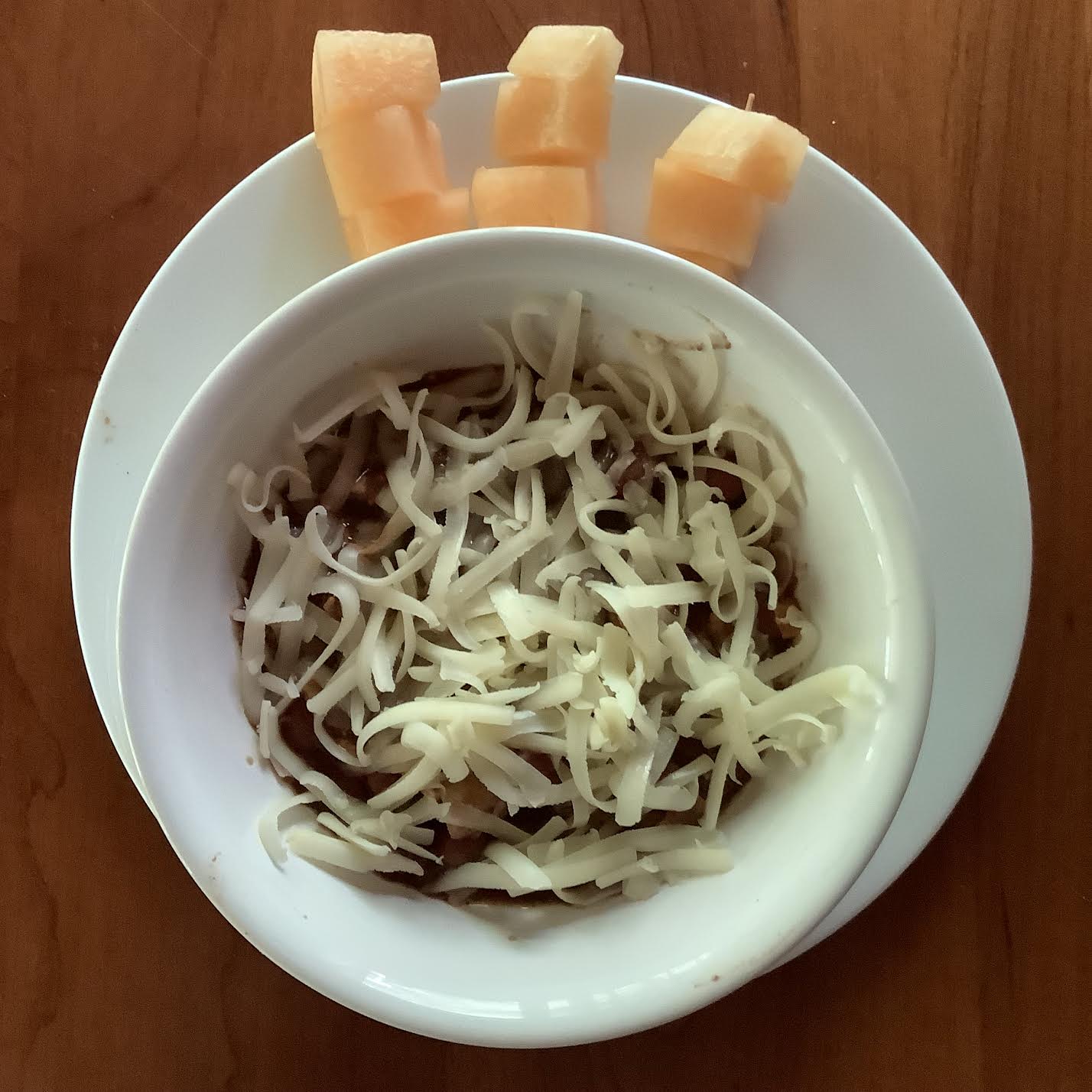
Bison-Chocolate Chili:  per 1¼ cup: 291 calories… 11 g fat… 8.5 g fiber…22.5 g protein… 30 g carbs…284.4 mg Calcium… Bison, beans, tomatoes, bell peppers, chili peppers, and chocolate are all foods of the New World/the Americas. Why not enjoy them together in this flavorful chili! HINT: Makes 4 [four] one-cup servings.

++ 4 oz ground bison or turkey ++++ 15 oz canned tomatoes – in chunks or diced drained in a sieve [save the juice] ++++ 1 clove garlic, chopped ++++ 1 cup red onion, chopped ++++ ½ cup green pepper, chopped ++++ ¾ cup canned red or black beans, drained and rinsed ++++ 2-4 tsp chili powder ++++ ¾ tsp salt ++++ ½ – 1 tsp ground cumin ++++ 1 Tbsp unsweetened cocoa powder ++  per serving: ¾ oz Cheddar, grated ++ 4 oz melon, cubed ++

Cook the bison, onion, garlic, and green pepper in some of the tomato juices until vegetables are tender. Add remaining ingredients and cook gently until the chili is hot throughout. Taste to see if it needs more seasoning. After portioning into bowls, plate with the melon and sprinkle with cheese.