Slow Days: Peach Wine DIY, Bottling

People who are new to Fasting often pose the questions: “Can I really eat ‘anything I want’ on a Slow Day?” and “What should I eat on Slow Days?” To answer those questions, I have decided to add some blog posts to show some of the foods we eat on what the world calls NFDs [non-fast days] but which, in our house, we call ‘Slow Days.’ This feature will appear sporadically. 

Now for the answers. Can you really eat ANYTHING you want on a Slow Day? Not really. If you eat too many calories every Slow Day, you will not lose weight. There are many questions asked on the Fast Diet Forum which attest to that. Once in a while you can splurge, as long as it isn’t everyday. For what to eat on Slow Days, Dr. Mosley recommends a Mediterranean Diet. As for how we eat, an example follows.
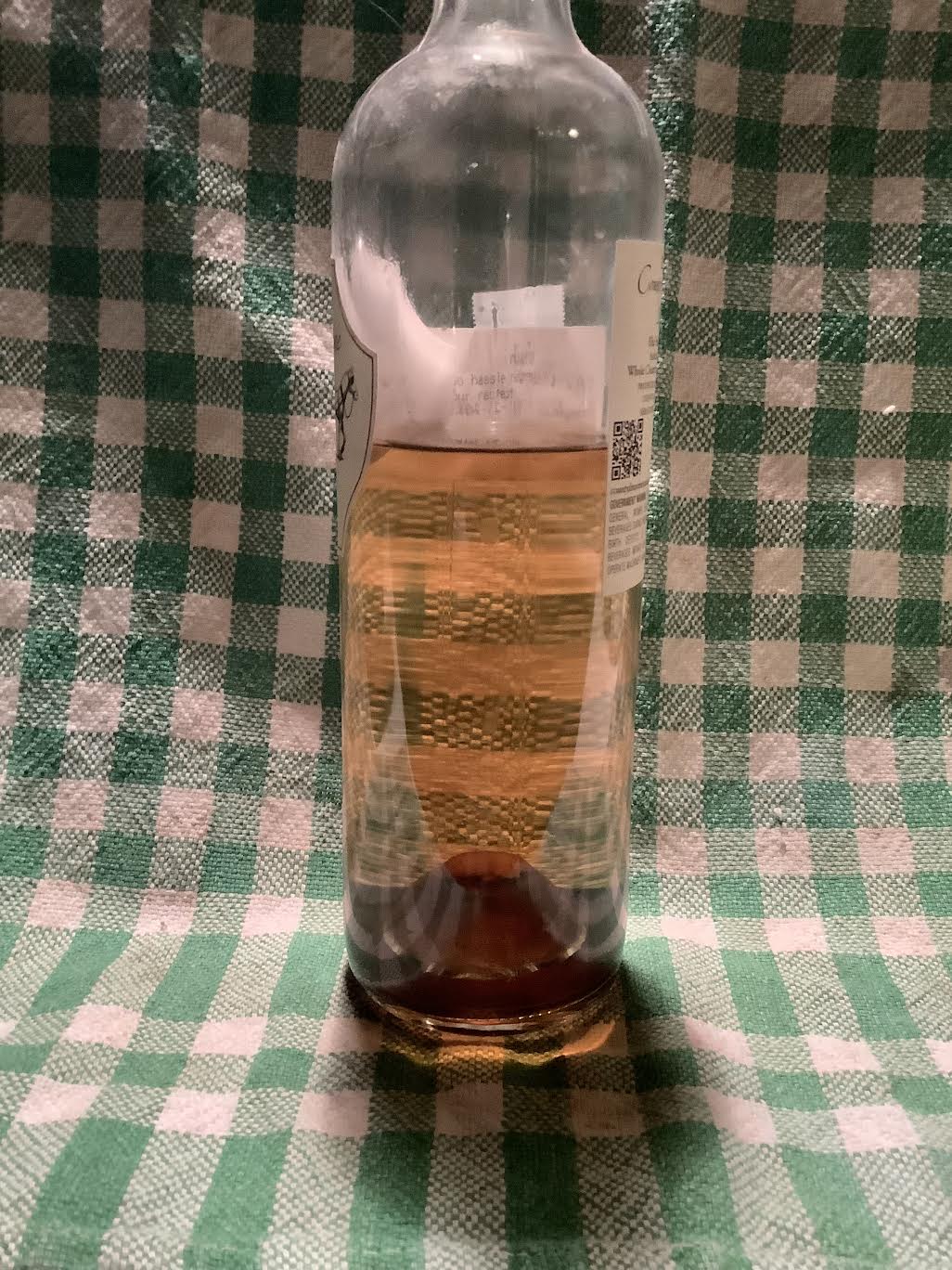
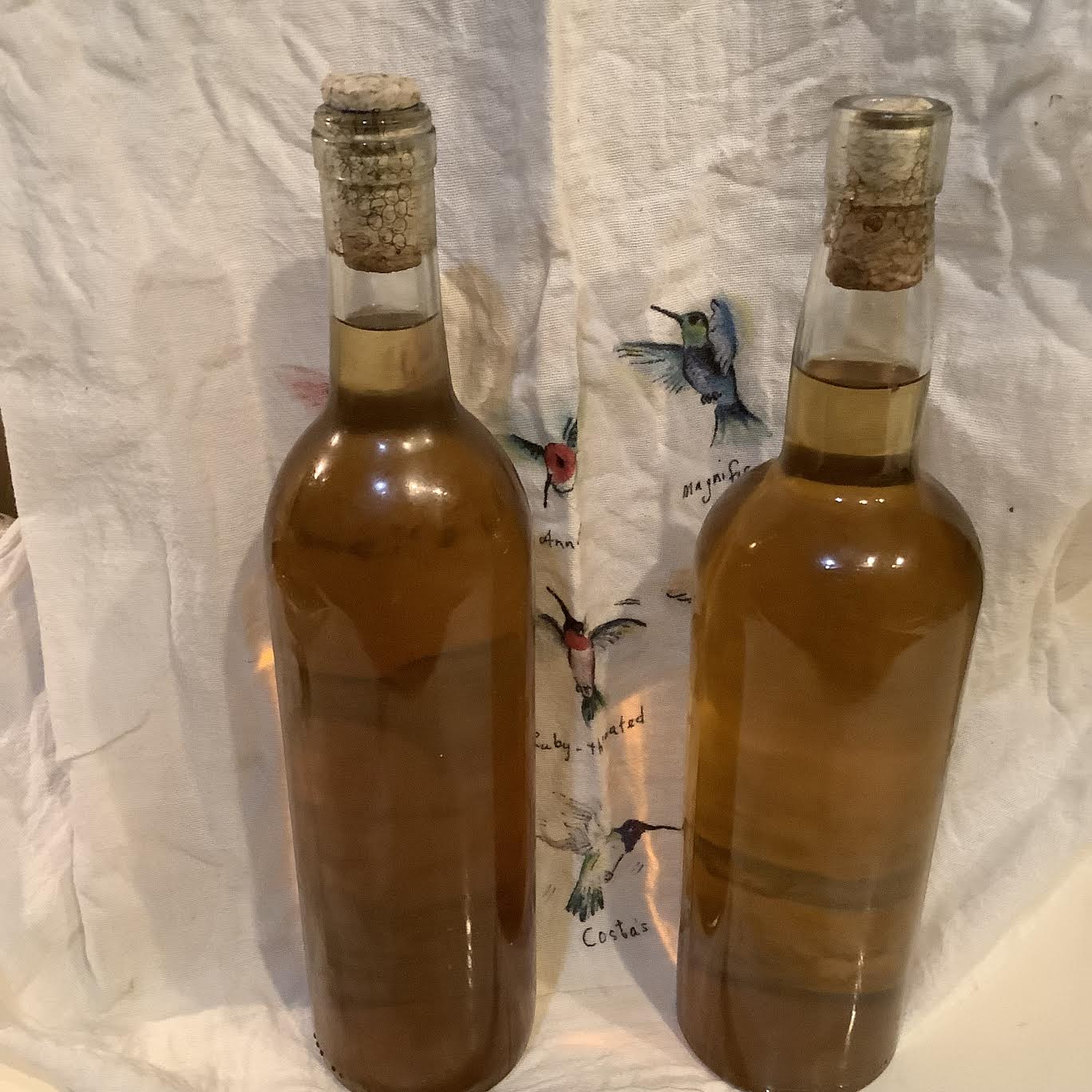
Bet you thought I’d forgotten about that peach wine that we started a year ago! Mine has taken a l-o-n-g time to clear and maybe your’s did too. We have to wait until all the particles — the ‘lees’ — have settled, lest the wine be cloudy. This can take anywhere from 5 months to more than a year! It does not harm the wine to wait that long. You might have seen these words on a bottle of grape wine: ‘aged on the lees for 12 months’ or ‘sur lie.’ That is the wine-maker telling you that he/she left the wine in a barrel, settling, and in contact with the lees, for a long time. Some say that this adds more flavor to the wine. There is a quicker way to settle the lees, and that is by adding a chemical substance with various trade names. For me, the fewer chemicals I add to the wine, the better.
Equipment: several large [4-6 cup capacity] jars with lids. 5 wine bottles. 1 Liter measuring cup or equivalent. 5-7 corks, size #9. jar large enough to hold all the corks. Camden Solution. sugar + water hydrometer and cylinder. corking device.

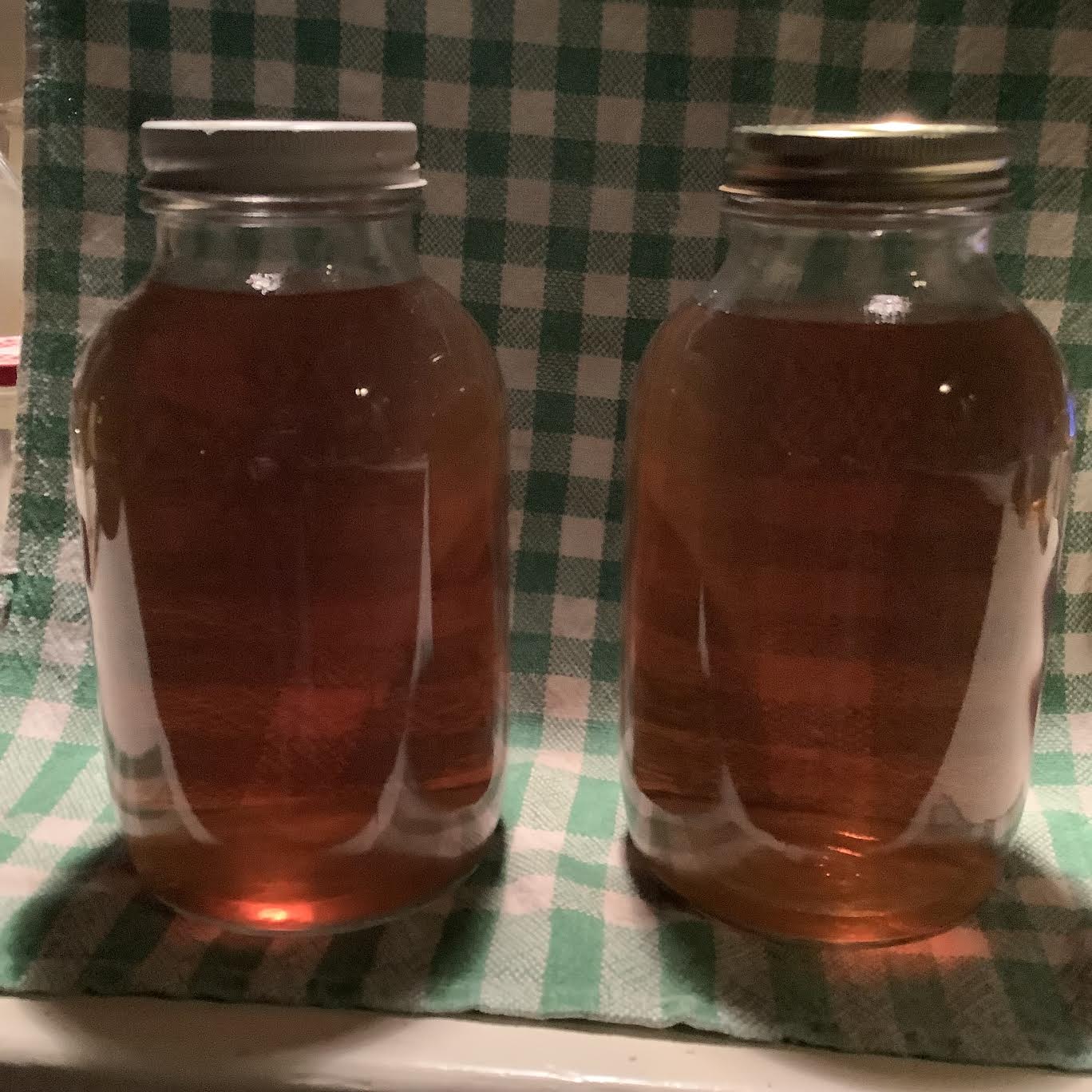
Let’s get down to bottling now that the wine is crystal clear. First, we decant the wine off the lees. I like to sterilize [with Camden Solution, remember?] large jars, holding 4-6 cups, and pour the wine off the lees into the jars. Have a few jars available so you can pour from the fermenting bottle without stopping. If you pour some wine out, then put the bottle down, some of the lees will kick up and cloud the wine again. Cloudy wine at the bottom can be poured into an appropriately sized bottle and topped with an air lock. It will settle again, yielding some more wine in a month or two. The remaining lees can be poured down the sink. Wash 5 wine bottles and give them a sterilizing rinse.

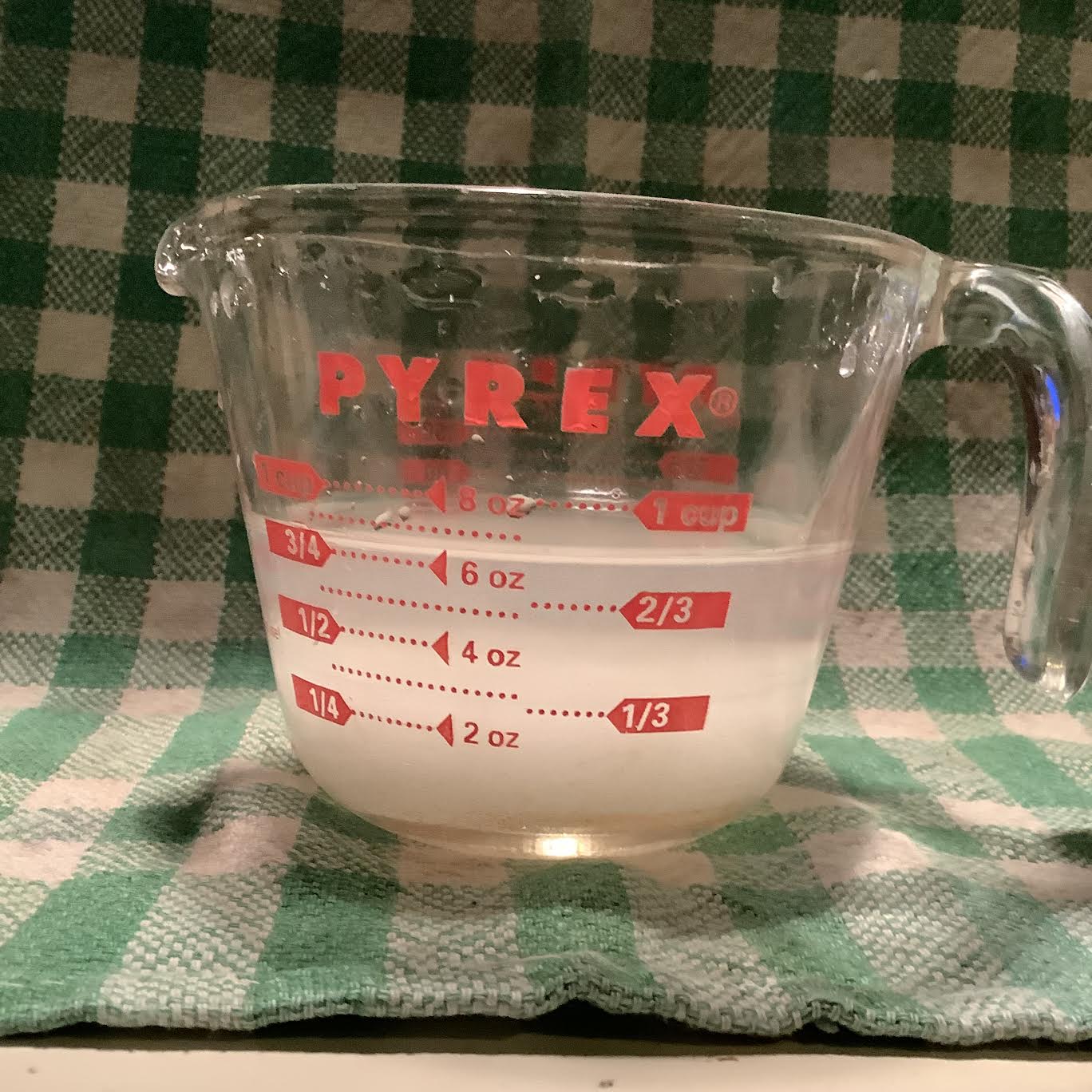
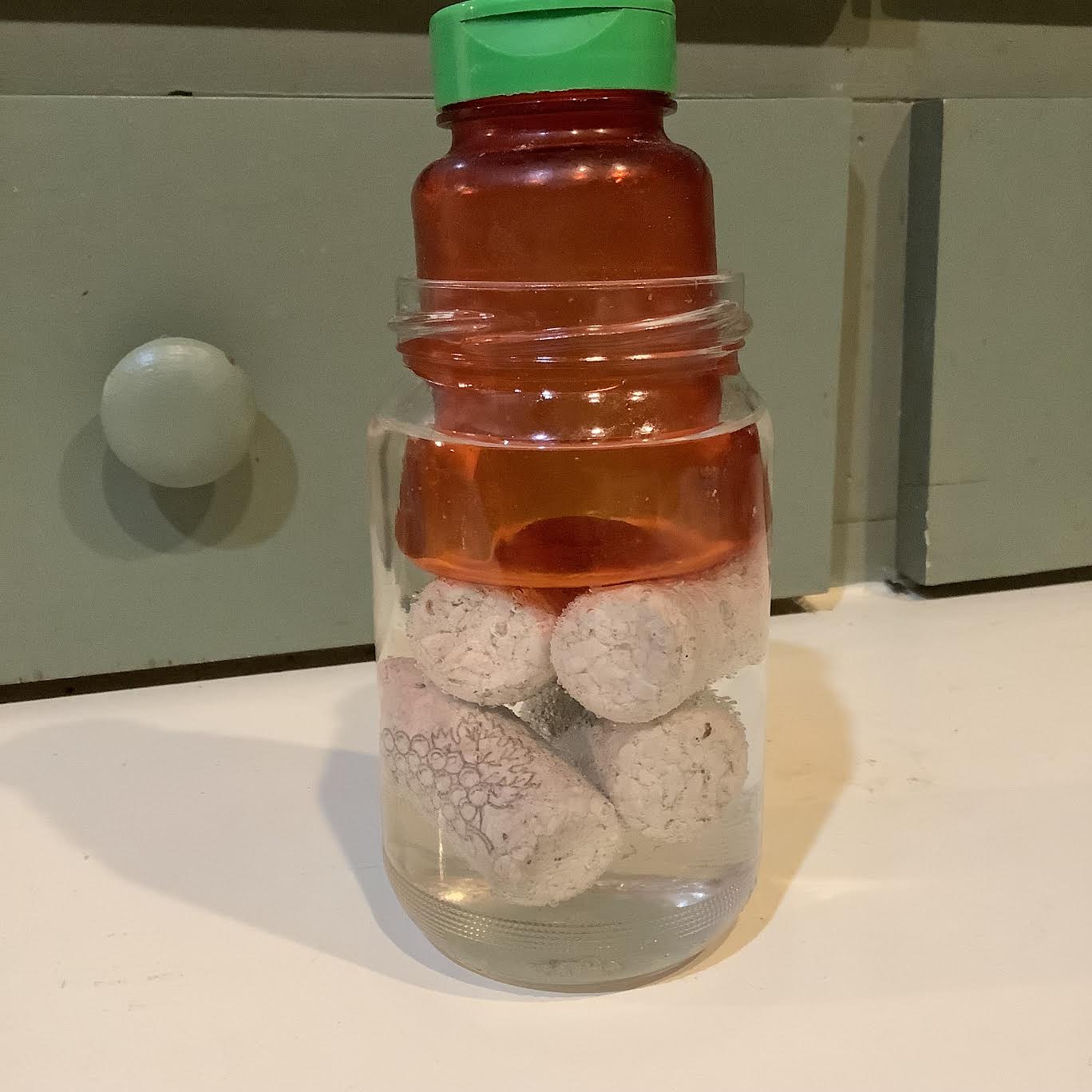
Next, prepare a Simple Syrup. That’s 1/2 cup of granulated white sugar dissolved in a 1/2 cup of water — heating gently will help to dissolve the sugar. Pour boiling water in to a jar and add 5 corks. The corks will float so to submerge them fully, I put a smaller diameter jar on top of them to hold them down. Soak the corks for 10 minutes — not longer. After 10 minutes, drain the corks and keep covered.

You now need the hydrometer and the cylinder that goes with it. Sterilize them both. Take a good look at the hydrometer. See the line labeled 1.000? If you take the Specific Gravity [SG] of the wine and it floats at the 1.000 line [or closer to the 0.990 mark], then all the sugar that you initially put into the mixture has ‘fermented out’ and turned to alcohol. This produces a very dry wine, but with less flavor. Taste it and see how you like it. If you love it, go ahead and bottle it as is.

Here is the initial reading I took from my Peach Wine: ~0.904 Too dry. If, like me, you want to make a less dry wine, then you will want to add some of the Simple Syrup. Sterilize a 1 Liter measuring cup and pour 750 ml wine into it. Add a little bit — 1 Tablespoon? — of the syrup and pour the wine into the cylinder and test it again. Taste as you go — in little sips! If you get tipsy at this point, your judgement and small-motor skills will be impaired!

If you expect me to give you exact amounts, dream on — this is the ‘art’ of wine-making. Continue to taste and pour and test until it suits you. This time [it varies from batch to batch], the SG that tasted good to me was between the ’10’ and the ’20’ — about 1.015. When you find an SG level that appeals your taste, bottle it. To do that, pour the contents of the 1 Liter measuring cup into the clean bottle until the wine level is just a little way up the neck — 2- 3″ below the top of the bottle. The empty space between the bottom of the cork and the top of the wine is called “ullage.” Continue to adjust the SG for each bottle of wine and to fill the bottles to a good ullage. IMPORTANT: Since you have added more sugar, there is the risk that the sugar will start fermentation again. Then pressure builds up in the bottle and the cork explodes out of the bottle! You do not want your wine to go to waste, so add either 1/2 or a full Camden tablet to each bottle to stabilize it. This adds a little Sulfite to the wine which kills the bacteria.

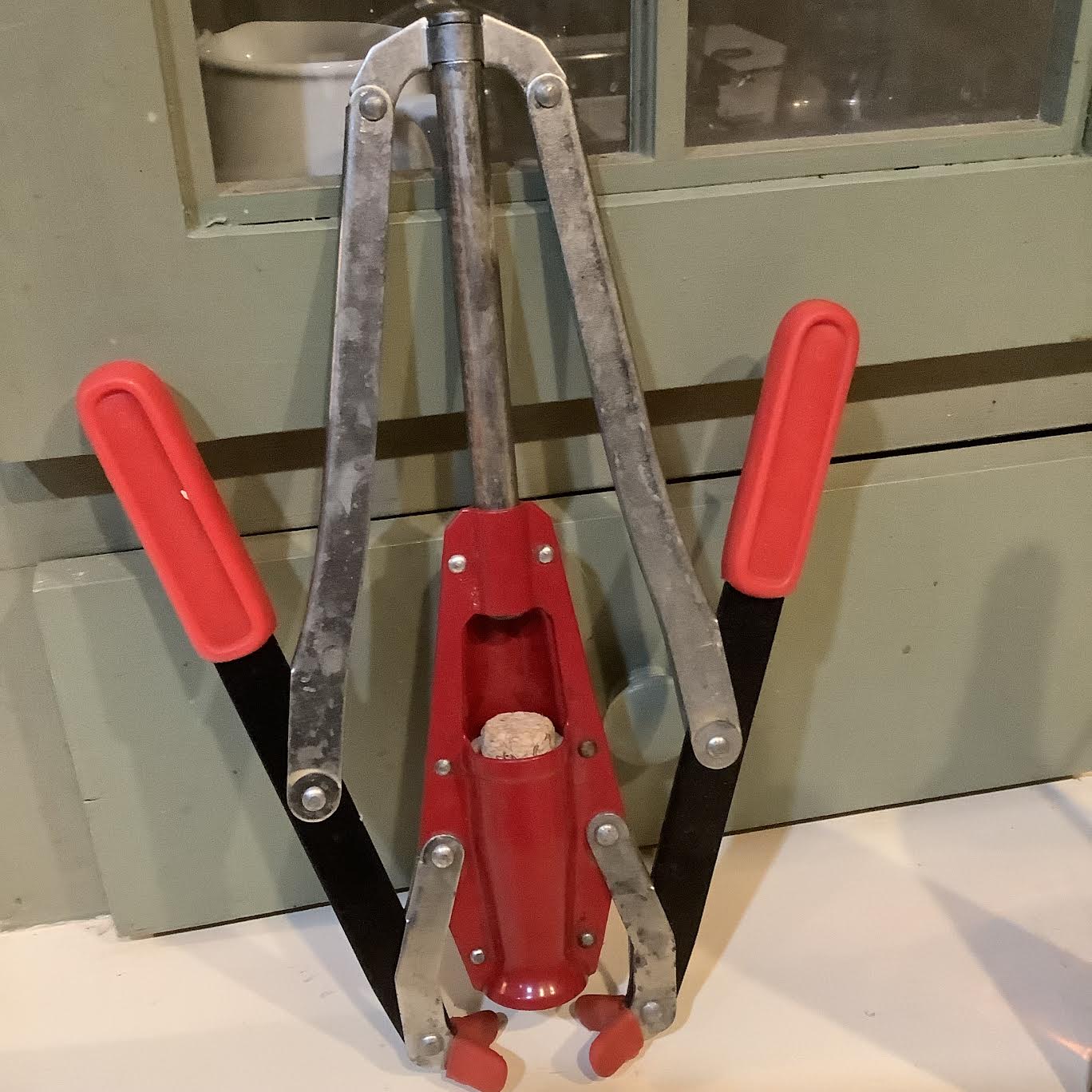
Now you can cork the bottles. Take a cork [I use #9] and dip one end into Camden solution. Put that end into the corker [pictured above, center] and push it down to the lower end of the tube. Place the bottles on a surface lower than a counter: on the door of an open oven or the door of an open dishwasher or into a sink or on the floor. Stand near and above the bottle so you can get good leverage. Put the corker on the mouth of the bottle and, while keeping the corker upright, push down on the handles to move the cork into the bottle. Takes some getting used to… Put a label on the bottle [there are websites for that], telling the type of wine and the date of bottling.

And now you have a country wine of your own making. Resist the urge to drink a bottle tonight. The wine will improve if you ‘lay it down’ [put it on its side in a cool, dark place] for a month or so. Then you can cook with it or drink it with meals. Dear Husband, who knows a bit about wine, suggests that country wines are better chilled. Remember that the recommended amount of daily wine for women is 5 oz and for men it is 8 oz. Be responsible with alcohol — your health depends on it.

Slow Days: My Grandmother’s Christmas Cookies

People who are new to Fasting often pose the questions: “Can I really eat ‘anything I want’ on a Slow Day?” and “What should I eat on Slow Days?” To answer those questions, I have decided to add some blog posts to show some of the foods we eat on what the world calls NFDs [non-fast days] but which, in our house, we call ‘Slow Days.’ This feature will appear sporadically. 

Now for the answers. Can you really eat ANYTHING you want on a Slow Day? Not really. If you eat too many calories every Slow Day, you will not lose weight. There are many questions asked on the Fast Diet Forum which attest to that. Once in a while you can splurge, as long as it isn’t everyday. For what to eat on Slow Days, Dr. Mosley recommends a Mediterranean Diet. As for how we eat, an example follows.

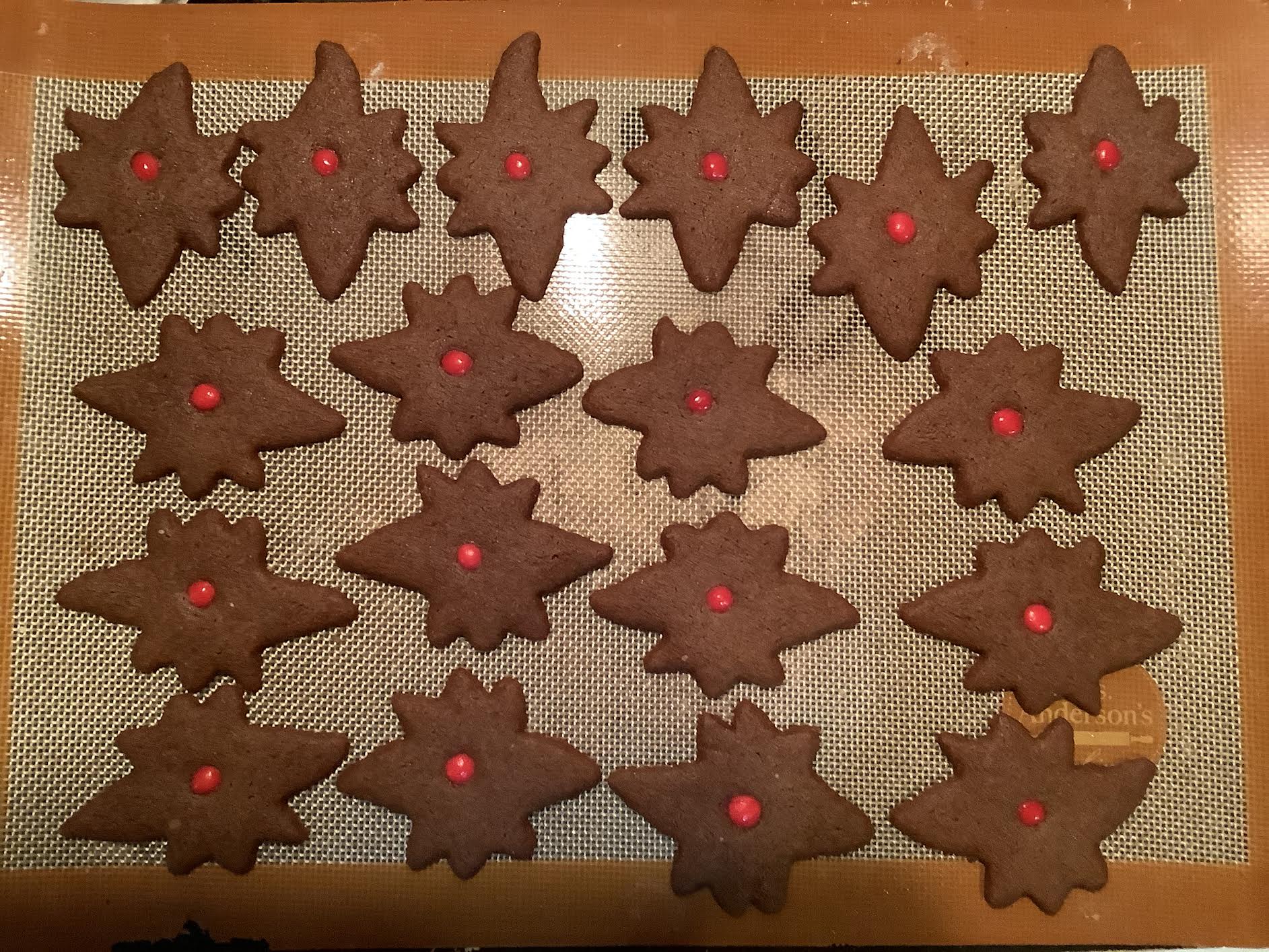
My father’s mother was not a good cook. No surprise there. Born in 1884, she was raised to know how to run a household, not to do the cooking and cleaning. In fact, one of the stipulations that my great-grandfather made when my grandfather asked for her hand, was that the wedding would be delayed until such time as the prospective groom had a sufficient income to hire domestic help. Once I asked my father what his family would eat when it was cook’s night off. He replied that his mother would open a can of ravioli and that was dinner. One of my grandmother’s two signature recipes was for the cookies that she made at Christmas. We would drive through the night from Connecticut to Pennsylvania to arrive before Christmas morning, and my grandmother would greet us with the cookies that she had just taken from the oven. They were cut-out cookies, misshapen and often a bit burned, but my father loved them. My sister and I never understood that when we were children, but now I get it. My mother, a great baker of cookies, asked for the recipe and here it is in the original: “Lard, Molasses, Cinnamon, and enough Flour.” My grandmother’s devotion to those cookies tells me that the recipe was from her beloved mother, who no doubt had it from her mother: Agnes Waugh Greason, 1811-1885. My grandmother called the cookies “Ginger Snaps” although there is no ginger in them. My mother called them “Greason Cut-outs” in honor of the Greason Family. Ancestor William Greason/Grayson settled in Cumberland County, Pennsylvania in 1775, and married Agnes Waugh, 1756-1855. Pennsylvania west of the Susquehanna River was the frontier at that time, and supplies were scarce. The lard was from your own pig; molasses was obtained by barter [cane sugar was unavailable]; flour was milled locally; cinnamon was a precious commodity. When you encounter a recipe with such ingredients, you know it is an old one, from a time of perilous scarcity. Now I bake these cookies every December. At first, Dear Husband would not eat them. Lard? ick! But once he found that the recipe had such a long family history, he has taken to them and even finds them to be good to eat..

Original recipeScaled down recipePreheat oven to 325F.
1 cup lard
2 cups molasses
2 tsp cinnamon
1/3 cup lard
2/3 cup molasses 2/3 tsp cinnamon
Mix together, either by creaming by hand or by using an electric mixing device.
‘as much flour as necessary to make a soft dough rollable’ 1 cup white whole wheat flour*Stir in the flour thoroughly.
Cinnamon red-hotsRoll out in batches on a floured surface to around ¼” thickness. Cut in your preferred shape. I use a Moravian Star** and press a red-hot into the center of each one.
Bake on parchment paper until firm to the touch, 6-8 minutes. Let cool on the pan. These cookies store well, as a ‘frontier’ cookie would need to do.

*I use white whole wheat flour because I think it is more like flour that would have been available in 1840. **The Moravians are a common religious group in eastern Pennsylvania, so I think that their many-pointed Christmas star is an appropriate cookie shape. If you want a Christmas Cookie with a history, try these.

Religions: Mithraism

How this Fast Diet Lifestyle works: Eat these meals tomorrow, for a calorie total of less than 600. On another day this week, eat the meals from a different post, another day of eating 600 calories or less. Eat sensibly the other days of the week. That’s it: a simple way to lose weight and be healthier.

The Roman Empire left a big imprint on Europe and many of its influences lingered after the Empire fell. Think: Romance Languages. But its religions did not remain, having been supplanted by Christianity. Many of us are familiar with the deities of their official religion, since the planets bear their names. Few are familiar with a secret cult which flourished among the Roman military and merchants who dealt with the far-flung army. It was the Cult of Mithras and from 100-300 CE, it gave Christianity a run for its money. Although Mithras is mentioned in Persian texts many thousands of years ago, his Roman following sprang into existence only in the late 1st century CE. Mithras was a young, clean-shaven, free man who was born from a rock. [why? how? when? who knows] He is friends with Sol, the invincible Sun god. For some reason I can’t explain, Mithras, with the approval of Sol, hunts and kills the Bull, symbol of fertility and vitality. Mithras and Sol then eat the flesh of the Bull and drink its blood. This paves the way for rebirth and renewal and resurrection. The Cult of Mithras was a secret society from which there are no written records. Their temples were built in caves or under-ground, to promote mystery and secrecy in dark places. Every temple had a sculpture or painting of Mithras killing the Bull over the altar. What little we know of their religion involves a baptism [in water? in blood?] to mark the start of a new life; a ritual of pretending to die and then come to life again [perhaps going under-ground then reemerging was symbolic of that]; and a shared communion of wine and food. The religion was monotheistic, unusual in pantheistic Rome, and Mithras’ birthday was December 25th. Perhaps the ‘date’ of Christmas was said to be December 25 [even though it wasn’t] to take the day away from Mithras’ followers. Indeed, many scholars see so many similarities between the two religions that one might think that the Cult of Mithras was established to counter Christianity. Dr Martin Luther King, while at theological school, wrote a paper on the influences of the two religions on each other. The Mithras Cult was a secret males-only society, like a men’s fraternal lodge, and it thrived for several centuries — until it didn’t. Being a member of ‘the in-crowd’ surely attracted members, but that exclusivity also probably killed it. Christianity spoke of resurrection too, but for everyone — not just the few. As the power of the Roman Empire faded, the soldiers left the outposts of service, and the Cult of Mithras dwindled and died, not to be revived.

Eating meat in ritual meals was a big part of the Cult of Mithras. Excavations of temples reveal a variety of bones from the feasts, including rabbit, game birds, and pig. Our breakfast is about the rabbit that got away, causing the hunter to make a cheese meal instead. Our dinner contains meat from the sacrificial bovine itself, cooked in a pie with mushrooms. Of the four Mithraic sites in the UK, one is in Wales, one is in London, and three are on Hadrian’s Wall. These meals are very British.

Welsh Rabbit ScrOmelette: 152 calories 9.5 g fat 0.6 g fiber 11.4 g protein 3.4 g carbs 97.5 mg Calcium   NB: Food values shown are for the ScrOmelette and fruit only, and do not include the optional beveragesPB GF  The origional version of this recipe is served in Old Williamsburg, Virginia at Chowning’s Tavern. We love it for a homey supper, just as people did in Colonial Days and here are the same flavors in breakfast form.

1½ two-oz eggs  HINT: If you are serving one person, crack three 2-oz eggs into a small bowl or glass measuring cup. Whip up those eggs and pour half of their volume into a jar with a lid to store in the ‘fridge for next week.  ¼ oz Cheddar cheese ¼ tsp Worcestershire sauce ½ tsp dry mustard 1 oz pear or strawberries  Optional: blackish coffee [53 calories] or blackish tea or mocha cafe au lait [65 calories] or lemon in hot water  Optional: 5 oz fruit smoothie or berry-yogurt smoothie [88 calories]

Grate the cheese and stir in the Worcestershire and mustard. Spritz a fry pan with olive oil or non-stick spray and heat over meduim. Whisk and pour in the eggs. Add the cheese mixture and scramble or let cook then fold as an omelette. Prep the fruit and the beverages and ponder the rebellious days of Colonial America.

Steak & Mushroom Pie: 277 calories 5 g fat 7 g fiber 27 g protein 25.6 g carbs 34 mg Calcium Two very compatible flavors together again, topped [not encased] in puff pastry. Similar to a meal enjoyed at The Sign of the Angel in Lacock, Wiltshire, England. A real treat. HINT: recipe serves 2 [TWO], photo shows one serving.

4 oz grilled sirloin steak [leftover from a previous meal, perhaps] 1.5 cups mushrooms 1 Tbsp red wine ¼ cup creamed onions ½ tsp thyme + salt & pepper to taste 1/6 sheet puff pastry [Pepperidge Farm, frozen sheets are easy to find and use]  per person: 1/3 cup peas

Thaw the frozen puff pastry for 40 minutes on the counter. Rewrap and return one sheet to freezer. Remove one of the sheets, unroll it carefully, and cut the sheet into 6 squares. [TIP: stack the remaining 5 pieces with waxed paper or cling wrap between the layers. Pop into a zipper bag and freeze for later use.] Cut the steak into ½”-1” cubes. Combine the meat with the mushrooms, wine, onions, seasonings in an oven-proof dish just large enough to hold the meat mixture yet large enough to be topped with the puff pastry. Heat the meat mixture until it is warm. Lay the puff pastry on top, decoratively slitting the crust. Bake at 400 F. about 15 minutes, until the crust is well-browned. Cook the peas and imagine that you are dining in an English country restaurant.

Ingredients for next week: Breakfast, single portion for Monday …………………………… single portion for Thursday:

1 two-oz egg + Parmesan cheese2 two-oz eggs 
70-calorie whole-grain breadmilk + sugar
half & half [blend cream]white whole wheat flour
apple or strawberriessweet cherries + clementine
Optional smoothieoptional smoothie
optional hot beverageoptional hot beverage

Dinner, single portion for Monday:………………………….. single portion for Thursday:

pork shoulder + garlicslices of cooked roast beef
onion + red wine + olive oilrounds of pickled beets
zucchini + bell pepperDijon mustard+ shallot
Mongol bread or other 86 calorie flatbread.red wine vinegar + olive oil
Sparkling waterSparkling water

Slow Days: Ossobuco

People who are new to Fasting often pose the questions: “Can I really eat ‘anything I want’ on a Slow Day?” and “What should I eat on Slow Days?” To answer those questions, I have decided to add some blog posts to show some of the foods we eat on what the world calls NFDs [non-fast days] but which, in our house, we call ‘Slow Days.’ This feature will appear sporadically. 

Now for the answers. Can you really eat ANYTHING you want on a Slow Day? Not really. If you eat too many calories every Slow Day, you will not lose weight. There are many questions asked on the Fast Diet Forum which attest to that. Once in a while you can splurge, as long as it isn’t everyday. For what to eat on Slow Days, Dr. Mosley recommends a Mediterranean Diet. As for how we eat, an example follows.

Italian cuisine runs the gamut from plain to complex, from North to South, from pasta dishes to pasta-less dishes. In the North, the Piedmont Region has foods that one never finds in the southern part of the country: beef in plenty, cheese from water buffaloes, rice, butter, corn, and fewer tomatoes. One famous dish from Milano in the Piedmont is Ossobuco. The word means ‘bone with a mouth’ since the meat in the meal is slices of veal shank with a hollow bone in the center — the bone with a mouth. As we get into the cooler weather and past Saint Martin’s Day [when the farm animals were slaughtered], our thoughts turn to eating rich, flavorful stews or heavier pasta dishes. Enter Ossobuco. Perhaps the most difficult part of the recipe is finding the veal, since veal has justly fallen into disrepute due to the sad way that the veal calves have been raised. Our veal comes from D’artagnan, an online source of many meats, and it is raised humanely in France. That solved, preparing Ossobuco is not a complex process. Our recipe is adapted from Marcella Hazen’s excellent Essentials of Classic Italian Cooking.

6-8 ServingsLarge covered Dutch oven or 16” cast iron pan with cover.Preheat oven to 350F
1 Tbsp vegetable oil + 1 Tbsp oil 4 veal shank slices, each 1½” thick white whole wheat flour, pepper, saltHeat oil in casserole over medium high heat until quite hot. Dry meat with paper towels and dredge in seasoned flour. Cook meat on both sides until ‘deeply browned.’  Depending on size of the casserole, you might do this in stages. Add more oil as needed. Put meat aside on a plate.
½ cup dry white wineAdd wine, cook down by half while scraping up brown bits. Pour it off and save it. 
1 Tbsp butter
½ c onion, chopped finely
½ c celery, chopped finely
½ c carrot, chopped finely
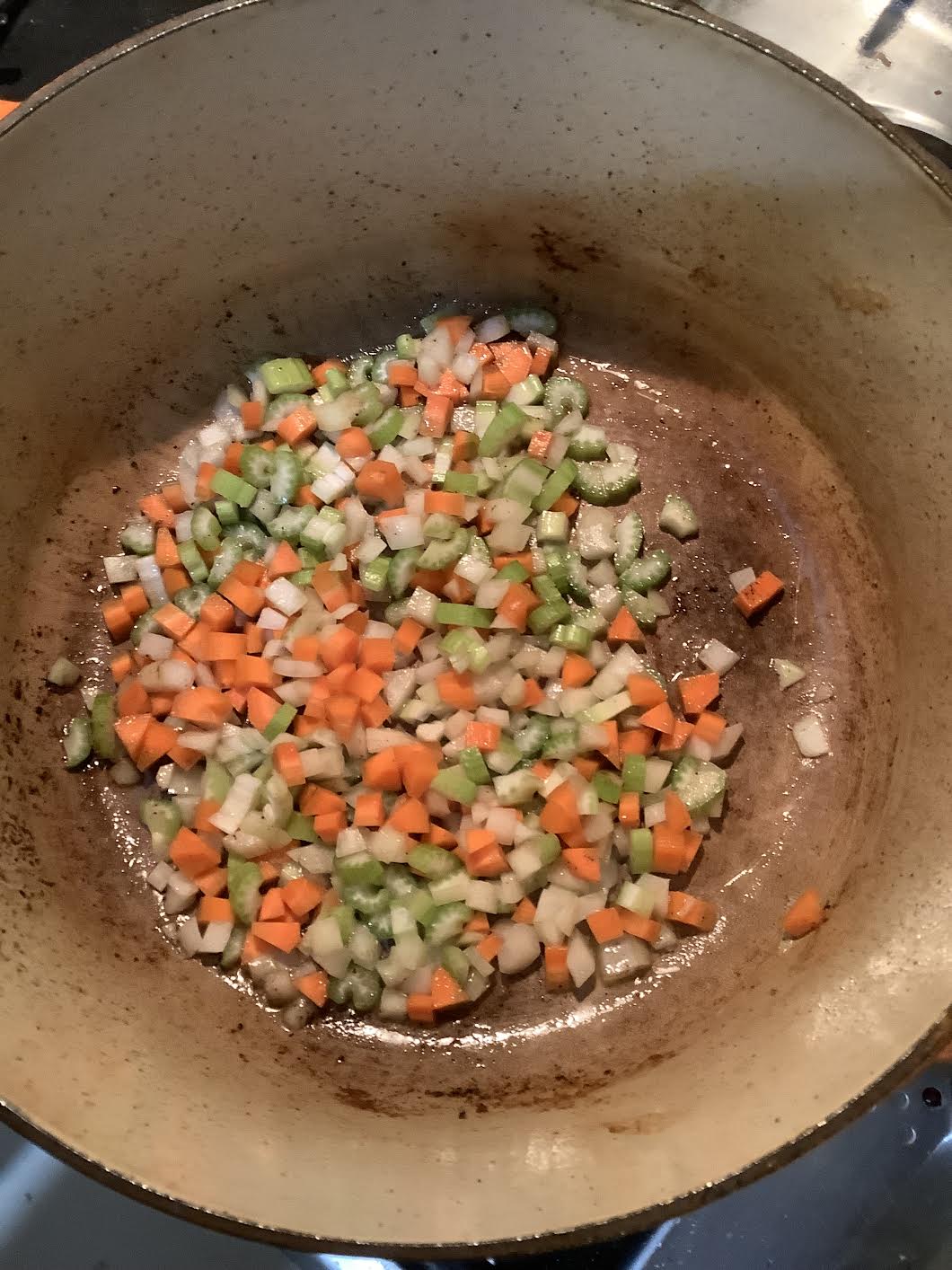
Put butter into casserole over medium heat on stove top. When melted, add vegetables. Cook, stirring a bit, 6-7 minutes to form the soffrittoIn Italy, they call it soffritto, in France it is mirepoix.
1 tsp garlic, finely chopped
1 strip of lemon peel, no white pith
Add these, cook and stir ~1 minute, until vegetables are wilted but not brown.
Put veal atop the soffritto, laying the pieces flat if possible, or overlapping them slightly.
½-1 cup homemade meat broth
1 c canned Italian plum tomatoes with juice 3-4 sprigs of thyme
2-3 sprigs parsley, chopped 2 bay leaves freshly ground pepper + salt
Chop tomatoes and parsley. Put all of these into the casserole, along with remaining deglazing liquid. Liquids should come up to top of the veal slices, but not cover them. Bring to a simmer and cover. Put casserole in the heated oven and set a timer for 2 hours.
Every 20 mins, check the cassserole. Turn and baste shanks, adding more liquid, 2 Tbsp at a time, if needed.
When meat is very tender, take casserole from oven. Remove bay leaves and thyme sprigs. If sauce is too thin, cook it down on the stove-top.
Now for the heresy! Remove meat shanks and slice meat, saving the marrow bone. Add slices back to the sauce, stirring them in. Nestle marrow bones in the center of the pot, standing on end.

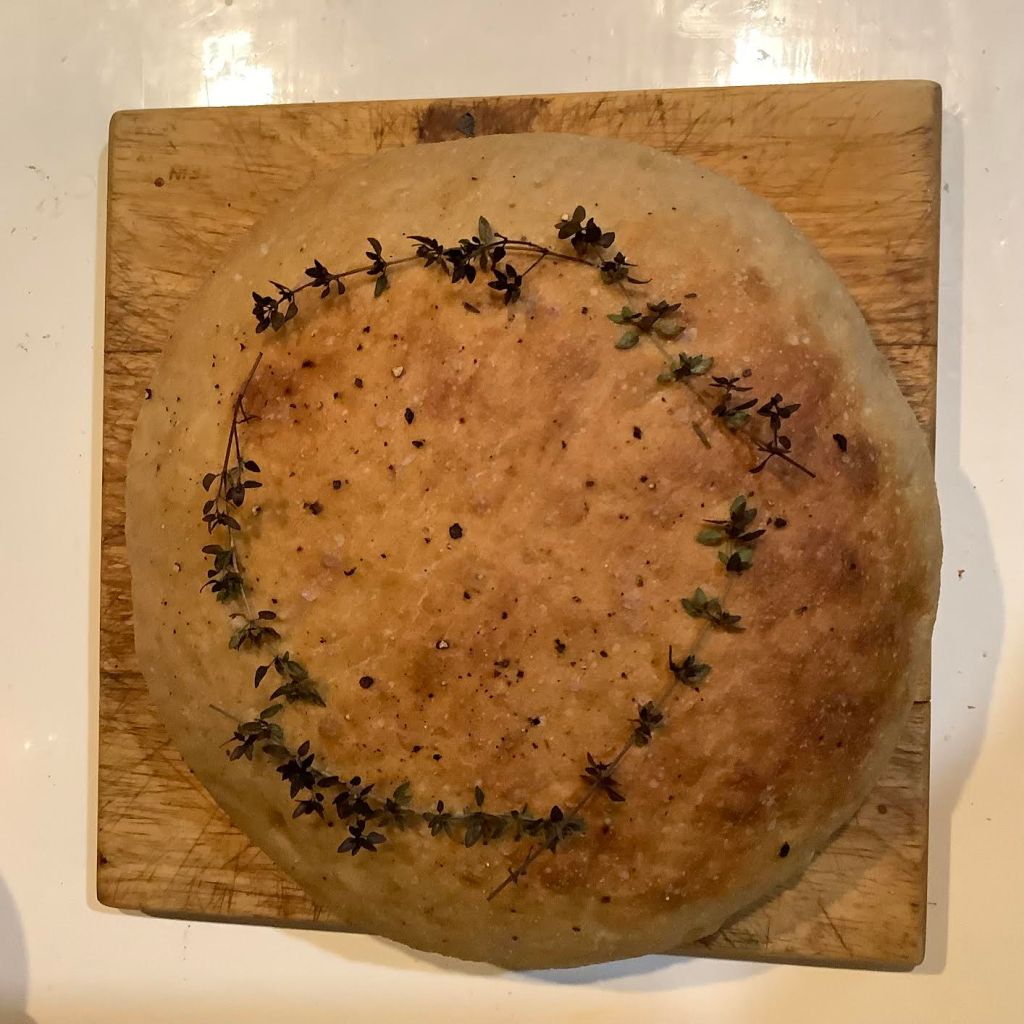
For a vegetable course, we prepared an antipasto plate of vegetables marinated in Italian Vinaigrette. For bread, no-knead focaccia, sliced for ease of serving.

Fresh, hand-cut pasta, 5 oz per person drizzle olive oilCook pasta 1-3 minutes until al dente. Drain, adding some water to sauce. Drizzle pasta with a bit of oil.
focacciaPresent casserole and pasta separately, allowing diners to serve themselves and to take one of the marrow bones if they like. Serve with slices of focaccia loaf.

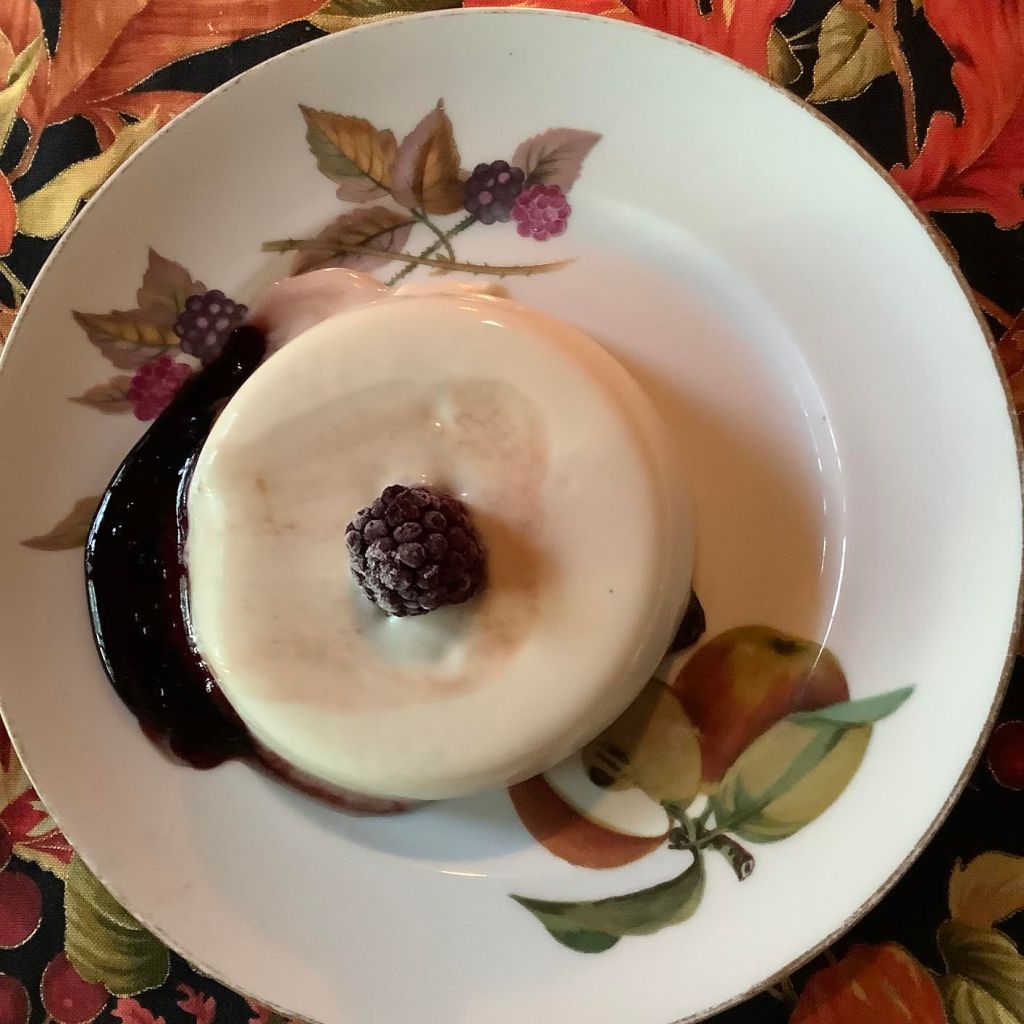
One could serve risotto or polenta, to be in keeping with Northern Italian cuisine, but we opted for fresh pasta which is more typical in the North than the South. For dessert, panna cotta with fruit coulis.

Slow Days: Cranberry Corn Sticks

People who are new to Fasting often pose the questions: “Can I really eat ‘anything I want’ on a Slow Day?” and “What should I eat on Slow Days?” To answer those questions, I have decided to add some blog posts to show some of the foods we eat on what the world calls NFDs [non-fast days] but which, in our house, we call ‘Slow Days.’ This feature will appear sporadically. 

Now for the answers. Can you really eat ANYTHING you want on a Slow Day? Not really. If you eat too many calories every Slow Day, you will not lose weight. There are many questions asked on the Fast Diet Forum which attest to that. Once in a while you can splurge, as long as it isn’t everyday. For what to eat on Slow Days, Dr. Mosley recommends a Mediterranean Diet. As for how we eat, an example follows.

Autumn in New England means foliage in stunning colors, apple cider, the last of the sweet corn, apples, cranberries, and Thanksgving. In our family, Thanksgiving is not just a feast on a particular day, rather it is an unfolding process of celebrating local foods. Cornmeal was introduced to the early European settlers here [the Puritans at Plymouth, Massachusetts] by the First Nations people who had grown corn for centuries. Dried, it could last the winter, providing vitamins and carbohydrates all year long. The Puritans thought they would be growing wheat, but the climate was unsuitable. Cornmeal filled in for flour in many foods of the era. In old recipes, the word “Indian” in the title [Indian Pudding, Indian Bread] meant that the dish contained cornmeal. Cornbread caught on all over the Eastern seaboard and people now tend to think of it as a Southern thing, despite its deep roots in New England. For breakfast on Thanksgiving, we get out the old corn-stick molds for a history-soaked breakfast. These cast-iron pans allow you to bake corn-bread in the shape of little corn cobs. Mine were from my mother’s kitchen, though I don’t remember her ever using them. The design goes back to 1919, so I guess they were my grandmother’s pans. Bottom Line: corn bread + cranberries + cute cast-iron pans = Fun Fall Breakfast.

Here are two recipes that I have used, Fannie Farmer and Hayden Pearson, both as New England as you can get:

Corn Bread by Fannie Farmer8×8” baking pan or cast-iron cornstick pans. Preheat oven to 375F
¾ c cornmeal
½ c white whole wheat flour
½ cup white flour
¼ cup sugar 3 Tsp baking powder
¾ tsp salt
Sift together into a large bowl.
1 cup milk
1 egg, well beaten 4 Tbsp butter, melted
Add these to dry ingredients and mix well.
For Corn Sticks, one 7-stick pan is filled using 1 cup batter. The pan must be greased in all its crannies with melted butter. For Corn Bread, butter the baking pan.
½ – ¾ cup cranberriesAfter batter is in the pan, poke cranberries into the Corn Sticks, using 4-5 per Corn Stick. For Corn Bread, sprinkle the berries on top and gently swirl them into the batter.
Bake 15 minutes for Corn Sticks; 25 minutes for Corn Bread.Since I have left-over batter from the Corn Sticks, I bake it and use it in the turkey stuffing.
Sunny Acres Corn Bread by Hayden Pearson8×8” baking pan or cast-iron Corn Stick pans. Preheat oven to 425F
¾ cup yellow corn meal
2/3 cup white whole wheat flour
2/3 cup white flour
3 ¼ tsp baking powder
¾ tsp salt
1/3 c white sugar
¼ tsp allspice
Sift these into a large bowl.
2 eggs, beaten
1 stick/8 Tbsp butter, melted
¼ c milk 1 Tbsp brown sugar
Add these to dry ingredients and mix well.
For Corn Sticks, one 7-stick pan is filled using 1 cup batter. The pan must be greased in all its crannies with melted butter. For Corn Bread, butter the baking pan.
½ – ¾ cup cranberriesAfter batter is in the pan, poke cranberries into the Corn Sticks, using 4-5 per Corn Stick. For Corn Bread, sprinkle the berries on top and gently stir them into the batter.
Bake 15 minutes for Corn Sticks; 25 minutes for Corn Bread. Since I have left-over batter from the Corn Sticks, I bake it and use it in the turkey stuffing.

Vermeer

How this Fast Diet Lifestyle works: Eat these meals tomorrow, for a calorie total of less than 600. On another day this week, eat the meals from a different post, another day of eating 600 calories or less. Eat sensibly the other days of the week. That’s it: a simple way to lose weight and be healthier. Welcome to ______ who is now Following.

The Dutch Baroque style of painting was quite different from the Italian Baroque of Caravaggio. In both, light is a key factor — light contrasting with shadows to lead the eye into the painting and to guide the viewer to certain points. But while Caravaggio was all about sensuality and dramatic violence, the Dutch artists were about light: the clear, luminous, low-humidity light of Northern Europe. Johannes Vermeer was a painter in Delft: born, raised, and baptized in that city on 31 October, 1632. He appears to have been self-taught, although perhaps influenced by friends of his father who was an art dealer. Vermeer began to paint and he specialized in ‘interiors’ — people [mostly women] in rooms, doing ordinary things. The rooms are drenched in light from a window on the viewer’s left, making the colors of clothing and carpets glow, and bringing a sense of calm. He used expensive pigments and worked very slowly. Vermeer’s paintings have a clarity and perfection that makes them almost photographic. Indeed, in modern times, there has been much debate about whether he was merely ‘copying’ what he saw through a camera obscura — a viewing device that projects scenes onto a surface. For more about whether and how Vermeer used optical aids to create his art, give some time to the fascinating film Tim’s Vermeer, in which an inventor tries to duplicate The Music Lesson. However he did it, Vermeer produced some beautiful paintings, most of which were purchased by a single patron in Delft. When he died precipitously in 1675, his wife had difficulty paying his debts, and his work was forgotten. In the mid-1800s, he was rediscovered by a French art critic who wrote copiously of Vermeer and his 80+ works. There is no way that Vermeer painted that much in the 20 years that he was active! In the 1920s-30s, “newly discovered Vermeers” were coming out of the woodwork: forgeries all. He is one of the most forged and mis-attributed artists of all time, some forgeries fooling Nazi art hoarders. Now, around 34 works are said to be by Vermeer, and each one is a cherished peek into life in 17th century Delft. Which one is your favorite?

A Flemish breakfast and a simple supper for an artist who was not a financial success during his lifetime.

Holiday-After Breakfast: 139 calories 6 g fat 0.6 g fiber 14 g protein 6.4 g carb 37 mg Calcium  NB: The food values given above are for the egg bake and fruit only, not the optional beveragesPB GF  The boiled egg and meat are typical of a Flemish breakfast that Vermeer would have known. I named it ‘Holiday-after’ as it employs a few left-overs from a feasting table, such as Easter as seen below.

1 two-oz egg, hardboiled 1.5 oz ham OR beef OR turkey  1.5 oz pineapple OR ¼ cup mixed berries Optional: 5 oz fruit smoothie or berry-yogurt smoothie [88 caloriesOptional: blackish coffee [53 calories] or blackish tea or mocha cafe au lait [65 calories] or lemon in hot water

Warm the meat or not. Cut the fruit in bite-sized pieces. Plate the meat, egg, and fruit. Brew your beverages of choice. Sit down and relax with your easy anytime breakfast.

Fish Cakes:  212 calories 4 g fat 5 g fiber 9.6 g protein 34 g carbs 52 mg Calcium [food values for dinner using ONE 1/3 cup-size cake and side dishes.]   PB GF  This recipe is from Legal Seafood Cookbook,  from the restaurant chain in Boston, Mass. Fish cakes have been popular where ever there are folk who want a little fish to go a long way.

NB: The Fish Cake recipe can produce 6 cakes, each 1/3 cup in size. Each cake = 92 calories 1.7 g fat 1 g fiber 8 g protein 12 g carbs 22 mg Calcium NB: The Fish Cake recipe can produce 8 cakes, each 1/4 cup in size. Each cake = 69 calories 1.3 g fat 0.6 g fiber 5 g protein 9 g carbs 16 mg Calcium 

1/3 cup green or white onion, chopped 1-2/3 cup mashed potatoes [no milk, no butter] ¼ tsp dry mustard + salt + pepper 1 two-oz egg 2 Tbsp milk 6 oz cooked fish [cod, haddock, salt cod, salmon or a mixture], flaked into small pieces 1 tsp butter ½ cup pickled beets 1 cup baby greens or sliced lettuce leaves cherry tomato ½ tsp olive oil + ½ tsp vinegar + salt + pepper

Combine the onion, potatoes, egg, seasonings, and milk, stirring. Stir in the fish, gently but thoroughly. Using a 1/3 cup measure as a mold, portion the fish/potato mixture into 6 cakes. Put on a plate or cookie sheet while the pan heats up. Heat a heavy fry pan, such as cast iron, and spray with non-stick spray. Cook the fish cakes on one side, flattening them slightly with a turner. Remove from the pan and add 1 tsp of butter to the pan. Spread the butter around, return the fish cakes, and cook them on the other side until they are browned. Serve while hot. What you don’t eat today, let cool completely, then freeze with waxed or parchment paper between the cakes. 

Slow Days: Corn Fritter Breakfast

People who are new to Fasting often pose the questions: “Can I really eat ‘anything I want’ on a Slow Day?” and “What should I eat on Slow Days?” To answer those questions, I have decided to add some blog posts to show some of the foods we eat on what the world calls NFDs [non-fast days] but which, in our house, we call ‘Slow Days.’ This feature will appear sporadically. 

Now for the answers. Can you really eat ANYTHING you want on a Slow Day? Not really. If you eat too many calories every Slow Day, you will not lose weight. There are many questions asked on the Fast Diet Forum which attest to that. Once in a while you can splurge, as long as it isn’t everyday. For what to eat on Slow Days, Dr. Mosley recommends a Mediterranean Diet. As for how we eat, an example follows.

Fresh corn is a food that comes but once a year, and that is in late Summer. True, supermarkets will offer corn on the cob in May, but they have to bring it in from far away. To get the full effect, you must get your corn locally and in season. After you cook up a batch for dinner-time feasting along with burgers or grilled chicken, cut the cooked kernels off the remaining ears and turn them into Corn Fritters. Southerners would insist that a fritter must be deep-fat fried, but in New Hampshire, a griddle works very well and is easier. Here in Northern New England, these delights are served many ways: as a savory side dish, if chopped chives or scallions are added; as a cocktail nibble when prepared as tiny rounds; as a first course at dinner, with maple syrup [Yes, seriously. Children swoon at this]; as a dessert, with maple syrup; and at breakfast, with maple syrup. Can you tell that we like our fritters? Here are two recipes to try:

Fannie Farmer Cookbookmakes ten 4” diameter fritters
1 cup corn kernels, drained if canned 1 egg yolkStir together.
½ cup + 2 Tbsp white whole wheat flour ½ tsp baking powder ½ tsp salt
pinch of paprika
Sift or stir together with a fork.Add to the corn/yolk.
1 egg whiteBeat until stiff and fold into the corn/flour mixture.
Pan greased with bacon fat.

For each fritter, pour 3 Tbsp batter into the hot pan. Don’t let it spread too widely. You should get 2 or 3 into a 10” pan or use a larger griddle. Cook a few minutes until bottom is set and brown. 
Flip and cook a little longer. 
Maple syrupServe hot with maple syrup.

For a complete breakfast, I cooked up some back bacon and wrapped it around slices of sweet, ripe melon. Here are those fritters, waiting for the maple syrup!
thekitchn.com7 three-inch fritters
1/4 cup all-purpose flour 1/2 cup white whole wheat flour
1 Tbsp fine yellow cornmeal 1.5 tsp granulated sugar
1 tsp baking powder 1/2 tsp kosher salt
1/4 tsp cayenne pepper
Whisk flour, cornmeal, sugar, baking powder, salt, and cayenne pepper together in a large bowl.
1.5 c. corn kernels 
1 Tbsp New Mexico green/red chiles 1 Tbsp chopped fresh chives
Seed and mince the jalapeno, if using. Toss these with dry ingredients until the vegetables are coated.
1/4 c. whole milk
1 large egg
Mix together in a measuring cup until incorporated, then pour into flour-corn. Stir until all flour is moistened. Batter will be quite thick, but do not overmix. Let sit.
Wipe pan with a paper towel dipped in vegetable oil OR spray with cooking sprayHeat oil into a large cast iron skillet over medium heat until shimmering. Drop 1/4-cup portions of batter evenly around pan and flatten each slightly. Cook until golden-brown on the bottom, 2-3 mins. 
Flip cakes and cook until puffed, brown and cooked through, 2-3 mins more. If using frozen corn kernels, they may need 1-2 minutes more cook time per side.
Remove fritters to a towel-lined basket. Keep making fritters with remaining batter. 
Maple syrupPlate fritters, serve warm or at room temperature.

Slow Days: Summer Vegetable Pizza

People who are new to Fasting often pose the questions: “Can I really eat ‘anything I want’ on a Slow Day?” and “What should I eat on Slow Days?” To answer those questions, I have decided to add some blog posts to show some of the foods we eat on what the world calls NFDs [non-fast days] but which, in our house, we call ‘Slow Days.’ This feature will appear sporadically. 

Now for the answers. Can you really eat ANYTHING you want on a Slow Day? Not really. If you eat too many calories every Slow Day, you will not lose weight. There are many questions asked on the Fast Diet Forum which attest to that. Once in a while you can splurge, as long as it isn’t everyday. For what to eat on Slow Days, Dr. Mosley recommends a Mediterranean Diet. As for how we eat, an example follows.

Since Dear Husband and I enjoy pizza for dinner every Saturday night, I am often on the lookout for a new way to top the pie. Thus, I was delighted to find a recipe at thekitchn.com for a pizza from the famous Berkeley Cheeseboard Collective. The corn and fresh vegetables remind me of a pizza which I enjoyed in Rome. This is a delicious way to use Summer’s bounty. Of course, I use a dough prepared with mostly white whole wheat flour, instead of all-purpose flour. It gives the pie a hearty, rustic flavour which we enjoy.

Mise en Place with all those luscious vegetables.
Sv 2
5½ -6 oz white whole wheat pizza dough/personIf dough is cold, let sit at room temp 2+ hours. The dough is ready when it does not bounce back when stretched.
1 c mozzarella 1/3 c feta cheeseGrate mozzarella cheese on the large holes of a box grater. Crumble feta cheese.
1½ tsp basil 1 clove garlic 2½ Tbsp olive oil
pinch salt
¼ tsp pepper flakes
GARLIC OIL: Chop basil finely. Chop the garlic.
Place everything in a small bowl and stir to combine.
NB: can be done hours before
¼ packed c. red onion
½ c grape or larger tomatoes
½ c kernels fresh corn ½ c summer squash ribbons 
Thinly slice onion. Cut grape tomatoes in halves or fourths. [If using whole tomato, cut in 1/2″ dice.] Cut ribbons of squash with a vegetable peeler. 
Prepare the vegetables and combine in a bowl. If any liquid accumulates in the bowl, pour it off.
1½ tsp garlic oil l¼ tsp kosher saltAdd garlic oil to the vegetables, season with the salt, and toss to combine. If preparing two pizzas, divide the vegetables equally into two bowls.
2 tsp Garlic Oil per crust prepared cheesesRoll out dough balls, and brush garlic oil onto each crust, all the way to the edges. Sprinkle evenly with mozzarella. Arrange vegetables on top in an even layer, without any liquid. Sprinkle with feta.
Bake at 500F until bubbly. Take from oven.
garlic oil
8 fresh basil leaves
Drizzle with garlic oil, then tear basil into bite-sized pieces and scatter over top. Serve right away.
Can be cooked on a gas grill. Pre-grill the untopped crusts for 2-3 mins, until grill marks form. Bake covered.
The salad greens were added after the pies came from the oven to provide Pizza with Salad without any plates or forks. Truly a treat for a late Summer meal.

Slow Days: Granola

People who are new to Fasting often pose the questions: “Can I really eat ‘anything I want’ on a Slow Day?” and “What should I eat on Slow Days?” To answer those questions, I have decided to add some blog posts to show some of the foods we eat on what the world calls NFDs [non-fast days] but which, in our house, we call ‘Slow Days.’ This feature will appear sporadically. 

Now for the answers. Can you really eat ANYTHING you want on a Slow Day? Not really. If you eat too many calories every Slow Day, you will not lose weight. There are many questions asked on the Fast Diet Forum which attest to that. Once in a while you can splurge, as long as it isn’t everyday. For what to eat on Slow Days, Dr. Mosley recommends a Mediterranean Diet. As for how we eat, an example follows.

Granola is a cereal made of whole grains, nuts, and dried fruit. It differs from muesli in that granola is sweetened and baked. Good Friend Ann wanted to make some granola. She had a recipe from the box of Quaker Oats, then sent out a call to her circle of friends to solicit recipes, receiving two responses. Reading the three recipes got me curious about the history and nutrition values of granola.

In 1847, James Caleb Jackson set up a sanatarium in Dansville, New York. Like Maximilian Bircher in Switzerland [see Dr Bircher, August 21], Jackson thought that eating a better diet would improve physical health. One of the key ingredients was whole grains. Toward that end, he developed a dry cereal which he called ‘granula’ which was made of granules of dried Graham flour paste. John Kellogg, who had a health spa in Battle Creek, Michigan, ‘appropriated’ the recipe and marketed it for his own profit. A law suit caused Kellogg to change the name to ‘granola.’ In the 1970s, granola was rediscovered by the counterculture. Then it was commercialized and turned into a sweet, fatty product that neither Jackson nor Kellogg would neither recognize nor serve.

As you can see from this chart, granola packs a wallop when it comes to calories and fat per cup. But if you read the ‘suggested serving guide,’ one serving is usually 1/2 to 3/4 cup. Very few people think that 3/4 cup of cereal is sufficient, since they eat with their eyes rather than their brain, so sitting down to a big [read: 2 cups] bowl of granola for breakfast will give one lots of fiber and some protein, but a TON of calories, fat, carbs, and sugar. Then they add full-fat yogurt and chocolate chips and think how healthy it is. Good Grief.

Per batch# cupsCaloriesFat g Fiber gProtein gCarbs gCalcium mgSugar gr
MFE’s recipe7 cups3206106.75458543.5166240
Per cup45815.27.78.277.623.734.3
AHM’s recipe6 cups3152196.53449.5343.6193132.5
Per cup525325.68.2573222
DCP’s recipe~11 cups8074415.6140178.5944327.5377
Per cup73437.712.71685.829.734

Our family enjoys a recipe from the Peter Rabbit Cookbook, which our son was given as a toddler. This is easy to prepare and delicious. I find a 1/2 cup serving with milk to be quite satisfying.

Johnny Town-Mouse Granola from the Peter Rabbit Cookbook by Arnold Dobrin.

Makes 7 cupsPreheat oven to 250F.
4 Tbsp canola oil
½ c honey
Stir oil and honey together and warm in the microwave until they are liquid.
4-5 cups rolled oatsPut oats in a 9×13” pan and pour in the warm honey-oil. Stir until oats are all coated with the honey-oil. Bake 30 mins.
1½ cups total of any of the following: 
chopped nuts
chopped dried apples
chopped dried apricots
Take pan from oven and stir in these add-ins.
Distribute the granola evenly over the surface of the pan. Return to oven and bake 15 minutes.
½ cup raisins +/or dried cranberriesRemove pan from oven, stir in raisins/cranberries.
Let cool in the pan, then store in glass jars.

Slow Days: Gateau aux Fruits Frais

People who are new to Fasting often pose the questions: “Can I really eat ‘anything I want’ on a Slow Day?” and “What should I eat on Slow Days?” To answer those questions, I have decided to add some blog posts to show some of the foods we eat on what the world calls NFDs [non-fast days] but which, in our house, we call ‘Slow Days.’ This feature will appear sporadically. 

Now for the answers. Can you really eat ANYTHING you want on a Slow Day? Not really. If you eat too many calories every Slow Day, you will not lose weight. There are many questions asked on the Fast Diet Forum which attest to that. Once in a while you can splurge, as long as it isn’t everyday. For what to eat on Slow Days, Dr. Mosley recommends a Mediterranean Diet. As for how we eat, an example follows.

In Summer, there is an abundance of fresh fruit. Heaven! And there are many ways to eat it, besides eating it fresh, of course. For a few years, I worked in a restaurant owned and run by a Frenchman. [He would have insisted that he was a Breton, but we will let that go.] Although I did not work in the kitchen, I was happy to glean as many tips as I could about cooking. Chef did not give out his recipes. However, I managed to get enough clues to produce a reasonable version of Gateau aux Fruits Frais — a simple cake made special by a topping of fresh fruits.

The base of the Gateau is a simple yellow cake — you could use sponge cake or pound cake as well. It was baked in a 4×8″ loaf pan, then cut lengthwise into two slabs, each about 1-inch thick. If you are serving a large gathering, put the cake slabs end to end on the serving board to create one 16″ long gateau. I freeze the other half for a dessert in the future. Next, the top of the cake is slathered with pureed rhubarb or thick applesauce. The sauce should be lightly sweetened, but not too sweet at all.

Then you need a cream mixture, the sort that could be the filling of a cake or the piping at the edge. It could be an Italian meringue, or a butter cream icing, or whipped cream. I stirred together vanilla yogurt, almond meal from unpeeled almonds and let it sit for a bit to thicken. Spoon or pipe the ‘vanilla cream’ around the edge, on top of the pureed fruit. Rake the cream with a fork to pattern it or get creative with your piping bag.

Arrange any sort of fresh fruit over the cake: whole strawberries, kiwi slices, raspberries. Since we had blueberries and red currants ripe in the garden, I arranged them in stripes. For the final touch, melted jelly was brushed over the top of the fruit to give it a gloss. Voila! Gateau aux Fruits Frais.