Slow Days: Pecan Rolls

People who are new to Fasting often pose the questions: “Can I really eat ‘anything I want’ on a Slow Day?” and “What should I eat on Slow Days?” To answer those questions, I have decided to add some blog posts to show some of the foods we eat on what the world calls NFDs [non-fast days] but which, in our house, we call ‘Slow Days.’ This feature will appear sporadically. 

Now for the answers. Can you really eat ANYTHING you want on a Slow Day? Not really. If you eat too many calories every Slow Day, you will not lose weight. There are many questions asked on the Fast Diet Forum which attest to that. Once in a while you can splurge, as long as it isn’t everyday. For what to eat on Slow Days, Dr. Mosley recommends a Mediterranean Diet. As for how we eat, an example follows.

When our sons were young, our Summer Vacation was two weeks at Prince Edward Island in Canada. I would pack up ingredients for the meals we would eat, we would stuff our duffels with bathing suits and snorkel equipment, and off we would go to the old farm house we would always rent on a little lane that went down to the sea. It was delightful.

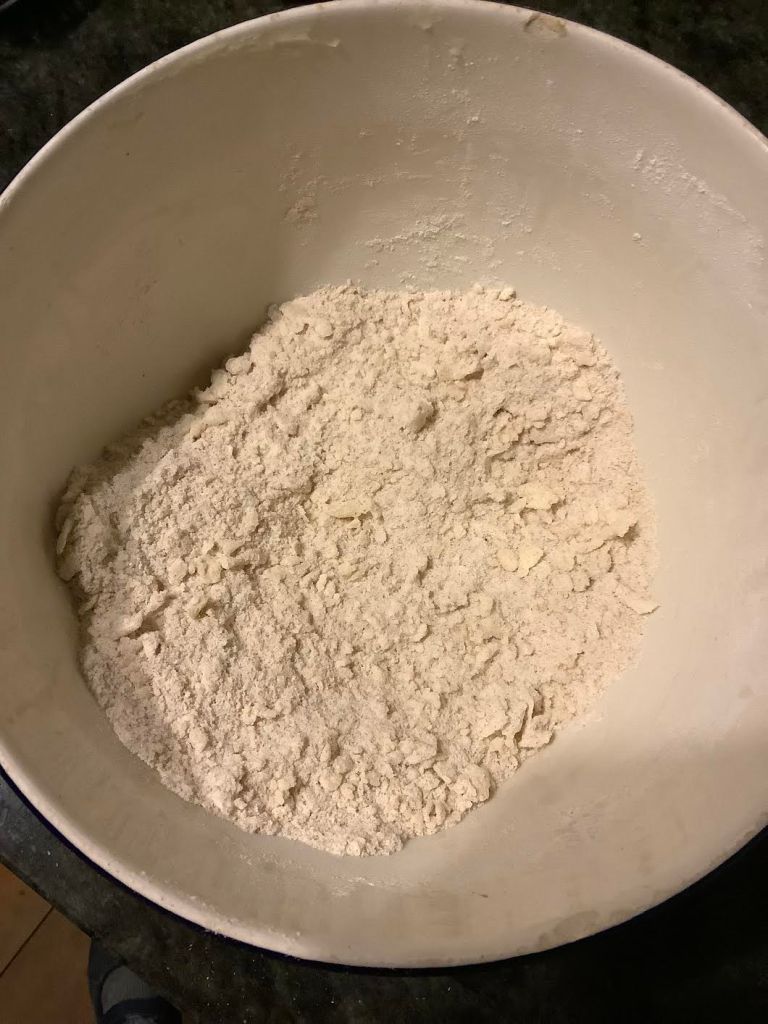
Early on, I discovered a new recipe: Pecan Rolls that could rise overnight and be enjoyed for the next day’s breakfast. Even better, the recipe made so many that they could be frozen and re–heated for subsequent breakfasts large enough to satisfy two growing boys. Great!! The recipe is from Great Breads by Martha Rose Shulman.

Now we have our own house on Prince Edward Island, built to resemble our former rental, but with some serious updates — like a large, well-equipped kitchen. Every Summer there, I make a batch of Pecan Rolls: some for the next breakfast, many for the freezer to feed our Summer guests. Depending on how you cut the dough, you could make 24-36 large rolls. Have fun with this one!

Mise en place: in big bowl — 2 flours, mace, salt; in smaller vessels, left to right: milk-juice-honey, yeast, pecans, egg-oil, unplumped raisins
24 huge rolls OR 32 regular12 huge rolls OR 16 regular
1 cup raisins
boiling water to cover
½ cup raisins boiling water to coverSoak 15 mins, then drain, saving the water and raisins.
½ c cooled raisin water
1 Tbsp yeast
¼ c cooled raisin water 1.5 tsp yeastPour into 1-Quart bowl. Let sit a few minutes, then stir to dissolve
¾ c warm milk
½ c warm orange juice
1/3 c warm honey
1/3 c warm milk ¼ c warm orange juice 3 Tbsp warm honeyStir into yeast solution, let stand 5-10 mins.
¼ c oil, ex: canola two 2-oz eggs2 Tbsp oil, ex: canola one 2-oz eggAdd to the bowl and mix.
1 2/3 c white flour
2 tsp salt
½ tsp mace or nutmeg 4-5 c white whole wheat flour
½ + 1/3 c white flour 1 tsp salt
¼ tsp mace or nutmeg
2-2½ c white whole wheat flour
Combine in a large bowl.
Plumped Raisins
1 cup liquids
Plumped Raisins
½ cup liquids
Stir into dry ingredients.
1 cup liquids½ cup liquidsAdd more liquids and mix.
Remaining liquidsRemaining liquidsAdd and mix. Knead and let rise 1½-2 hours.
Punch down, divide dough in half if making larger amount. Roll ½ to an 8×12” oblong. 
4 Tbsp melted butter
2 Tbsp honey 1 tsp cinnamon
2 Tbsp melted butter
1 Tbsp honey ½ tsp cinnamon
Stir to combine. Divide into 2 parts, if making larger amount. Brush rolled dough with 1 part butter-honey.
1/3 cup + 1/3 cup chopped pecans3 Tbsp chopped pecansSprinkle dough with 1 part nuts. With long side toward you, roll up dough, slice into 12-16 pieces. Repeat with other ½ of dough, if making larger amount.
Arrange rolls, cut side up, on buttered baking trays.
Let rise on counter 1 hour, or overnight in ‘fridge.
Bake 15-20 mins at 350F.
½ c. icing sugar or more 1 tsp orange juice or more¼ c. icing sugar or more 1 tsp orange juice or moreStir together icing. Slather on rolls to serve today. Cool and freeze un-iced remaining rolls in plastic bags.
Pecan Rolls, back bacon, strawberry yogurt — tastes like Summer to me!

Slow Days: Pistachio-Cherry-Chocolate Biscotti  

People who are new to Fasting often pose the questions: “Can I really eat ‘anything I want’ on a Slow Day?” and “What should I eat on Slow Days?” To answer those questions, I have decided to add some blog posts to show some of the foods we eat on what the world calls NFDs [non-fast days] but which, in our house, we call ‘Slow Days.’ This feature will appear sporadically. 

Now for the answers. Can you really eat ANYTHING you want on a Slow Day? Not really. If you eat too many calories every Slow Day, you will not lose weight. There are many questions asked on the FastDiet Forum https://thefastdiet.co.uk/forums/ which attest to that. Once in a while you can splurge, as long as it isn’t everyday. For what to eat on Slow Days, Dr. Mosley recommends a Mediterranean Diet. As for how we eat, an example follows.

‘Biscotto’ means ‘twice baked.’ Twice-baking is an old way of preserving baked goods. The 2nd baking dries them out, so they can be stored for future use. Examples include the dried bread called rusk or zwieback or sukhariki. Their origin seems to be as marching food for the Roman army. Army forts always had granaries and bake-houses, producing vast quantities of fresh and twice-baked bread. In the Renaissance, the twice-baked bread was reborn, made delicious with almonds. A baker in Tuscany is given credit for the introduction of ‘cantucci,’ perfect for dunking in the local Vin Santo as a dessert. It is a delicious combination, as sampled in Firenze. As fresh baked goods became readily available, not many people bothered with preserving bread. And then biscotti were reintroduced, taking America by storm in 1990s coffee houses. At first, many customers were put off by the ‘stale cookies’ but dunking became popular again, and so did the twice-baked cookies. If you think that biscotti are born in a package, wrapped in plastic, then you must try baking them at home.

This particular version is adapted from Chocolate by Nick Magliere. The biscotti are lovely as a Christmas gift or for enjoying at home with a leisurely cup of coffee during the holidays. I like the green nuts and the red cherries, seen together in a slice. A real treat from your very own kitchen.

Set rack in middle of oven. Preheat to 350 F.
Cover a cookie sheet with parchment paper.
1¾ c flour
2/3 c sugar
1 tsp baking powder
¼ tsp salt
Combine these, mixing well
8 Tbsp/1 stick butter Cut in 8 pieces and toss with flour mixture. Rub or cut butter into the flour.
¾ c dried cherries or cranberries
¾ c chocolate chips
¾ c/4 oz unsalted pistchios
Stir into the flour-butter.
2 two-oz eggs
2 tsp vanilla
Whisk together, then stir into above mixture with a fork until dough comes together. 
Cherries, chocolate chips, and pistachios all mixed together with the flour-butter.
2 two-oz eggs
2 tsp vanilla
Whisk together, then stir into above mixture with a fork until dough comes together. 
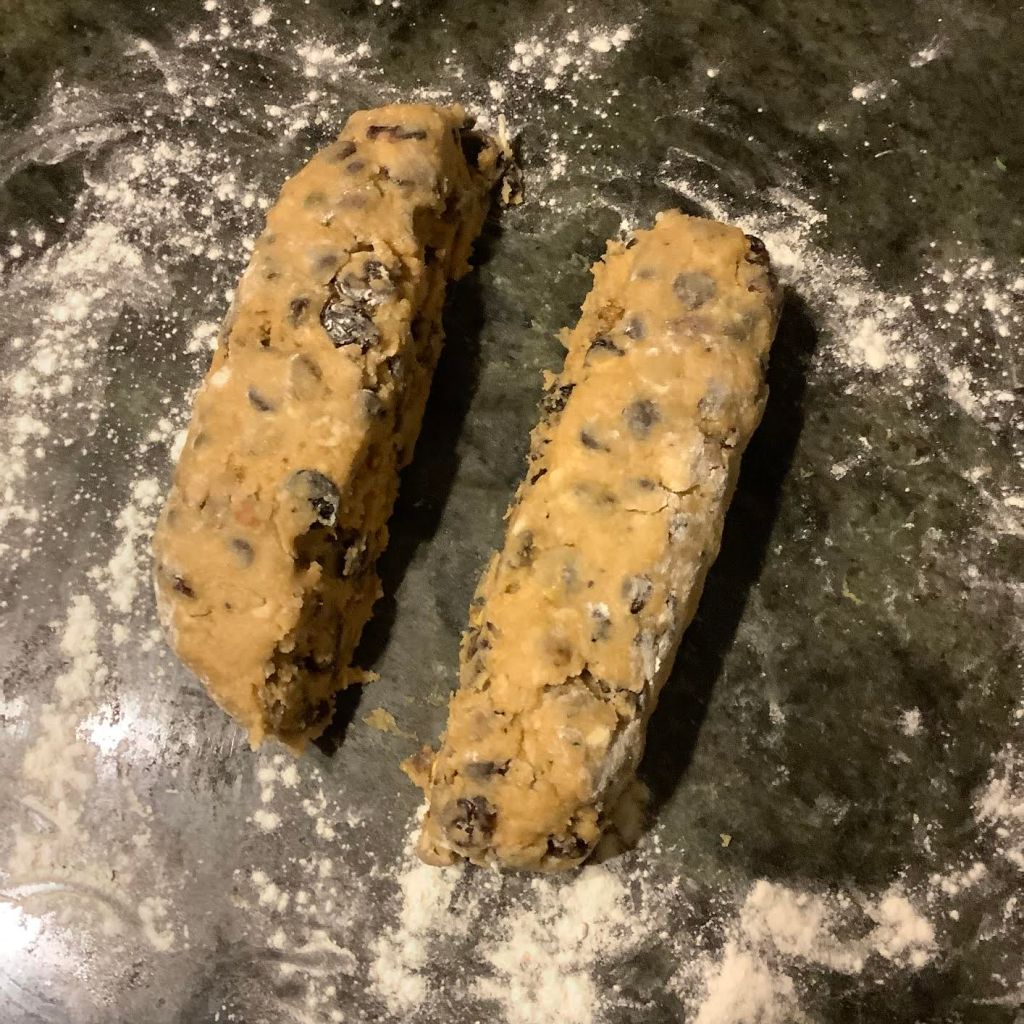
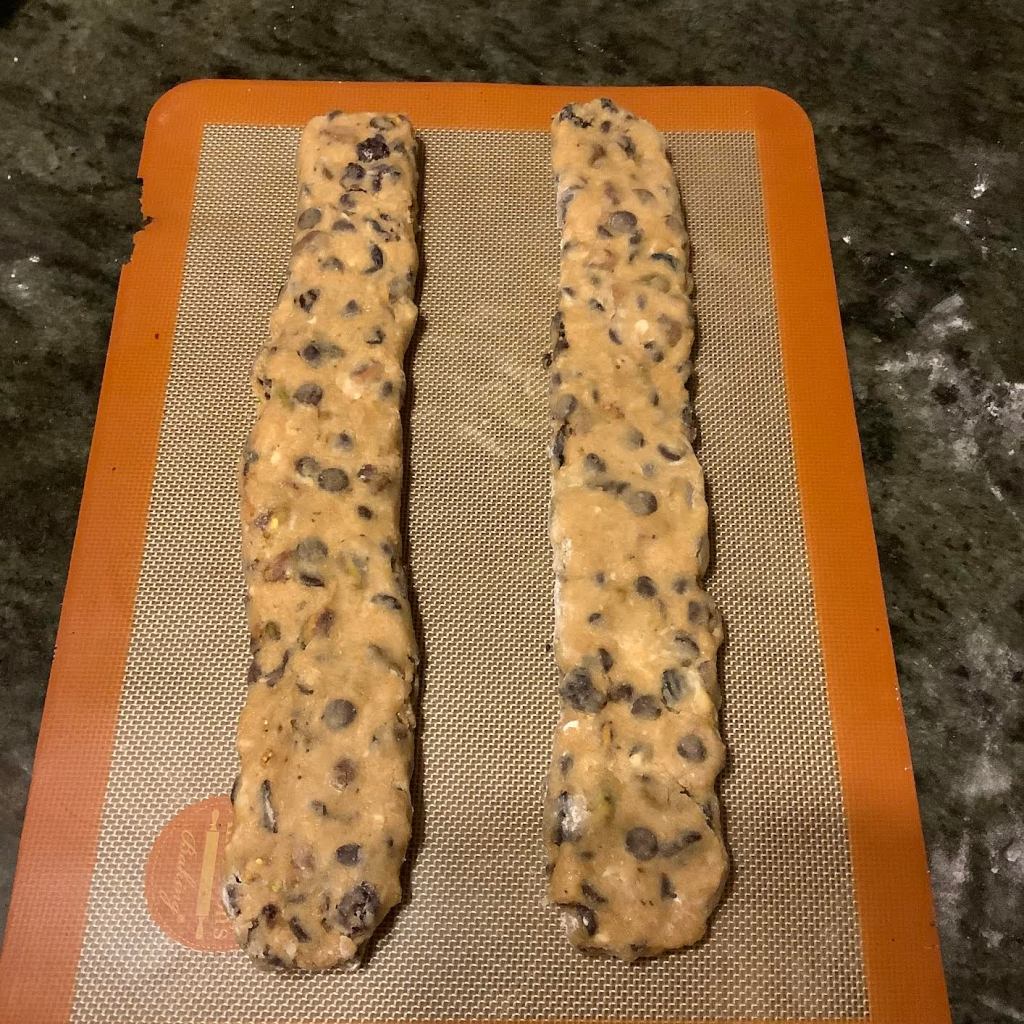
Divide dough into 2 portions, then roll each half into a log 12” long. Place the 2 logs on the prepared pans with 2” between them.

Bake 25-30 mins, until dough is browned and firm to the touch. Remove to cutting board to cool.
When cool, cut each log with a serrated knife into ½” slices, straight across or on diagonal. Put slices back on parchment paper on the cookie sheet.
Bake at 325F 15-20 mins, until light brown in color.
Cool, then store in an air-tight tin.

Slow Days: Turkey Leg Confit

INTRO: People who are new to Fasting often pose the questions: “Can I really eat ‘anything I want’ on a Slow Day?” and “What should I eat on Slow Days?” To answer those questions, I have decided to add some blog posts to show some of the foods we eat on what the world calls NFDs [non-fast days] but which, in our house, we call ‘Slow Days.’ This feature will appear sporadically. 

Now for the answers. Can you really eat ANYTHING you want on a Slow Day? Not really. If you eat too many calories every Slow Day, you will not lose weight. There are many questions asked on the FastDiet Forum https://thefastdiet.co.uk/forums/ which attest to that. Once in a while you can splurge, as long as it isn’t everyday. For what to eat on Slow Days, Dr. Mosley recommends a Mediterranean Diet. As for how we eat, an example follows.

Last Thanksgiving, since neither of our sons could/would travel due to Covid, we were faced with a sad culinary conundrum: what form of turkey to serve to only two people??? A whole turkey was out since the smallest ones were in high demand. We could make our usual Turkey Roulade, but even that served three generously for more than one meal. Happily, I heard of doing confit treatment to turkey and I found this recipe by André Baranowski on Saveur.com. Since we were accustomed to preparing a duck confit, this seemed like a great idea. As I always do, I cross-referenced to see if there were any other hints or refinements to include. Here is my synthesis. HINT: If preparing for Thanksgiving, start 5-7 days ahead. This takes a short amount of working time during two days at the start, then a wait of 5-7 days before eating.

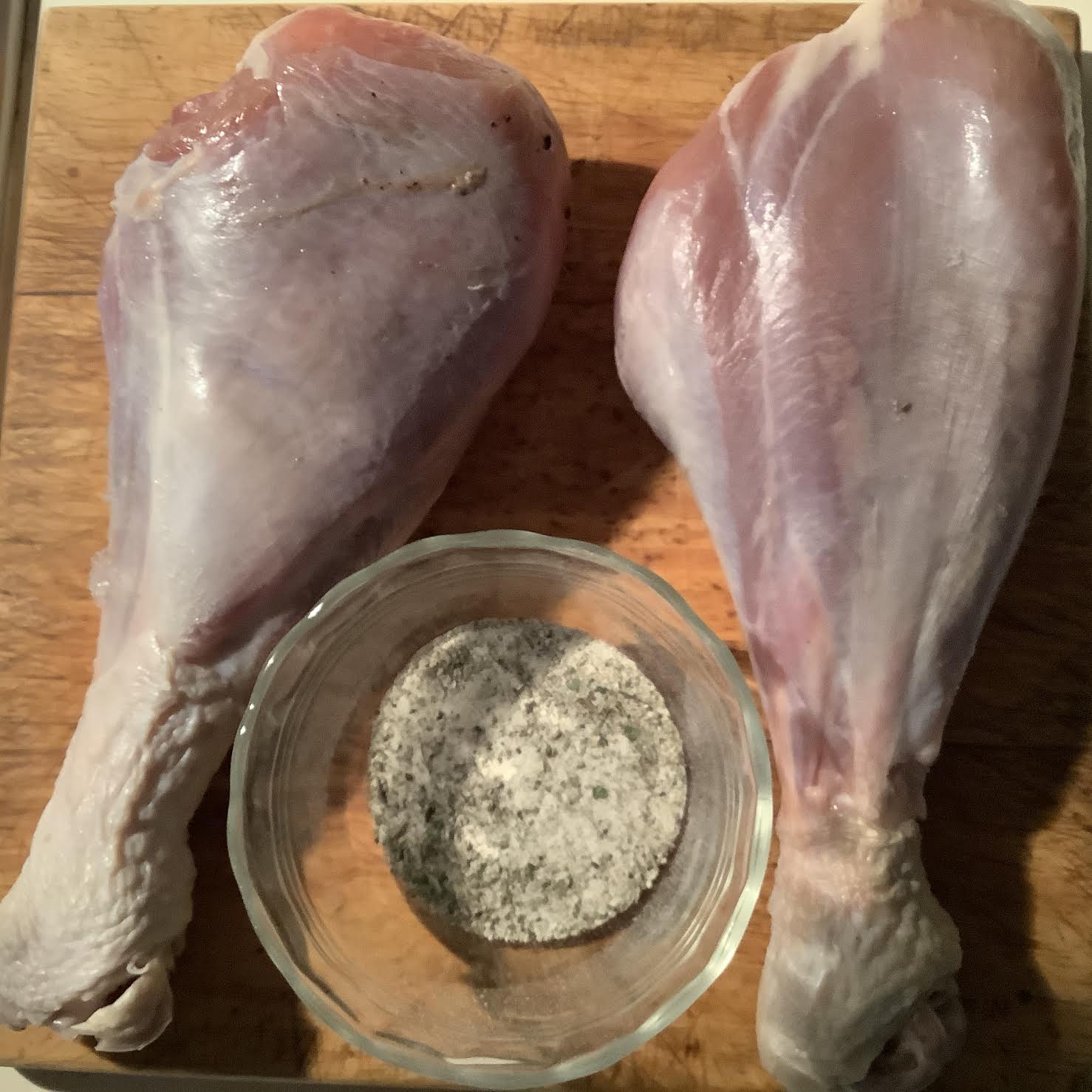
2 legs from a 15# TurkeyDAY 1  Pat dry the turkey legs. Move turkey to a 9”x5”x4” loaf pan
½ tsp. rubbed sage
½ tsp. dried thyme
1 dried bay leaf
1 Tbsp Kosher salt  generous grind black pepper
DAY 1 SEASON AND COOL In a spice grinder, grind the herbs to powder. Rub turkey with herb/salt and chill overnight, loosely covered.
2-3 quarts rendered duck fat OR lard I used 1 quart duck fat DAY 2  BAKE AND CURE Heat oven to 275°. Discard any liquid from the pan of turkey. Microwave fat in a jar on low power or warm in a pot over low heat until the fat liquifies. Pour fat over turkey to cover the meat. Cover pan with foil; bake until very tender, ~ 2 hours. Let turkey cool in the fat and put the pan in the ‘fridge for 3-7 days.

When first I heard of confit for meat, I was horrified: all that salt and FAT? Ugh. But the salt and fat work to kill bacteria and also to make the meat very tender. The fat does not go into the meal, keeping the turkey low in fat.

DAY 5 or 7 HEAT AND EAT  Heat the pan until fat is just liquefied. Pour fat into a jar to freeze/store. Take legs from pan and let the extra fat drain off. Place legs in a cast iron pan and cook until browned and crisp, ~15 minutes
Plate with your favorite sides for a succulent meal.
What a grand Thanksgiving meal! A dish of stuffing was baked separately, since there was no bird to stuff.

Slow Days: Chow

People who are new to Fasting often pose the questions: “Can I really eat ‘anything I want’ on a Slow Day?” and “What should I eat on Slow Days?” To answer those questions, I have decided to add some blog posts to show some of the foods we eat on what the world calls NFDs [non-fast days] but which, in our house, we call ‘Slow Days.’ This feature will appear sporadically. 

Now for the answers. Can you really eat ANYTHING you want on a Slow Day? Not really. If you eat too many calories every Slow Day, you will not lose weight. There are many questions asked on the FastDiet Forum https://thefastdiet.co.uk/forums/ which attest to that. Once in a while you can splurge, as long as it isn’t everyday. For what to eat on Slow Days, Dr. Mosley recommends a Mediterranean Diet. As for how we eat, an example follows.

The word ‘chow’ has many meanings. The Chow is a medium-sized dog with a curled-up tail. It is a slang word for food. As a verb, followed by the word ‘down’, it means ‘to eat.’ Then there is chow as a relish… In Pennsylvania Dutch areas, chow is a combination of pickled, chopped garden vegetables — cauliflower, onion, carrot — served as a sweet condiment. In the American South, cabbage takes center stage, with unripe tomatoes and red sweet and hot peppers as co-stars. It is served on hot dogs and with black-eyed peas. In Prince Edward Island, we met our favorite: Maritime Chow, aka ‘Acadian ketchup’. We were dining with friends at a small oyster house on the dock at Malpecque Bay. After a dozen oysters, we ordered fishcakes. We asked the young man who brought the food [former oyster-shucking champion] the name of the delicious relish. “Its Chow,” he replied, a bit confused. What is it made of, we asked. “Well…you know…its Chow,” he attempted, “My grandmother makes it.” So I asked my local PEI friends for a chow recipe. Lillian P. shivered and said, “Ugh. Chow. I never make it.” Cathy K. had no recipe. Nona McL. kindly wrote out her recipe for Chow, which in the Maritimes is always made with unripe tomatoes. This is Nona’s recipe.

20 cups sliced green tomatoes 5 cups sliced onions
½ cup pickling salt
DAY 1 Combine and leave overnight
6 cups sugar
2 cups cider vinegar
1 cup water
2 cups white vinegar
pickling spice in a bag
DAY 2 Drain tomatoes + onions and put into a large pot. Add these ingredients to the pot. Simmer 1 hour. Take a little liquid from the pot
¼ cup cornstarch
1½ tsp turmeric
1½ tsp dry mustard
Mix these ingredients with the reserved liquid from the pot. Then add to the pot and cook together for ½ hour.
Put into sterilized 1-pint or ½-pint canning jars and process in boiling water bath for 10 minutes. Makes 9 pints.

Since I had some half-ripe tomatoes, I was eager to get started. By Day 2, I realized that I had neither turmeric nor dry mustard in the pantry. Time to substitute: yellow Indian Curry powder for turmeric and Dijon mustard for the dry mustard. I was pleased with the result and served it at a luncheon, attended by all the afore-mentioned ladies. Lillian tasted it and asked what it was. “Its Chow!” I crowed, “Made with Nona’s recipe.” When Nona tried it, she exclaimed, “That’s not my Chow — you have changed my recipe!” I acknowledged that I had made substitutions… Both of those worthy matrons agreed that “it isn’t Chow, but it is good.” Now I make a batch every year. This is my recipe.

4 cups sliced tomatoes = 1 L.  chose under-ripe ones with some red areas but mostly green
1 cup sliced onions
1.5 Tbsp pickling salt
DAY 1 Combine in a medium-sized bowl and leave on the counter overnight. 
Some red on the tomatoes, but mostly green.
300 ml sugar = 1¼ cup
100 ml cider vinegar = 3.75 fl oz
50 ml water = 1.75 fl oz 
100 ml white vinegar = 3.75 fl oz
1 Tbsp pickling spice  [no mustard seed] 
DAY 2 Drain tomatoes + onions and put into a large pot. Put the pickling spice in a cheesecloth bag or a tea ball before adding to pot. Add these ingredients to the pot and simmer one hour.
15 ml cornstarch = 1 Tbsp
½ tsp Dijon mustard, en lieu of mustard seed
3/8 tsp CGE curry
Take a little liquid from the pot and add these 3 ingredients. Stir together until smooth. Add back into the pot, stir, then simmer for ½ hour.
Makes 5 half-cup jars
Process in boiling water 10 minutes

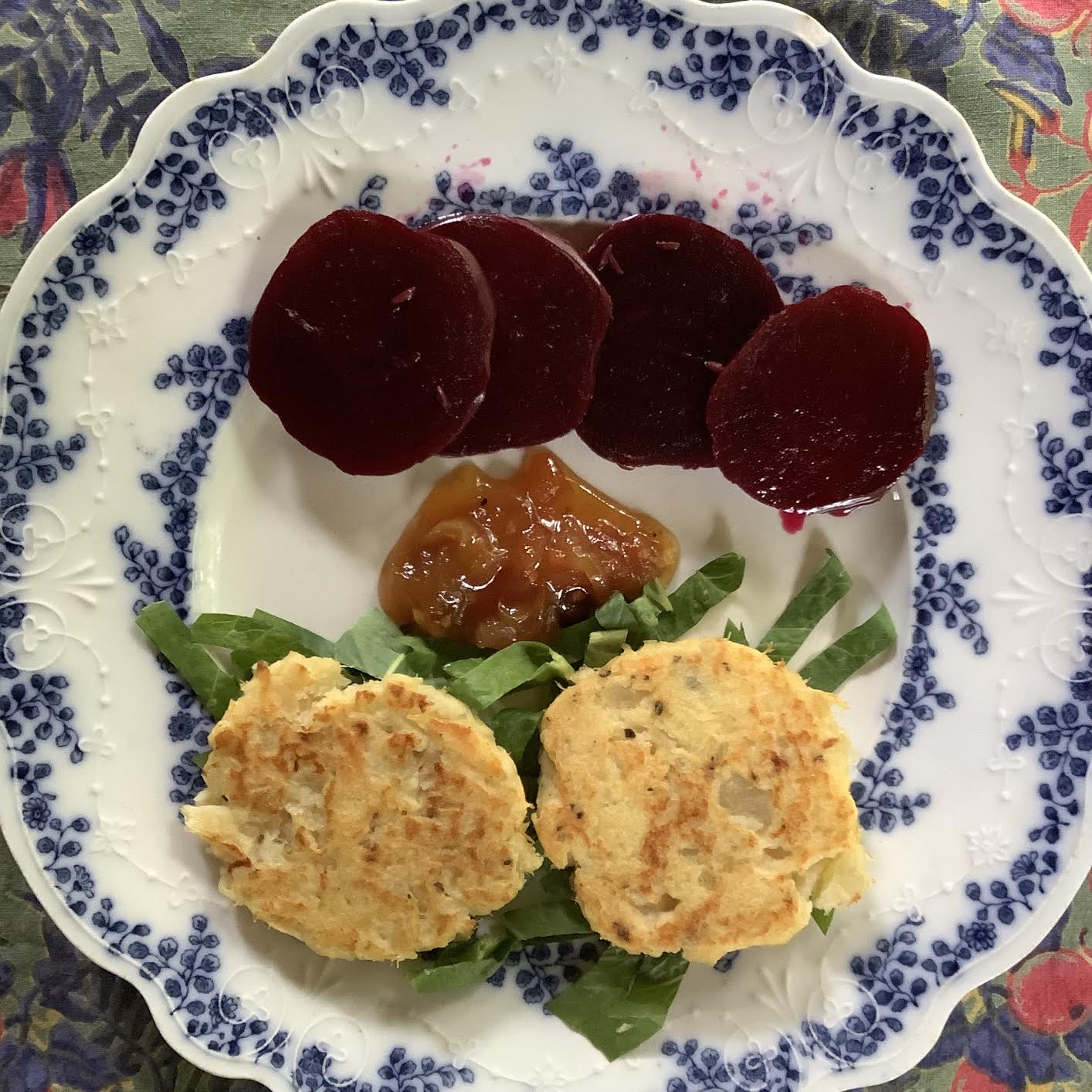
We always serve Chow with Fish Cakes. For this meal, they are made the Maritime way: using Salt Cod instead of fresh fish. I also have a recipe for fish cakes made from fresh fish, from the Legal Seafood Cookbook.

The lovely, savory-sweet, rosy-hued Chow is in the center. Pickled beets are our favorite side dish for Fish Cakes.

As the summer garden winds down and you wonder what to do with all those half-ripe tomatoes, Chow is the answer. Chow down.

Tomatoes

How this Fast Diet Lifestyle works: Eat these meals tomorrow, for a calorie total of less than 600. On another day this week, eat the meals from a different post, another day of eating 600 calories or less. Eat sensibly the other days of the week. That’s it. Simple way to lose weight and be healthier.

80,000 years ago, there was a wild plant in Ecuador, Solanum pimpinellifolium, which produced red fruits the size of a cherry. Seeds spread by animals/people traveled south and north, to Peru and Mesoamerica. By 7,000 years BP [Before Present as geologists say], there was a larger tomato being cultivated in Mexico, where they entered the local cuisine. Post Conquest, the Spanish took tomatoes and other local food plants back to Spain. Not so fast! European botanists recognized them to be members of the Nightshade Family, which they equated with poison. Not only were people leery of tomatoes, there was even the legend that tomatoes were the ‘Forbidden Fruit’ of the Garden of Eden, and you sure don’t want to eat that! By the mid 1500s, tomatoes were being grown as a curiosity in Italy and in 1694, the tomato had arrived as a recipe in a cookbook. In September of 1820, a local promoter of good agriculture, Col. Robert Gibbon Johnson, let it be known that he would eat tomatoes, Solanum lycopersicum, from his garden in Salem County, New Jersey, USA. A throng of locals showed up to watch him sicken and keel over in agony. He didn’t die, of course, and people accepted the tomato as a new addition to their cooking. Is there a cuisine between Latitude 45N and 45S that does not use tomatoes? I think not. Although some people associate nightshades with arthritis, the tomato is GOOD for you — high in Vitamin C, Potassium, and the antioxidant lycopene. The United States is the largest producer of tomatoes in the world and ‘Better Boy’ is one of the most popular in home gardens, while other gardeners opt for heirloom varieties.

It was not difficult to choose today’s meals. These tomato dishes are so good to eat that I do hope you will try them. Whenever tomatoes are ripe in your area, eat some fresh.

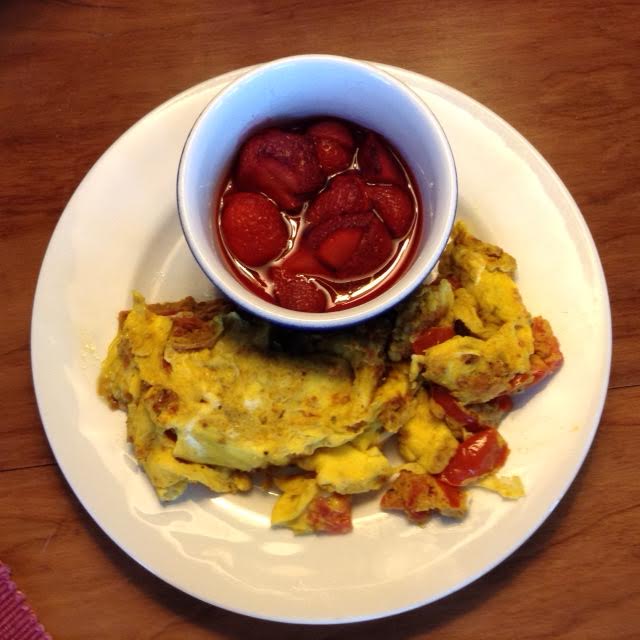
Tomato-Curry ScrOmelette: 148 calories 8 g fat 3 g fiber 11 g protein 9.5 g carbs [8 g Complex] 78 mg Calcium  NB: Food values shown are for the ScrOmelette and fruit only, and do not include the optional beveragesPB GF  This delicious recipe was loosely inspired by Fifty Breakfasts, a book by Col. A. R. Kenney-Herbert, detailing “dishes men like” and containing many flavors redolent of his years serving the Queen in India.

1½ two-oz eggs  HINT: If you are serving one person, crack three 2-oz eggs into a small bowl or glass measuring cup. Whip up those eggs and pour half of their volume into a jar with a lid and put it in the ‘fridge for next week. ½ Tbsp curry powder 2 oz fresh tomatoes, diced and drained 1½ oz strawberries dollop of plain, fat-free yogurt  Optional: blackish coffee [53 calories] or blackish tea or mocha cafe au lait [65 calories] or lemon in hot water Optional: 5 oz fruit smoothie or berry-yogurt smoothie  [88 calories]

Drain the tomatoes so that they are not too juicy. Combine with the curry powder and whisk with the eggs. Spritz a fry pan with olive oil or non-stick spray and pour in the egg mixture. Cook to your liking. Top with a dollop of yogurt for the full effect. Prepare the beverages and plate the fruit. A rousing good start to your day.

Tomato Soup w/ Sandwich 289 calories 5 g fat 5.6 g fiber 16 g protein 30 g carbs 210 mg Calcium  PB GF  Comfort food can also be low in calories. The soup recipe is from Fresh Ways with Soups and Stews, published by Time-Life Books. HINT: the soup is enough for 3 servings, so it is worth the time to make enough to freeze for later, rather than making a single serving.

Cook Soup: 1 tsp olive oil 2½ cups onions, chopped 1 cup carrot, thinly sliced 1 tsp fresh thyme or ¼ tsp dried thyme 3 cloves garlic, chopped black pepper 28-oz can whole tomatoes, coarsly chopped with juices 1¼ cup unsalted chicken or vegetable stock ¼ tsp salt

Heat the oil and 2 Tbsp water in a large heavy-bottomed pot over medium heat. Cook the onion, carrot, thyme, garlic, and pepper for 7-10 minutes or until onions are translucent, adding more water if needed. Add the tomatoes their juice, stock, and salt. Reduce heat and simmer 30 minutes. [more directions later]

Prep Sandwich: 1 slice 70-calorie bread [such as Nature’s Own] ½-oz slice Swiss cheese from the deli ½ oz ham, 97% fat free

Cut the bread in half. Cut the cheese in pieces the size of the bread halves. Construct a sandwich of bread, ham, cheese, bread. Save out one bread-sized piece of cheese. Wrap the sandwich in foil and put in the toaster oven at 350F until cheese is beginning to melt on the inside. Unwrap the sandwich and put the cheese on top. Toast the sandwich so that the top cheese becomes melted and might start to brown.

Finish Soup: 1 tsp ricotta or small-curd cottage cheese 1 tsp plain non-fat yogurt Puree the cooked soup in food processor or blender. TIP: Pour 2 cups [2/3 of the amount] into freezer containers to cool before storing. Put the remaining soup in the serving bowl. Stir the cheese and yogurt together and dollop it in the middle of the hot soup. Use the tip of a knife to pull the mixture out from the middle in several radiating arms. A few grapes add a dash of color.

Ingredients for next week: Breakfast, single portion for Monday …………………………… single portion for Thursday:

1 two-oz egg1 two-oz egg + mushrooms 
chives + thyme
1 buckwheat galette [savory crepe]
strawberry OR apple
Optional smoothieoptional smoothie
optional hot beverageoptional hot beverage

Dinner, single portion for Monday:………………………….. single portion for Thursday:

4 oz tuna steak + Moroccan spice blend2 buckwheat galettes/savory crepes
white beans, canned leeks + bacon + garlic
preserved lemon OR fresh lemonGruyere cheese + mayonnaise
peas OR broccoli OR green beanscarrot + broccoli + cauliflower OR tomatoes
Sparkling waterSparkling water

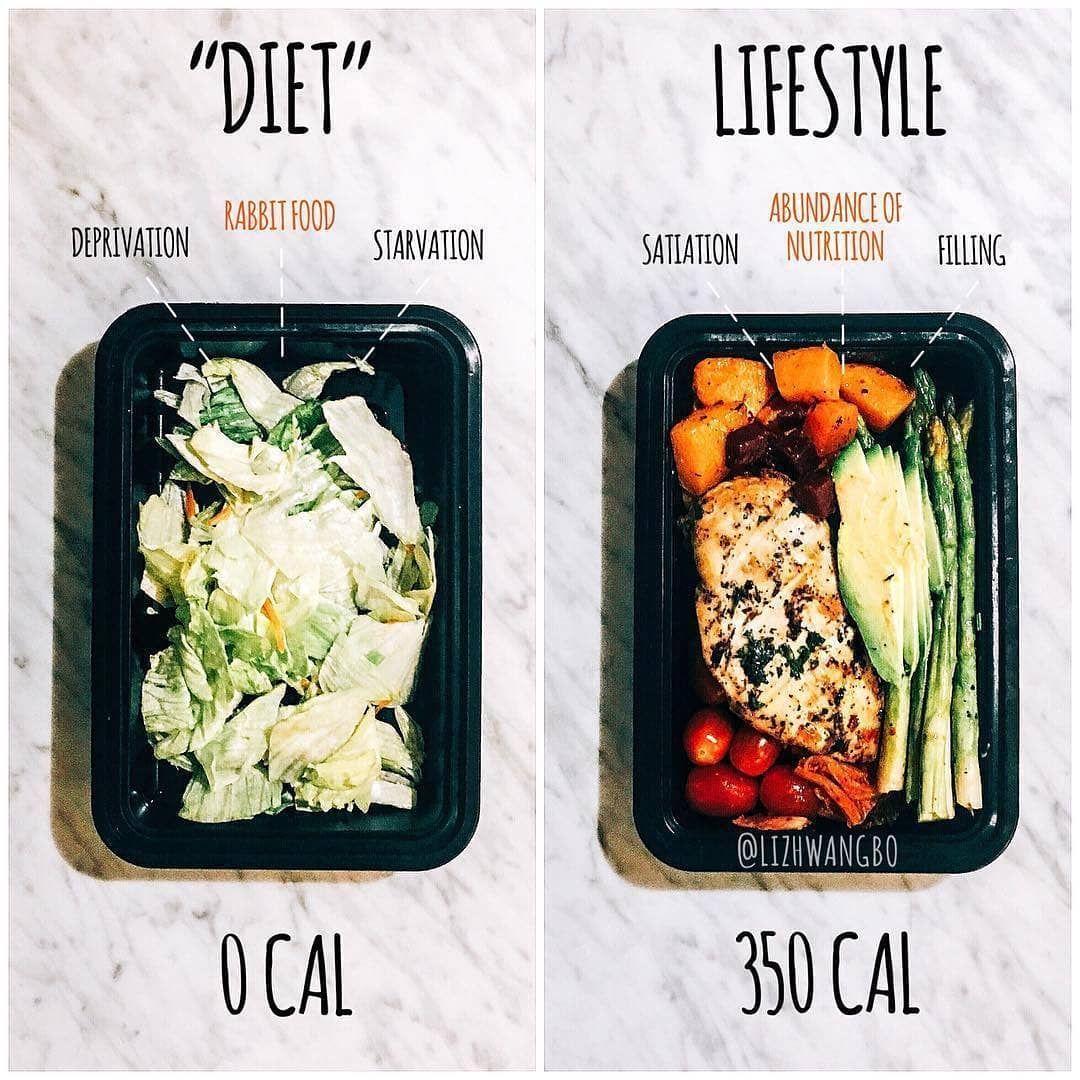
Diet vs Lifestyle

How this Fast Diet Lifestyle works: Eat these meals tomorrow, for a calorie total of less than 600. On another day this week, eat the meals from a different post, another day of eating 600 calories or less. Eat sensibly the other days of the week. That’s it. Simple way to lose weight and be healthier.

Diet” can mean: a) one’s usual or habitual food [noun]; b) a type of food recommended for a specific purpose; c) a way of eating sparingly to reduce one’s weight. When people say, “I’ve gained my ‘Covid 19’ and now I have to go on a diet” they mean that they are going to eat less to achieve a goal of weight loss. And then what? Can’t tell you how often I’ve heard, “We were on the South Beach/low carb/cabbage soup diet and we lost 30 pounds! And then we regained it.” That’s the trouble with ‘diets.’ You might deprive yourself of certain food groups for a while, but you can’t/won’t live like that for the rest of your life. And the weight comes back.

Lifestyle” can mean: a) the usual way of life of a group of people [noun]; b) associated with or promoting a more desired way of living [adjective]. For a new way of eating or behaving to be ongoing, it must be something you are comfortable to be doing all your life. Can you eat this way and still enjoy a social life? If so, this is described as a ‘sustainable’ behavior. If you are thinking about altering your current “usual or habitual food” to make it so that it will be “promoting a more desired way of living,” then think carefully about the long-term. Slow, incremental weight loss is shown to be preferable to quick weight loss. Learning to eat better for life is the key.

Now you know why I refer to the way we eat as the Fasting Lifestyle. It is a way of eating that requires only two days of behavior change, in the form of eating fewer calories. Look at today’s meals — couldn’t you eat like this twice a week for the rest of your life if it meant that the weight would come off and stay off?

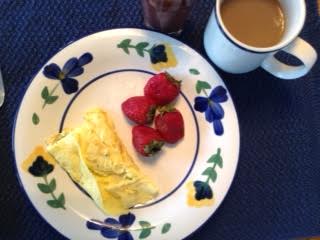
Cheese ScrOmelette:  154 calories… 9.6 g fat…  1 g fiber… 12 g protein… 5 g Carb… 108 mg Calcium…  NB: Food values shown are for the ScrOmelette and fruit only, and do not include the optional beveragesPB GF  What a classic. Why not eat this often?

++1½ two-oz eggs  HINT: If you are serving one person, crack three 2-oz eggs into a small bowl or glass measuring cup. Whip up those eggs and pour half of their volume into a jar with a lid and put it in the ‘fridge for next week. ++++  ¼ oz cheese such as Cheddar or Gruyere ++++ 1.5 oz applesauce or 2.5 oz strawberries++++  Optional: blackish coffee [53 calories] or blackish tea or mocha cafe au lait [65 calories] ++++ Optional: 5-6 oz fruit smoothie or berry-yogurt smoothie  [88 calories]++

Whisk the eggs with seasonings to taste. Grate the cheese. Put the eggs into a hot pan spritzed with cooking spray. Once the bottom of the eggs is set, sprinkle with cheese, fold and plate. Slice fruit, brew optional beverage, blend the optional smoothie or take it from the ‘fridge and shake it before serving.

Antipasto with chicken: 252 calories… 11 g fat… 4 g fiber… 22.6 g protein… 29 g carbs… 208 mg Calcium…  PB GF  This one is a keeper. Simple, off the shelf, pretty on the plate, good to eat. HINT: The recipe and photo show enough for 2 people. Invite a guest who is Fasting, too.

This generous platter serves two.

++ 2 oz roasted red pepper, without oil [I roast my own, slice and freeze them] ++++ 2 oz mozzerella, cut into ‘sticks’ [buy it in blocks] ++++ 3 oz chicken breast, cooked ++++ 5 oz tomato slices ++++ 3 oz whole green beans, steamed, drained, cooled ++++1½ oz marinated mushrooms++++ 1/3 c. garbanzo beans, drained if canned++++ 4 black olives, pitted and sliced++++ 3 slices pepperoni, chopped++++ 1 tsp flavored olive oil++++ flavorful finishing salt ++++chopped fresh herbs++ 

Prepare the ingredients and keep separate. Combine the garbanzoes with the chopped pepperoni. On a platter, arrange the ingredients in rows as shown in the photo. Suit your own artistic nature as to what goes where. Drizzle on the flavored oil. Be liberal with the fresh herbs.

Ingredients for next week: Breakfast, single portion for Monday …………………………… single portion for Thursday:

1 slice 70-calorie multi-grain bread1.5 two-oz eggs  + Bing cherries
strawberries +/or blueberries, fresh or frozen3%-fat ham + leek/scallion
fat-free ricotta cheesegarlic + mushrooms
chicken liver pate OR chicken liver
Optional smoothieoptional smoothie
optional hot beverageoptional hot beverage

Dinner, single portion for Monday:………………………….. single portion for Thursday:

4 oz pollock or other white-fleshed fish 4 oz filet mignon + butter + olive oil
American/streaky bacon + cauliflowerportobello mushroom cap + shallot
carrots + brussel sproutswhite wine + heavy cream
cherry tomatoes + Parmesan cheesegrainy mustard + fresh tarragon + asparagus
Sparkling waterSparkling water

Slow Days: Summertime Pasta

People who are new to Fasting often pose the questions: “Can I really eat ‘anything I want’ on a Slow Day?” and “What should I eat on Slow Days?” To answer those questions, I have decided to add some blog posts to show some of the foods we eat on what the world calls NFDs [non-fast days] but which, in our house, we call ‘Slow Days.’ This feature will appear sporadically. 

Now for the answers. Can you really eat ANYTHING you want on a Slow Day?  Not really. If you eat too many calories every Slow Day, you will not lose weight. There are many questions asked on the FastDiet Forum which attest to that. Once in a while you can splurge, as long as it isn’t everyday. For what to eat on Slow Days, Dr. Mosley recommends a Mediterranean Diet. As for how we eat, an example follows.

Jacques Pepin is a darned good chef. Perhaps it is the fact that he was formerly the Executive Chef of the Howard Johnson’s chain that caused him to promote simple-to-prepare food that is achievable for the ‘average’ cook. One such recipe, from his book Fast Food My Way, is called Summertime Pasta. [When he talks about Fast Food, he means the kind that is quick to prepare, not the type we eat on a FAST Day***. ] If ever there was a time when one wants to keep prep time to a minimum, Summer is it. It amazes me how easy this meal is on the cook and how fine it is to eat it. We dine on it ourselves and serve it to company. It is that good.

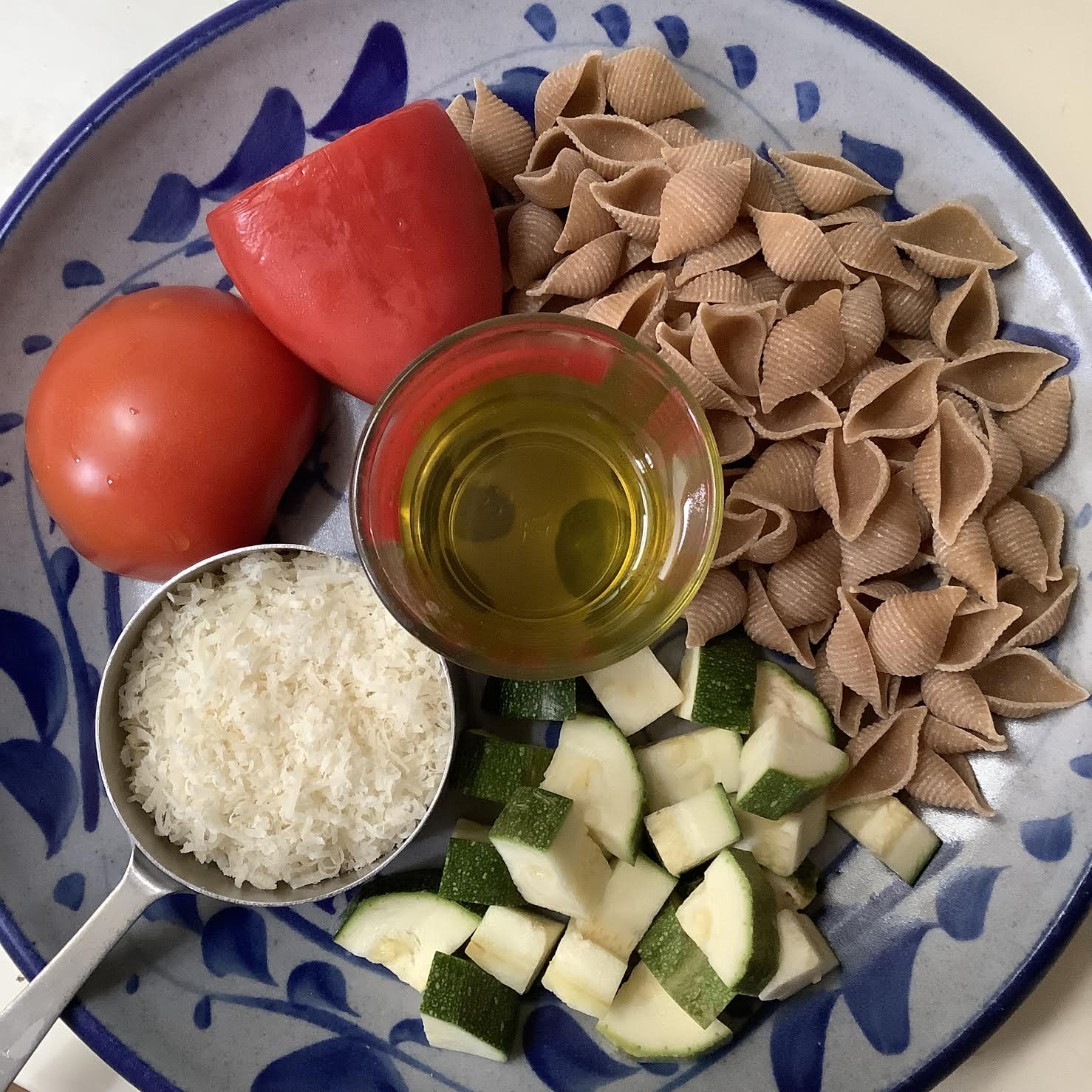
The mise en place for two servings of Summertime Pasta
Sv 4Sv 2 
3 c. tomatoes in ½“ dice
1 ½ c. zucchini in ½“ dice
1 c. white mushrooms, ½” dice
1 tsp salt + black pepper
1/3 c. extra-virgin olive oil  
6 oz diced tomatoes
¾ c diced zucchini
½ c diced mushrooms
½ tsp salt + black pepper
3 Tbsp EVOO
Mix everything in a microwavable glass bowl.
6 oz pasta shells, whole wheat
2 qts water
salt
3 oz shells, whole wheat
1 qt water
salt
20 minutes before serving, bring the water and salt to a boil. Add the pasta and cook about 7 minutes until al dente. Drain.
Microwave the vegetables for 2 minutes or longer until they are lukewarm.
1 c. grated Parmesan cheese ½ c ParmesanCombine the drained pasta with the warm vegetables, then stir in the cheese.
1½ c. Fresh basil leaves, shredded ¾ c. Fresh basil leavesPlate, and top with basil.
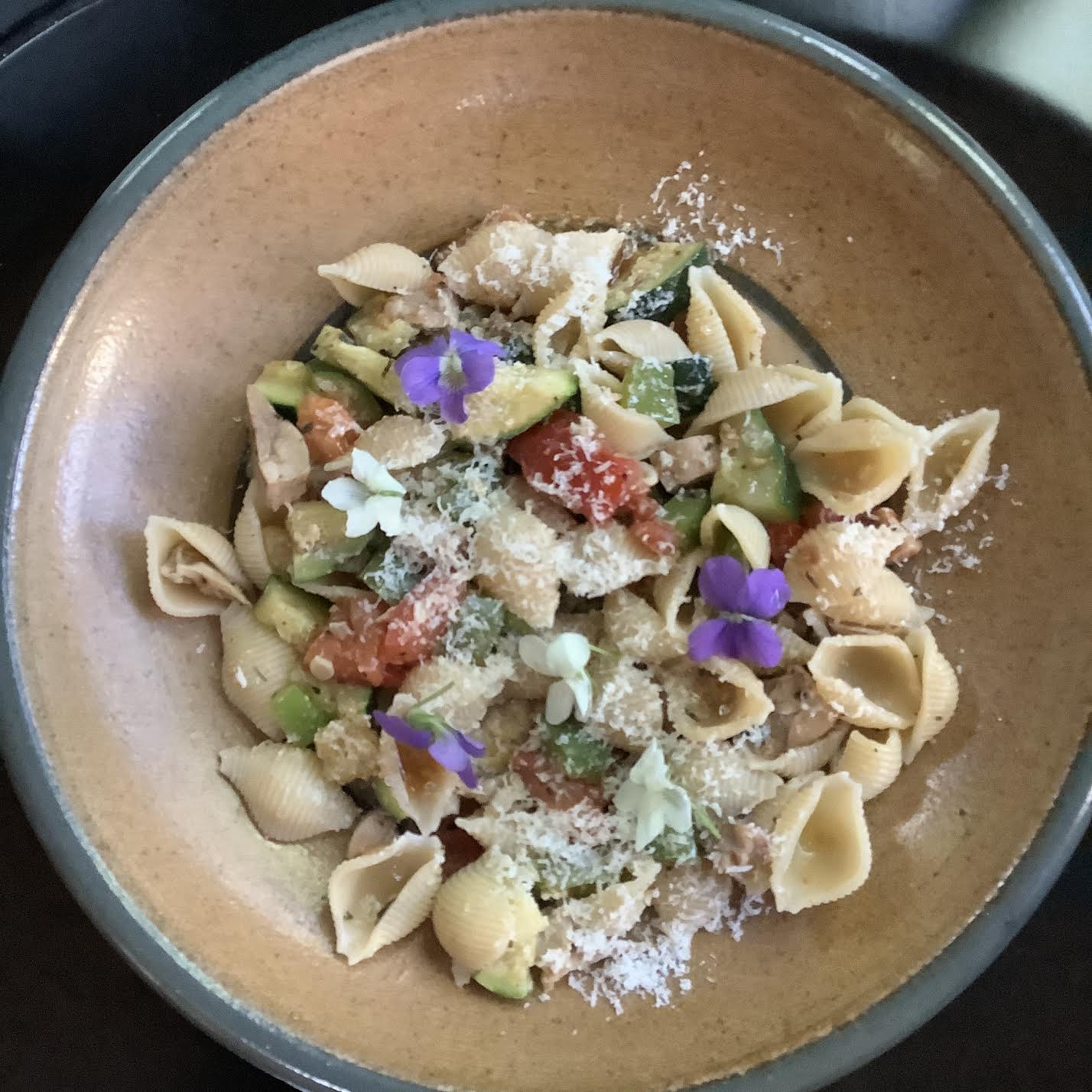
Every meal looks delicious with edible flowers as a garnish.

If you wish, you can add chunks of chicken or grilled shrimp to the dish to add more protein. Delicious.

Snow peas are also a nice addition.

***Truth be told, I do have a version of this recipe that is fine for a Fast Day. One of these days, I will share it with you.

Zephyr

How this Fast Diet Lifestyle works: Eat these meals tomorrow, for a calorie total of less than 600. On another day this week, eat the meals from a different post, another day of eating 600 calories or less. Eat sensibly the other days of the week. That’s it. Simple way to lose weight and be healthier. Welcome to cellulitewarriors and weightlossguide101website who are now Following.

The pantheistic Hellenes had many deities. All the usual events of nature — wind, day, night, the arrival of Spring — these could all be explained by the actions of those immortals. Zephyr was one of the four winds, representing the soft, warm West winds of Spring. Botticelli depicted Zephyr in one of his most famous paintings, The Birth of Venus. The winds lived on an island, imprisoned underground by Aeolus, Master of the Winds. There were four tunnels leading to the outside in the direction of the four Cardinal Points. At the direction of the gods, Aeolus would open one of the tunnels and release the correct wind. Unfortunately, Zephyr has been locked up again, for the kindly wind has died and the air is hot and sultry in much of North America. For us in New Hampshire, the wind of Summer is from the South-West, bringing hot and humid weather from the Gulf coast. The Greeks had no wind like that, and no deity represents it. Perhaps these ‘un-godly’ weather conditions arise from another origin….

In honor of Zephyr and his fellow winds, our foods will be light and full of air. The Pao de Queijo are a new treat for us, while the Cheese Soufflé is an old favorite.

Brazilian Breakfast: 233 calories 11 g fat 1 g fiber 11 g protein 25.5 g carbs 201 mg Calcium  PB GF – if made with tapioca flour Here’s a breakfast to get a Brazillian out of bed in the morning: cheesey pao de queijo with meat and fruited yogurt.

2 pao de queijo 1 slice uncured bacon [20 calories] 2 oz fat-free plain yogurt + 2 fl oz applesauce, unsweetened   Optional: blackish coffee [53 calories] or blackish tea or mocha cafe au lait [65 calories

Prepare the Pao de Queijo** in advance. Cook the bacon and stir together the yogurt and the applesauce. And that was simple.

PAO DE QUEIJO:  makes 15 puffs. recipe from thekitchn.com  Each = 79 calories 5 g fat 0 g fiber 2 g protein 7 g carbs 44 mg Calcium  This is a Brazillian favorite. Easy to make, with a super taste of cheese.

1/3 c olive oil ½ c water + ½ c skimmed milk 1 tsp salt 2 c. tapioca flour OR 1 c. tapioca flour + 1 c. white whole wheat flour [yeah. I know. NOT traditional.] 2 two-oz eggs 1 c. grated Parmesan cheese

Heat oven to 450F. Place the milk-water-oil and salt in a medium saucepan and bring to a gentle boil over medium heat, stirring occasionally. Remove from heat as soon as you see big bubbles coming through the milk. Add flour and stir with a wooden spoon until you see no more dry flour. The dough will be grainy and gelatinous. Put dough in a stand mixer with a paddle attachment. Beat dough for a few minutes at medium speed until it is smooth + is cool enough that you can hold your finger against the dough for several seconds. With the mixer on medium speed, beat in eggs, one at a time. Wait until the 1st egg is fully incorporated before adding the 2nd. Scrape down sides of the bowl as needed. Beat in cheese on medium speed until fully incorporated.  For small puffs, scoop dough by level tablespoons onto parchment-covered baking sheets, spacing about 1½“ apart (24/ baking sheet).  For larger puffs, scoop dough with a 1 oz/ 2 Tbsp scoop, spacing about 2” apart (12/ baking sheet). 

I used a 1.5 Tbsp scoop and made 15 puffs. Nice size. Place baking sheets in oven and immediately turn heat to 350°F. Bake 15 mins. Rotate baking sheets between racks and from front to back. Bake further, until puffed, dry on the outside, and just starting to turn golden-brown on the bottoms, 10 to 15 mins.

Cheese Souffle:  293 calories 19.5 g fat 1.4 g fiber 20 g protein 9.5 g carbs 290.5 mg Calcium Few foods are as amazing as a good souffle, which rises to airy heights of flavor. HINT: The recipe serves 2 [two] people.

2 egg yolks 2 egg whites ½ cup Bechamel sauce, no cheese 2 Tbsp chives/scallion green parts, snipped or sliced 2 oz Cheddar cheese, grated   per serving: 1½ oz steamed or roasted green beans

Separate the eggs, being very careful not to get any yolk in the whites. Whisk the yolks with the bechamel, then stir in the cheese and chives, along with salt & pepper to taste. Heat the oven to 400 F. Whip the egg whites until they are stiff. Combine a half cup of the whites with the egg yolk mixture and gently whisk together. Fold remaining egg whites into the yolk mixture and pour into a 1-quart oven-safe dish. [I like to use a 1-quart glass casserole with straight sides, which fits in the toaster oven.] Being as gentle as possible, pour the souffle mixture into the ungreased/unbuttered/unoiled baking dish and smooth out the top a bit. Bake for 25 minutes. Cook the beans. Serve the souffle by scooping it out onto the plates. Some like a soft souffle, which will sink rapidly. I prefer mine to be cooked through yet still be creamy on the inside. Absolutely delicious! 

Slow Days: Salmon for the 4th of July

People who are new to Fasting often pose the questions: “Can I really eat ‘anything I want’ on a Slow Day?” and “What should I eat on Slow Days?” To answer those questions, I have decided to add some blog posts to show some of the foods we eat on what the world calls NFDs [non-fast days] but which, in our house, we call ‘Slow Days.’ This feature will appear sporadically. 

Now for the answers. Can you really eat ANYTHING you want on a Slow Day? Not really. If you eat too many calories every Slow Day, you will not lose weight. There are many questions asked on the FastDiet Forum  which attest to that. Once in a while you can splurge, as long as it isn’t everyday. For what to eat on Slow Days, Dr. Mosley recommends a Mediterranean Diet. As for how we eat, an example follows.

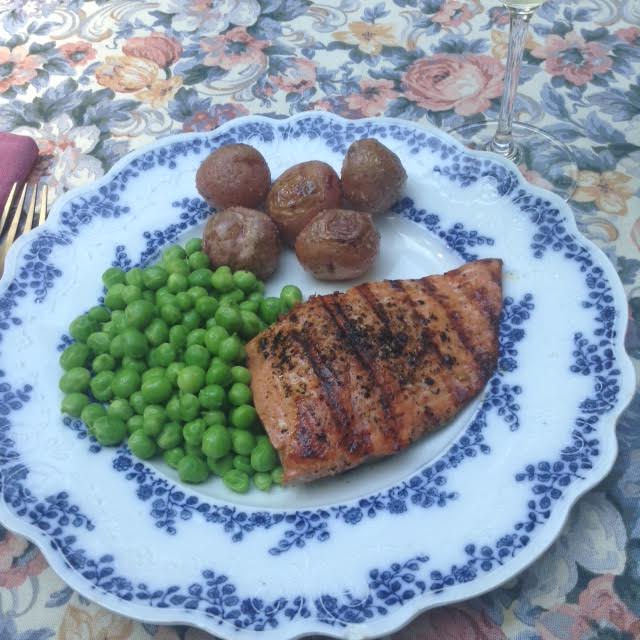
Time was, salmon ran up the rivers of New England by the thousands every year on the way to their breeding streams. They were so common that servants had clauses written into their contracts to prevent their employers from feeding them salmon every day. By early July, there is a wonderful confluence of ingredients: fresh salmon, the new green peas, and the tiny first potatoes. These became the makings of a classic meal for a traditional 4th of July in the 1800s, before anyone had ever heard of hot dogs and hamburgers and barbecue grills. If you don’t believe me, you may consult James Beard’s American Cookery [pg.119] and the Boston Globe.

The salmon may be grilled, poached, or baked. The peas are newly liberated from their shells. The potatoes are roasted with olive oil, salt, and rosemary. A traditional [and attractive, and delicious] way to celebrate our Independence Day.

Slow Days: Artistic Bread

People who are new to Fasting often pose the questions: “Can I really eat ‘anything I want’ on a Slow Day?” and “What should I eat on Slow Days?” To answer those questions, I have decided to add some blog posts to show some of the foods we eat on what the world calls NFDs [non-fast days] but which, in our house, we call ‘Slow Days.’ This feature will appear sporadically. 

Now for the answers. Can you really eat ANYTHING you want on a Slow Day? Not really. If you eat too many calories every Slow Day, you will not lose weight. There are many questions asked on the FastDiet Forum which attest to that. Once in a while you can splurge, as long as it isn’t everyday. For what to eat on Slow Days, Dr. Mosley recommends a Mediterranean Diet. As for how we eat, an example follows.

You’ve heard of ‘artisan bread,’ but have you ever seen bread that is artistic? I hadn’t, until our older son suggested it while we discussed what to serve at a small dinner party. We start with his recipe for ‘No-Knead Foccacio’ which is simplicity itself.

2 breads to serve 6-101 bread to serve 3-5
500 grams bread/strong flour
375 g water
10 g salt
6 g dry yeast
25 grams bread flour
187 g water
5 g salt
3 g dry yeast
Put all ingredients in a bowl with some mixing and rising room. Combine, using a fork, a spoon, or your hands, until it looks like a shaggy ball.
Cover the bowl and let rest 8-12 hours – overnight works well.
After rising over-night, the dough is ready to use.

Lightly brush olive oil onto two 8×15” pans or one large sheet pan. Divide the dough in half. Pat each half into an 8×12” rough oval on the pan. Let stand 1-2 hours

Each half of the dough is patted out on an oiled pan as a rough 8×12-inch canvas.

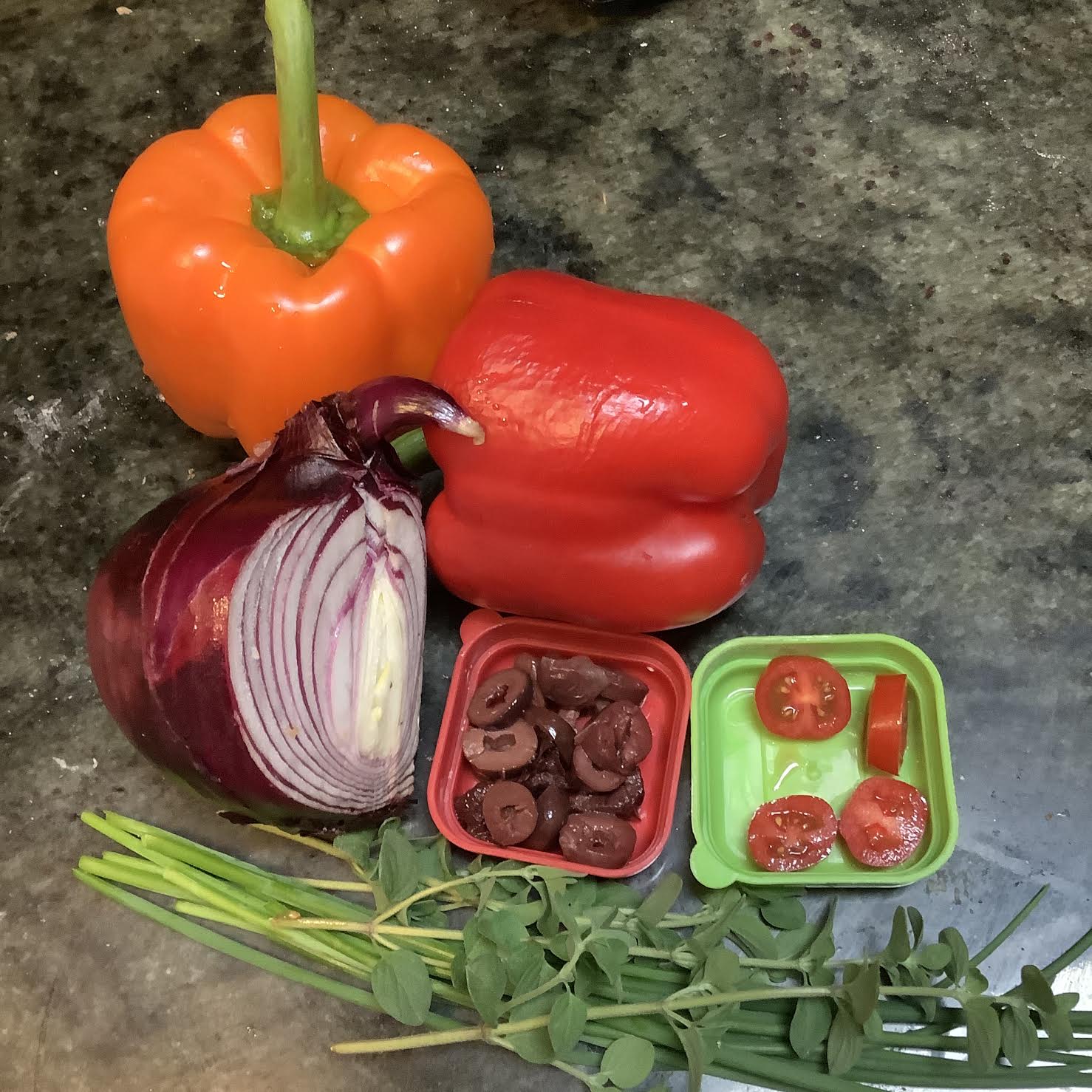
Two colors of bell peppers, red onion, black olives, cherry tomatoes, chives, and marjoram sprigs are the ‘paints’ you use to create your picture.

NB: I had drawn a design in advance to guide me in planning the vegetable placement. Brush the dough with olive oil and sprinkle with finishing salt. Cut the vegetables into the shapes you want for your design, then place them on the dough in a way that pleases your eye.

Ready to go in the oven, after a 15-minute rise.

Bake at 400F for 20 minutes, until crust begins to golden and the bottom of the bread is cooked. Serve warm or at room temperature to rave reviews. Should there be any left-over, it freezes very well.

On the table, ready for the guests.