
How this Fast Diet Lifestyle works: Eat these meals tomorrow, for a calorie total of less than 600. On another day this week, eat the meals from a different post, another day of eating 600 calories or less. Eat sensibly the other days of the week. That’s it: a simple way to lose weight and be healthier. Join me in the Fasting Lifestyle.
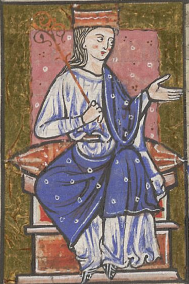
In 874 CE, the Vikings were on the rampage in the Britain. They had taken York and Norfolk and were moving west into the interior. They captured the town of Derby in the Kingdom of Mercia, renaming it as Deorby. For the next few decades, the balance of power between the Viking/’Dane’ invaders and the Anglo-Saxon defenders was touch and go. In 879 CE, a new king of Mercia was crowned: Aethelred [his name means ‘noble counsel’]. Within two years, King Aethelred accepted King Alfred ‘the Great’ of Wessex as his liege lord. In 887, Aethelred married Æthelflæd [whose name means ‘noble beauty’], daughter of King Alfred. The pair were a ‘power couple’ in their time, fortifying towns against the Danes and endowing abbeys. After a decade of increased Viking incursions, Aethelred of Mercia died. His wife, Æthelflæd the Lady of Mercia/Myrcna hlaedige, took over the reins of government, since Mercia was not prejudiced against female rulers and they did not want a divisive power struggle. She took the battle to the Vikings, fortifying key towns [called ‘burhs’, pronounced ‘bruffs’], and making incursions to recapture territory. For the rest of her life, Æthelflæd lead the Mercian struggle against the Vikings, building strongholds to stall their advances, and leading troops in the retaking many towns like Derby in a battle in 917. She died on June 12, 918, and was buried at Gloucester. Æthelflæd’s death was widely reported around Britain, such was her repute. Her brother Edward of Wessex took over Mercia a few months later, uniting it with Wessex to form the kernel from which the future united England grew.
What did Anglo-Saxons eat? Onions, garlic, cabbage, turnips, mushrooms, beets, carrots, peas, green beans, barley, wheat, fish from rivers and ocean, small game. Sounds like stew to me — all day long. Foods were simmered in pots over a fire, flatbreads were cooked on hot stones. Both our breakfast and our dinner are in keeping with the foodstuffs available to Æthelflæd and her people.
Bannock with Salmon & Applesauce: 206 calories… 5 g fat… 1.5 g fiber… 9 g protein… 31 g carbs… 97.4 mg Calcium… NB: Food values given are for the main meal only, and do not include the optional beverage. PB Oat cakes are found all over the British Isles. Were these the ‘cakes’ that King Alfred let burn while baking on the hearth?

++ 4 two-inch bannock ++++ ½ oz smoked salmon ++++ 1/3 c low-fat vanilla yogurt ++++ 1/3 c unsweetened applesauce ++++ Optional: blackish coffee [53 calories] or blackish tea or mocha cafe au lait [65 calories] ++
Bake, or thaw and warm the bannocks. Stir together the yogurt and applesauce until blended, or serve with a marbled appearance. Plate it all with the salmon for a very fine meal.
Winter Soup: 236 calories… 3 g fat… 8.6 g fiber… 12 g protein… 45.4 g carbs… 80 mg Calcium… PB GF – if using GF bread A hearty vegetable soup has been keeping people going for milleia. Easy to prepare, perfect for clearing out the vegetable drawer. HINT: 1 Serving = 1 cup. Makes 5 cups.

++ 1 quart beef broth ++++ 4 oz carrots, peeled and sliced or diced ++++ 4 oz rutabaga/yellow turnip, peeled and diced ++++ 4 oz parsnip, peeled and sliced or diced ++++ 4 oz onion, chopped ++++ 4 oz cabbage, chopped ++++ ¼ cup pearled ‘quick’ barley ++++ any herbs you wish, chopped ++
Prepare vegetables as described. Put everything except the barley in a soup pot. Bring to a boil, then turn down heat and simmer until all vegetables are soft. Add barley, herbs, salt, and pepper to taste. Simmer until barley is cooked.
<<<<<<<< Ingredients for next week >>>>>>>>> Breakfast, single portion for Monday …………………………… single portion for Thursday:
| 2 two-oz egg = US large | 1.5 two-oz eggs |
| flour, preferably whole wheat | chicken breakfast sausage @ 33 calories per link |
| sugar + milk, low-fat | apple |
| 10 sweet cherries + clementine | sage |
| optional smoothie | optional smoothie |
| optional hot beverage | optional hot beverage |
Dinner, single portion for Monday:………………………….. single portion for Thursday:
| olive oil + onion | Andouille sausage + chicken + ham chunk |
| garlic + scallion | onion + brown rice + celery + file powder |
| tomato, fresh or canned + canned chickpeas | green sweet pepper + garlic + crushed tomatoes |
| chicken stock + herbs | red pepper flakes + Tabasco + Worcestershire |
| Sparkling water | chicken broth + cajun seasoning + Sparkling water |














 Eating well, with creative recipes, to follow the Fasting Lifestyle according to Michael Mosley's "Fast Diet."